


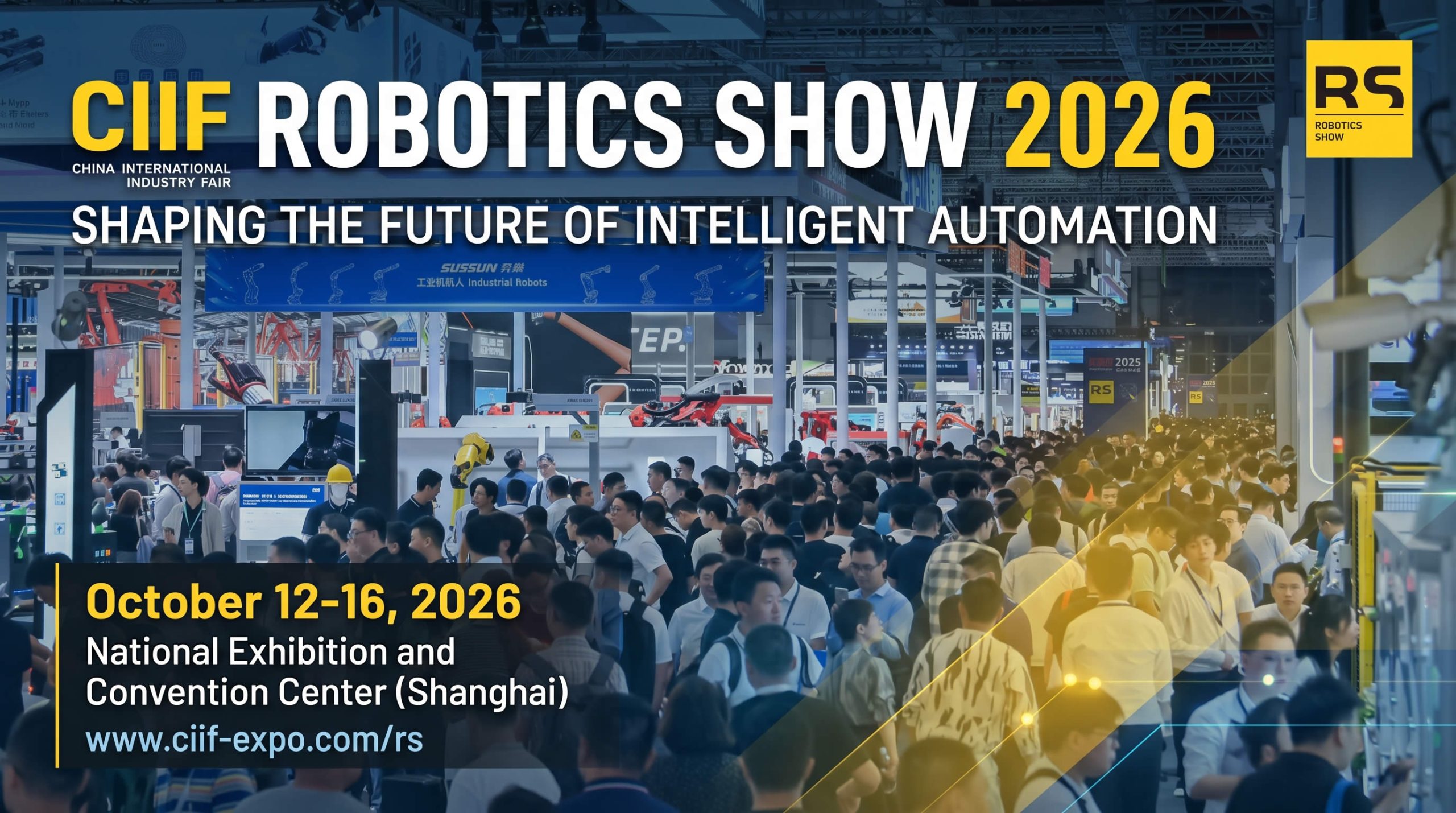
The October 12–16 exhibition will cover industrial automation, mobile robotics, machine vision and core components, alongside expanded zones for humanoid and elderly-care service robots.
The Robotics Show (RS), the robotics-focused exhibition at the 26th China International Industry Fair (CIIF), will run from October 12 to 16 at the National Exhibition and Convention Center (Shanghai). This year’s exhibition will put greater emphasis on embodied intelligence, with expanded zones for humanoid robots and intelligent elderly-care service robots, according to the organizers.
The event covers a broad section of the robotics industry, from factory automation equipment and mobile robots to machine vision, motion-control components and application-specific systems. The expanded focus on humanoids adds another dimension to a show that has traditionally served manufacturers, automation suppliers and system integrators.
Industrial Robotics Remains at the Core
Industrial robots and collaborative robots form a major part of the exhibition. The range includes robots for welding, palletizing, assembly, material handling, spraying, grinding and polishing, as well as SCARA, Delta and Cartesian robots. These systems serve production tasks where manufacturers need repeatable processes, controlled movement and predictable cycle times.
Collaborative robots, or cobots, are another important part of the lineup. Designed to work in applications that may involve closer interaction with people, they have become a familiar option for manufacturers looking to automate individual workstations or add flexibility to existing production lines.
Mobile robotics and smart logistics solutions are also on the program. These include automated guided vehicles (AGVs), autonomous mobile robots (AMRs), warehouse systems and automated material handling equipment. Their role extends beyond moving goods between locations: they can connect storage, picking, production and dispatch operations within a wider factory or distribution workflow.
Machine vision and core components round out the technical range. Exhibits include industrial cameras, lenses and integrated vision systems, as well as controllers, servo motors, reducers, sensors and related equipment. For engineers and purchasing teams, these products matter because robot performance depends on the wider control, sensing and integration systems around the machine.
The show also covers service robots, special-purpose robots and integrated solutions for different industrial applications.
Humanoid Robots and Embodied Intelligence
Humanoid robotics will receive particular attention in 2026. The organizers say the show will expand its Humanoid Robotics Zone and Intelligent Elderly Care Service Robotics Zone, reflecting the widening scope of a market that now extends beyond conventional factory automation.
The question for industrial users is how these systems perform outside a staged demonstration. In manufacturing, the more demanding tests involve handling objects of different shapes, coordinating movements between multiple robots, maintaining accuracy and completing a sequence of tasks reliably.
Some early exhibitor previews point to this emphasis on practical applications. JAKA plans to present a heavy-duty, dual-arm humanoid product with a combined rated load of 50 kilograms. Mech-Mind, meanwhile, plans to demonstrate a multi-robot application in which two robots coordinate feeding, assembly and tote handling. Both examples put the focus on the work a robotic system can carry out, rather than movement alone.
The expanded elderly-care service robotics zone also broadens the scope beyond manufacturing. It gives the exhibition a place for systems intended for care-related and service applications, where interaction with people and the demands of the operating environment differ from those on a production line.
A Robotics Exhibition That Has Evolved With the Industry
RS has developed alongside China’s robotics sector. It began as a robotics exhibition area within CIIF in 2012 and became a standalone themed exhibition in 2013, initially under the name Industrial Robot Show. It adopted the name Robotics Show in 2015.
The exhibition added a service robot experience area and a university research and innovation area in 2016, followed by dedicated China and international pavilions in 2017. In 2020, it introduced areas focused on smart logistics and collaborative robot applications. A dedicated humanoid robot zone followed in 2024.
That progression helps explain the format of the 2026 show. Conventional industrial robotics remains central, but the exhibition now spans a wider range of robot types, components and applications. For visitors following embodied intelligence, the opportunity is to see how these newer systems fit into an industry that already has established suppliers, integration expertise and manufacturing customers.
What Visitors Can Expect From CIIF Robotics Show 2026
For factory owners, manufacturing engineers and automation teams, the most useful exhibits may be those that address a specific production problem: machine tending, inspection, welding, material handling, assembly or warehouse operations. A robot’s payload, reach, repeatability, cycle time and integration requirements often matter more to deployment decisions than the appearance of the machine.
System integrators and component suppliers have another reason to attend. The exhibition brings together complete robots and the supporting technologies needed to deploy them, making it possible to compare equipment and discuss how individual products work within a larger system. For overseas buyers, conversations about technical support, delivery, integration capabilities and after-sales service are also important when assessing potential Chinese suppliers.
The previous edition provides a useful benchmark. According to the organizers, the 2025 Robotics Show attracted 223,997 professional visitor visits and more than 450 Chinese and international companies. More than 600 products and new application scenarios made global or China debuts. These figures describe the 2025 edition, rather than projections for 2026.
RS is one of the specialist exhibitions within CIIF, which covers a wider range of industrial technologies. Visitors can therefore consider robotics alongside industrial automation, machine tools and other manufacturing equipment, rather than viewing robots in isolation.
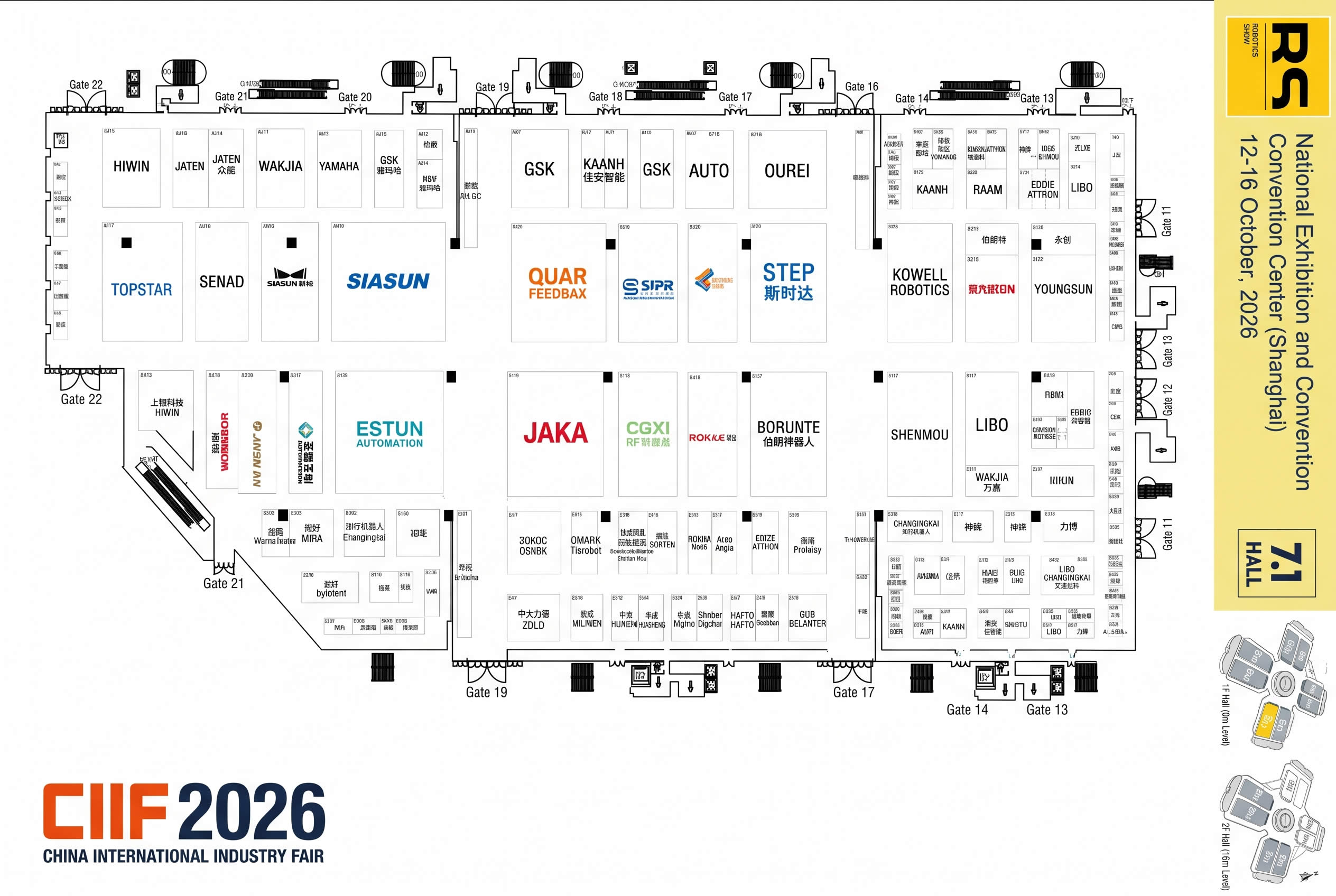
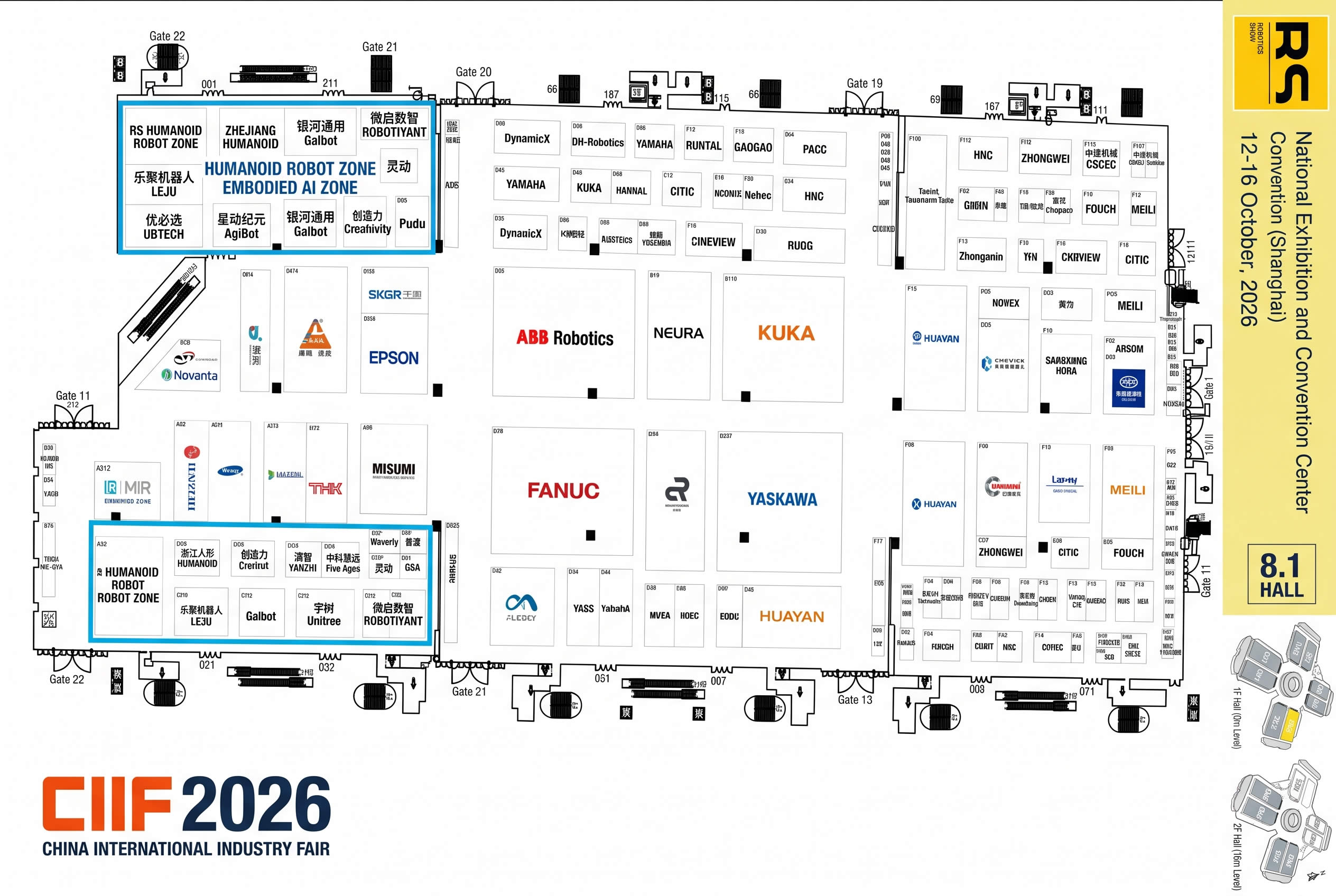
The 2026 Robotics Show takes place from October 12 to 16 at the National Exhibition and Convention Center (Shanghai), Halls 7.1H and 8.1H. For anyone tracking China’s robotics supply chain, the exhibition offers a view of both sides of the industry: the established equipment and components used in production today, and the newer robotic systems seeking a role in factories and service environments.
