

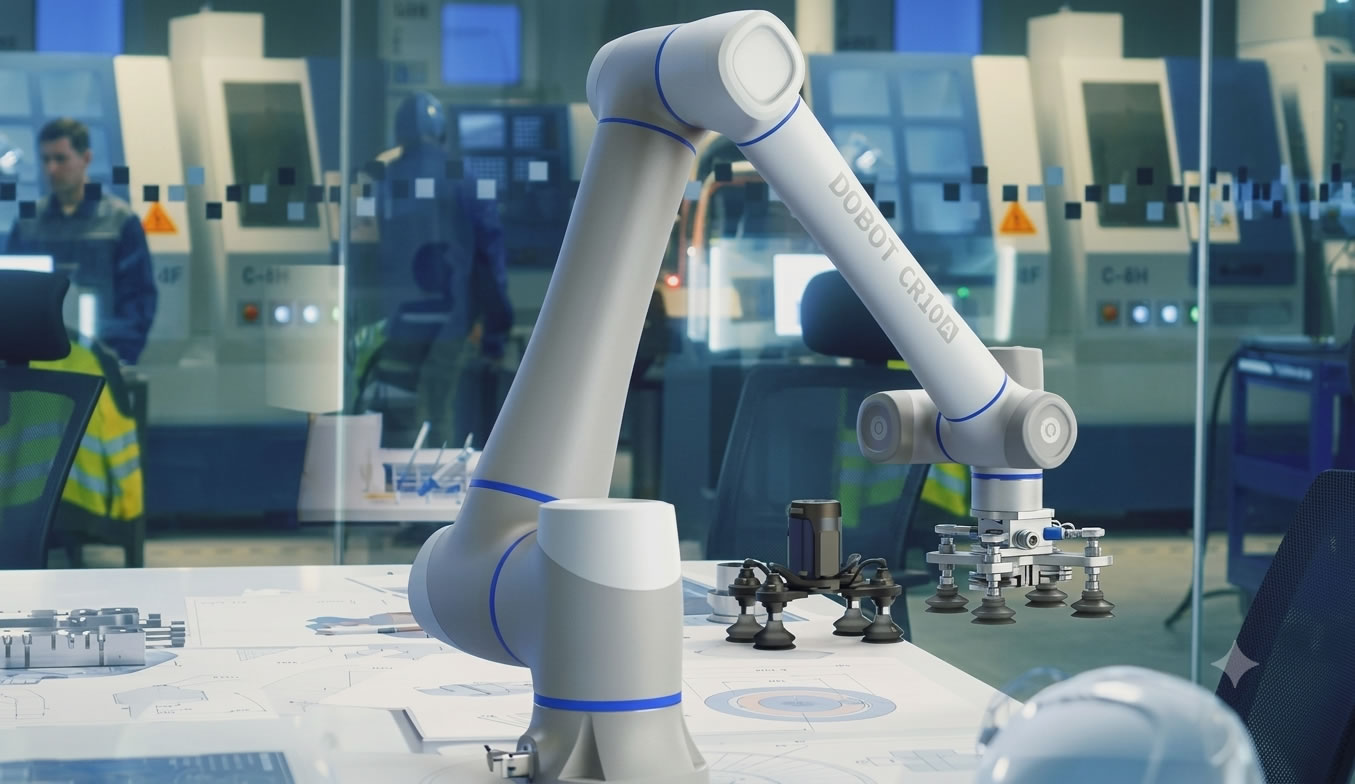
For the past few years, the collaborative robot (cobot) industry has been searching for a fresh growth narrative. Having transitioned from “novelty” to “mature product” in traditional industrial settings, cobots have steadily increased their penetration across sectors like 3C electronics, automotive, lithium battery manufacturing, healthcare, education, and research. But as adoption grows, the competitive pressure has become equally intense. Price wars, product commoditization, and channel saturation have become unavoidable headaches for the sector.
Then, around 2025, a new variable entered the equation: humanoid robots.
From Tesla’s Optimus to Figure AI and Agility Robotics—and on the domestic front, players like AgiBot, Unitree, UBTech, and Robot Era—capital, technology, and supply chains have rapidly converged on this new frontier.
This surge of interest is bringing a much-needed tailwind to the somewhat stagnant cobot industry. Increasingly, humanoid robot developers are realizing they don’t need to reinvent the wheel when it comes to building a reliable arm system. Instead, they are tapping into technologies that have already been battle-tested by cobot makers over the last decade.
This has led to a rather dramatic shift in the industry landscape: cobot manufacturers, once solely focused on factory floors, are quietly transforming into the “robot arm suppliers” for humanoid robot integrators. These are no longer one-off pilot orders; we are now seeing more definitive volume-based supply arrangements, with a clear supply chain logic beginning to take shape. For cobot companies that have long been searching for a ceiling to their industrial growth, a new door is opening.
Why Humanoid Arms Are Starting to Look Like Cobots
To understand this trend, you have to start with a basic technological reality: the upper body of a humanoid robot—its arm system in particular—shares a great deal of technical DNA with a collaborative robot.
The core competencies of a cobot—things like compliant control, gravity compensation, collision detection, and safe human-robot interaction—are exactly what a humanoid robot’s arms require. Whether in domestic service, industrial assistance, or rehabilitation, humanoid robots need arms capable of precise manipulation while remaining safe around people and their environment. These are precisely the capabilities cobot makers have spent the last decade perfecting on the factory line.
In short, cobot manufacturers hold a natural advantage. They aren’t designing for humanoids from scratch; they are simply transferring proven technology to a new application. Modular joints, force-control algorithms, servo drives, and safety controllers—components already validated in thousands of cobot units—can be directly reused for humanoid arms.
This model of technology overlap and commercial reuse allows cobot companies to enter the humanoid supply chain with minimal additional R&D spending. Meanwhile, humanoid makers gain shorter lead times, proven quality, and lower procurement costs. It’s a classic win-win dynamic.
China’s Supply Chain: The First to Catch the Scent
When you look at this trend from a global perspective, Chinese cobot makers appear to be in an exceptionally strong position to capitalize on it.
Data from QYResearch’s 2026–2032 Global and China Collaborative Robot Arm Market Status and Future Trends report puts the global cobot arm market at roughly $1.14 billion in 2025, projecting growth to $3.83 billion by 2032, representing a compound annual growth rate (CAGR) of 18.9%. China alone is growing even faster. The country’s cobot market revenue hit 9.8 billion RMB in 2025 and is expected to climb to 35 billion RMB by 2029, translating to a staggering CAGR of 37.4%.
These figures highlight that China is not only the world’s largest consumer market for cobots but also the fastest-growing one. More importantly, China has built one of the world’s most comprehensive supply chains for humanoid robotics. From core components to final assembly, and from algorithm development to mass manufacturing, virtually every stage of production can be sourced domestically.
As humanoid robots move into mass production, this density and efficiency in the supply chain will become a massive advantage. Cobot makers sit right at the middle of this ecosystem. Upstream, they aggregate motors, reducers, and sensors; downstream, they deliver complete arm modules to humanoid manufacturers. This intermediary position gives them substantial bargaining power and makes them difficult to replace.
The Key Players: Who is Cashing In?
Growth isn’t distributed evenly. Success in this race hinges on three variables: technical adaptability, depth of customer relationships, and experience with mass production. Below are a few Chinese players that have caught the attention of industry watchers.
Dobot Robotics
Founded in 2015, Dobot is an embodied AI company with roots in manufacturing. It has shipped over 100,000 cobots globally and took the top spot worldwide in 2025 by shipment volume, claiming the title of China’s first publicly traded cobot pure-play. In the embodied AI space, Dobot has built a unified “brain-body” platform. Its self-developed DobotWAM foundation model serves as the central nervous system, while its high-precision full-body force-control system handles motor functions, driving different hardware forms to work in unison. Notably, the DobotWAM model scored an average success rate of 99.25% on the LIBERO benchmark—a leading international standard for embodied AI—and achieved 100/100, according to company data, on object manipulation stability tasks, outperforming models like π0.5 and GR00T-N1.5.
Dobot has already moved past the R&D phase into real-world commercial deployment. Its humanoid robots completed what Dobot described as the world’s first fully autonomous commercial operation at a movie theater in Shenzhen, reportedly achieving a single-day revenue of 20,000 RMB. Its wheeled humanoid robots are also being deployed in new energy vehicle production lines and smart pharmaceutical retail, spanning both industrial and service sectors. For 2026, Dobot is targeting a thousand-unit order for its humanoid robots and plans to release a new generation of companion-style AI humanoids.
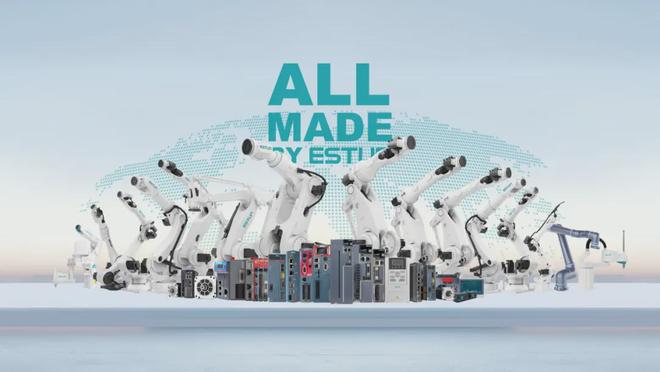
Estun Automation
Estun was founded in 1993 and is a veteran player in China’s industrial robotics sector, being the first company in the space to achieve an “A+H” dual listing. Estun’s advantage lies in its self-developed core components—servo systems and controllers are produced in-house, giving it strong cost control and supply chain security.
The company’s humanoid push is primarily driven via its incubated subsidiary, Estun Coodroid. The unit unveiled its first generation humanoid, the CODROID 01, in September 2024. By June 2025, it had released the CODROID 02, followed by the “ROCK” C05-L, a wheeled industrial humanoid robot, in November of the same year.
Huayan Robotics
Established in 2017, Huayan Robotics is focused on breakthroughs in core cobot technologies. Its product lineup is split into the E-Series (for high-end industrial, semiconductor, and medical applications) and the S-Series (mainly for automotive and logistics), covering over 40 industries and 60 process scenarios.
In the humanoid component business, Huayan Robotics’ motors and joint modules have already passed testing and entered stable supply agreements with multiple humanoid manufacturers. In April 2026, it released two seven-axis humanoid arm series—the Echo and HY lines—in various payload specifications. It is reportedly supplying core motion components to leading humanoid firms including AgiBot and Galbot.
ROKAE
Founded in late 2014, ROKAE focuses on industrial arms, flexible cobots, and embodied AI products. The company completed its Hong Kong IPO on July 9.
ROKAE offers a complete ecosystem spanning integrated force-controlled joints and robotic arms to whole-body platforms like its wheeled dual-arm robot, and has already secured orders exceeding 10,000 units for its embodied AI products. According to CIC Consulting, ROKAE ranked third in China’s embodied AI mechanical arm market in 2025 with a 6.3% share. It is also the only flexible cobot supplier among the top six in China with an annual output exceeding 1,000 units. Notably, the report states that nearly half of China’s top ten humanoid robotics companies (measured by market cap) have either tested or switched to ROKAE’s arms for their product iterations, including AgiBot, which formalized a partnership with ROKAE last September.
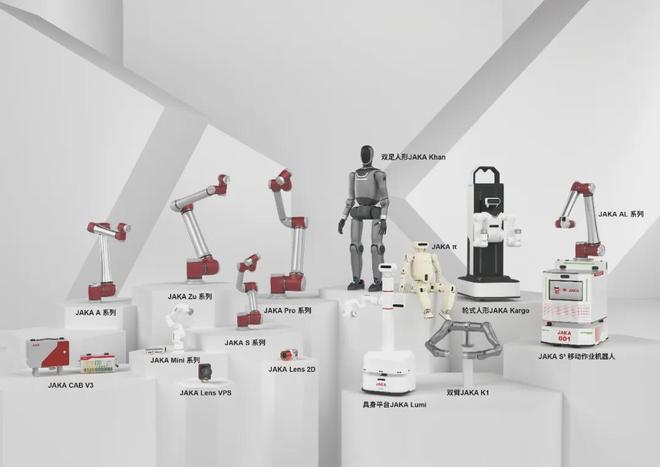
JAKA Robotics
Founded in 2014, JAKA is a leading global smart robotics company with two main product lines: collaborative robots and embodied AI products. The latter encompasses the JAKA Lumi embodied platform, the JAKA K1 dual-arm humanoid, the JAKA Kargo wheeled humanoid, and the recently released compact JAKA Pi robot.
JAKA’s strength is its mature mass-production capabilities and broad industrial customer base. For humanoid manufacturers struggling with cost reduction, JAKA’s experience with large-scale manufacturing provides a clear edge.
FAO Robotics
Founded in 2019, FAO operates with the long-term strategy of being a “popularizer of robots” and is one of the few Chinese firms that claims self-developed and self-produced supply chains for all core components.
Its collaborative arm portfolio covers payloads from 3kg to 35kg across a wide range of scenarios. In the embodied intelligence space, FAO is positioning itself as a turnkey Tier-1 supplier, offering everything from joint modules and humanoid arms to full upper-body and complete robot body customization. It is reportedly fulfilling hundreds of orders for humanoid-related parts, serving customers that include leading humanoid developers, multinationals, and listed corporations.
Beyond these names, other cobot makers such as SIASUN, Zhida, and RealMan are also actively entering this space.
A Second Growth Curve, But Not a Free Lunch
Despite the enthusiasm, the revenue boost from humanoid robots won’t immediately transform the income statements of cobot companies. The reason is straightforward: mass production for humanoids is still ramping up, and that takes time.
Even under the most optimistic forecasts, global shipments of humanoid robots are unlikely to surpass a million units before 2030. For cobot makers, the share of revenue currently coming from humanoid clients is likely in the low single digits. The “10% to 30%” incremental revenue figure often cited in reports—like those from Interact Analysis—is a long-term goal targeting 2030, leaving a five-year gap before it materializes.
The bigger variable is the production pace of humanoid robots themselves. If humanoids fail to achieve scale in consumer or industrial applications within that timeframe, this “second growth curve” may remain an investor slide deck fantasy. Cobot makers will need to exercise patience over the next half-decade—and remember not to neglect their industrial base, which remains the only reliable source of revenue today.
It’s also worth noting that not every cobot maker will automatically get a seat at the table. The requirements for humanoid arms differ slightly from those of traditional industrial cobots. Besides standard metrics like payload, precision, and repeatability, humanoid makers pay close attention to weight, power consumption, volume, thermal dissipation, and aesthetics. Cobot makers must adapt their designs rather than simply repackaging existing offerings.
Furthermore, customer lock-in is a critical factor. Once a cobot maker establishes a deep co-development and custom-supply relationship with a leading humanoid player, the barrier to entry for other suppliers becomes significantly higher. This means the current window of opportunity is precious, and companies are racing to secure their spots.
Conclusion and Outlook
Viewing the entire value chain, the role of cobot makers in the humanoid craze is a classic example of the “picks and shovels” play. Regardless of which humanoid developer eventually wins out, and regardless of the final form factor of these robots, the demand for a reliable, capable arm is a certainty.
The companies that can execute this single component to the highest standard will always hold value. After all, when the day arrives that humanoid robots achieve real scale, Chinese cobot makers are well positioned to be among the first and most capable groups globally to capture that wave of demand.
Zooming out, both collaborative and humanoid robots ultimately serve a specific task. On the factory floor, they are needed for precise handling, screw driving, and flexible assembly. In hospitals, they assist with rehabilitation and surgery. At home, they deliver companionship, cleaning, and fetching. In these scenarios, whether the robot rolls on wheels or walks on two legs, or whether it looks human or not, matters very little.
