


Hard to believe, but in 2026, the quadruped robots you see at a tech expo outnumber the golden retrievers, corgis, and poodles you’d run into walking around your neighborhood. Combined.
This isn’t a joke. Quadruped robot form factors are diversifying faster than most dog breeds evolved. On the same technical foundation, manufacturers have bolted on wheels, saddles, humanoid torsos, dinosaur skeletons, drone landing pads. Every new configuration seems to open up a new scenario, a new audience, and a new revenue stream. After seeing these wild machine dog variants, you might conclude that pet dogs never stood a chance.
A $30 robot dog and a $30,000 industrial platform sit on the same technological continuum
At this year’s World Robot Conference (WRC), a tiny AI remote-controlled robot dog became an unexpected hit. It didn’t have a flashy booth—just a vendor hawking it from a corner—yet it drew crowds all day.
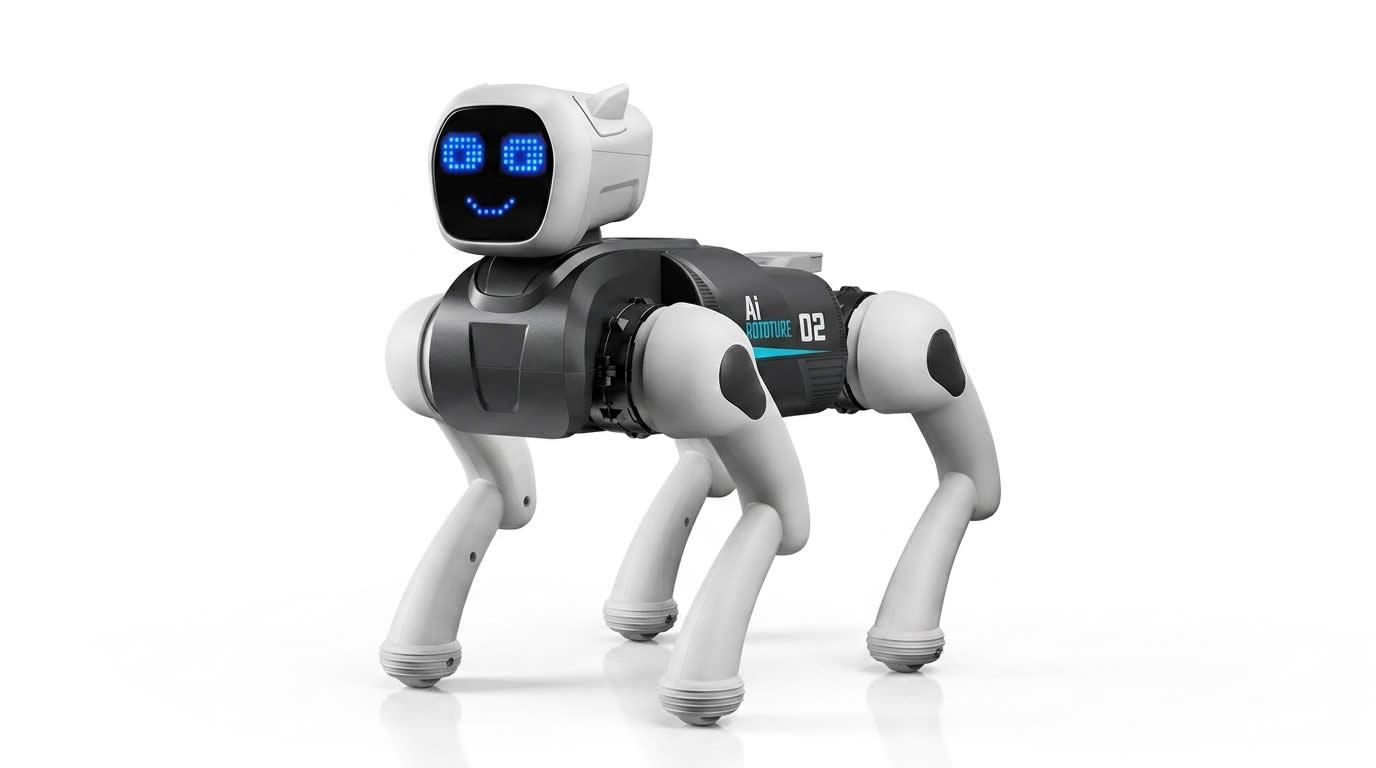
The robot, called Kemisi, is palm-sized but can run, flip, and interact with people. Reports from the show floor suggest these small robot dogs were selling at a rate of roughly a thousand units a day. That’s a number almost no other vendor at WRC could match.
How? Simple: price. The Kemisi robot dog sells for 200 to 280 yuan. Compared to the five-figure and six-figure robots scattered around the venue, it’s practically an impulse buy. People weren’t just looking—they were handing over money. For the price of a few fancy coffees, you get a machine dog that walks, makes noise, and responds to commands. Why not?
The deeper logic behind the sales explosion is that it hit the inflection point where quadrupeds shift from “demo piece” to “consumer product.” Small enough to toss in a backpack. Cheap enough to buy on a whim. Fun enough that ordinary people actually want one.
Kemisi and its peers stripped the structure down to the bare minimum to deliver a “quadruped 101” experience. The cost curve landed in territory consumer electronics can absorb, and the motors, servos, batteries, and compact control systems developed along the way feed back into the upstream supply chain.
At the other end of the same technological continuum, Unitree, DEEP Robotics, and other established players are carving out their own market slices. From a $30 toy to a $300,000 industrial platform, quadruped form factors are using the same gait logic to penetrate entirely different market tiers.
Wheel-legged hybrids: when a species learns to take shortcuts
The first real “form factor revolution” in quadruped robots started with the least glamorous component: the wheel.
Pure legged locomotion is elegant, sure. But it’s also a liability. Legs are irreplaceable for climbing stairs, crossing ditches, and handling rough terrain. But the moment a robot enters a factory floor, an industrial park, or a warehouse with flat floors, four legs start looking clumsy and expensive.
So the wheel-legged hybrid became the most pragmatic compromise: legs for dignity, wheels for efficiency.
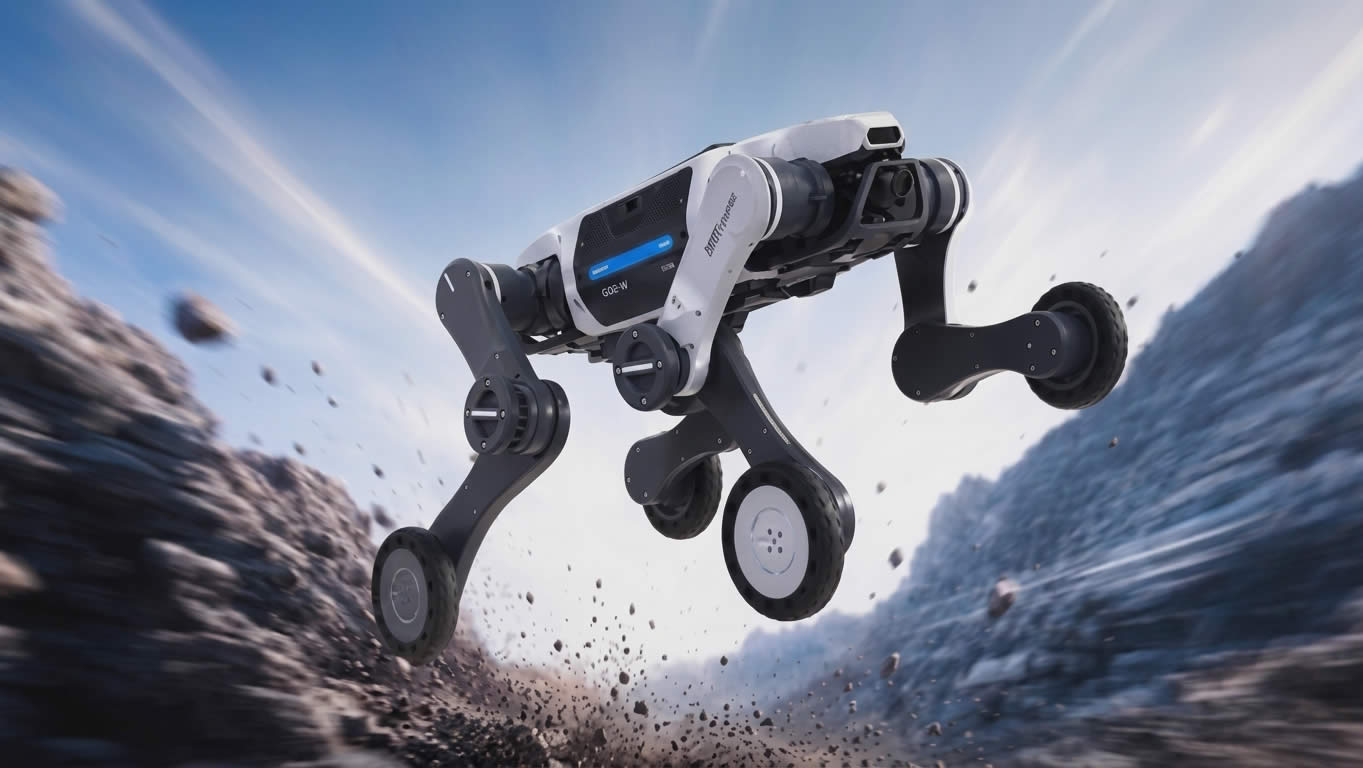
DEEP Robotics’ Lynx series is one of the early movers on this path, and the company has essentially turned wheel-legged designs into a second growth curve. The newly released Lynx S10 pushes lightweighting to the extreme—under 20 kg total weight, with a top speed of 8 m/s on flat ground. DEEP Robotics appears to have refined the switch between wheels and legs considerably.
Unitree has taken a similar approach. The As2-W, released in July, adds four actively driven off-road wheels to the existing As2 quadruped platform, pushing sprint speed to 6 m/s. You could think of it as an off-road scooter with legs.
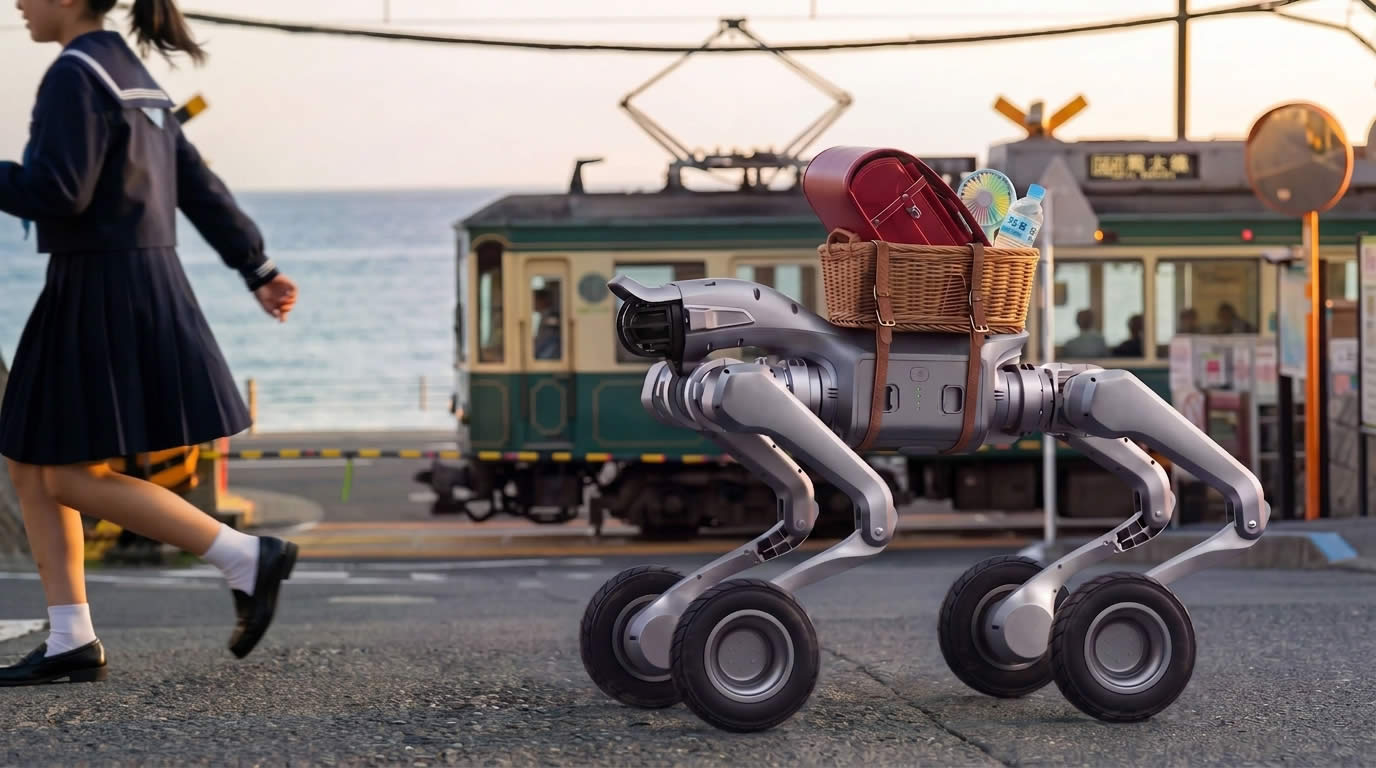
The division of labor—wheels for efficiency, legs for obstacle clearance—is essentially refined energy management. Putting both in one chassis lets the robot make dynamic trade-offs between its energy budget and terrain complexity. Quadrupeds have learned to read the room.
Rideable form factors: from “like a dog” to “like a horse”
Another evolutionary branch brings human riding out of science fiction and into the real world. That requires a leap in load capacity, stability, and human-machine interaction all at once.
Once a robot dog can carry an adult, it stops being a companion gadget or inspection tool. It becomes a mechanical mount. And at trade shows, this form factor is a guaranteed crowd-puller.

DaxAI is going the biomimetic route. In July, the company released the Qiji Series of all-terrain robotic horses. The Qiji X1 uses a fully quadrupedal biomimetic design, weighs 300 kg, and can reproduce a horse’s natural gait at 7–10 km/h, with a 300 kg dynamic payload and a range of 40 km. Its legs can independently adjust foot placement depth and angle to handle steep slopes, loose rock, and mud. At WRC, the robotic horse could be seen ambling between booths, a trail of camera-wielding attendees behind it.
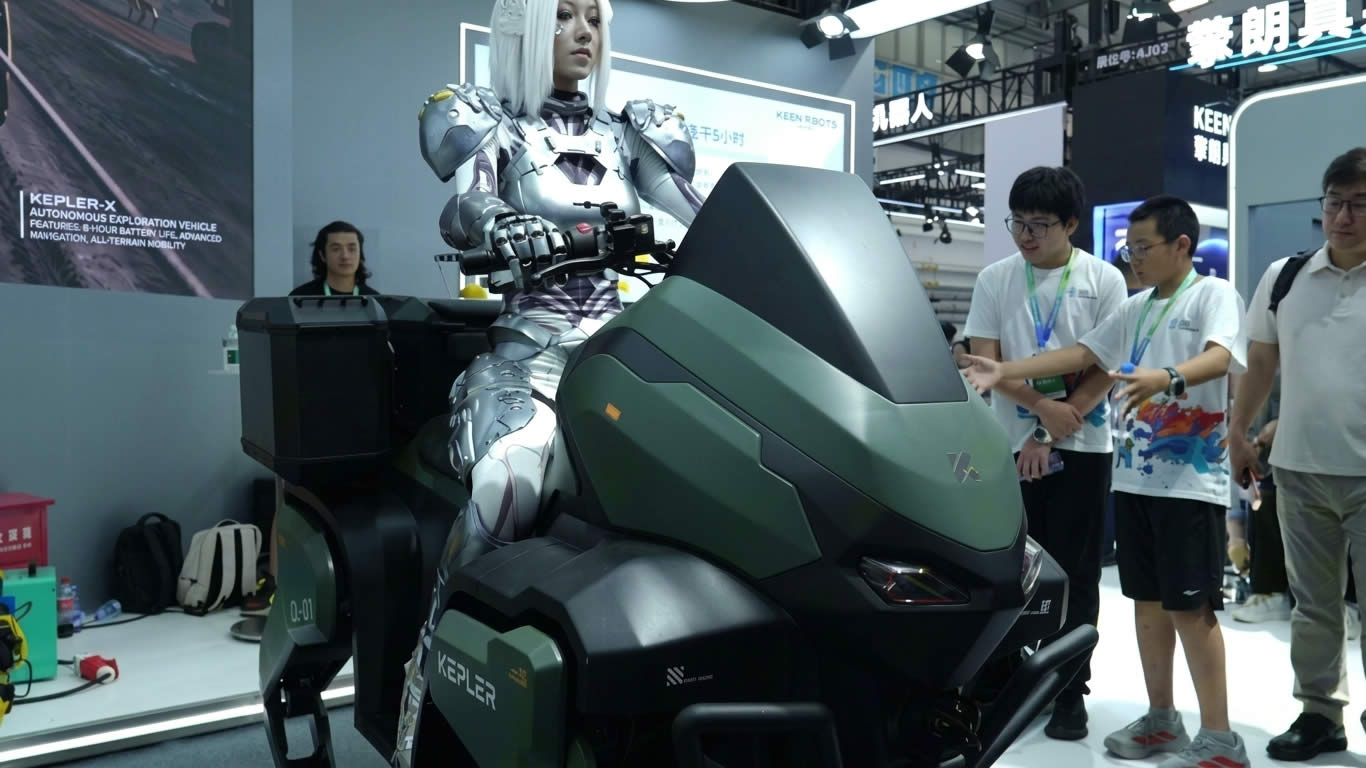
Kepler Robotics, meanwhile, has pushed riding capability to industrial-grade levels. The Kylin Series heavy-duty model weighs 300 kg on its own and supports a full payload approaching one ton, with a body height exceeding 2 meters. It supports both passenger riding and rear cargo transport, can climb 45-degree slopes, wade through water, and its core components carry IP67-rated protection.

Kawasaki Heavy Industries also threw its hat in the ring this April with Project CORLEO—a lion-inspired four-legged personal mobility vehicle roughly the size of a large motorcycle, with the rider steering through the handlebars and shifts in body weight. The concept reportedly dates back to last year, but production is about a decade away. The Japanese giant’s timeline is a beat slower than the Chinese upstarts, to put it mildly.
The rise of rideable quadrupeds marks a step change from “tool” to “platform.” These machines are designed to transport people through difficult terrain, becoming intermediaries between people and the environments they need to navigate—a redefinition of the human-machine relationship.
Centaur form factors: when the upper body needs to work
Another form factor explosion happens when you stick a humanoid upper body on a quadruped base. The robot dog turns into a centaur robot.

At WAIC 2026, Runke Juneng unveiled what it claims is the world’s first centaur robot: a humanoid dual-arm torso mounted on a four-wheel-legged base. The upper body handles manipulation; the lower body delivers wheeled speed and legged obstacle clearance. It merges mobility and manipulation into a single system—a “super embodied agent,” as the company puts it.

California startup Satyress Robotics has gone in a different visual direction. Its “Threehalves” robot is matte black, oddly proportioned, with a face resembling a goat’s head—evoking the demons of Western folklore. The name itself is a metaphor: “Threehalves” means half-human, half-beast, half-machine.
To be fair, the 2.1-meter-tall remotely operated robot is designed for wildfire rescue, structural collapse, earthquakes, and hazardous chemical spills—the most dangerous environments imaginable. Its existence is a reminder that quadruped design space extends far beyond “dog.”
The centaur form factor solves a fundamental problem for mobile robots in rough terrain: reach. The quadruped base gets you there; the humanoid upper body lets you do something once you’ve arrived. Two capability curves intersect in one machine.
Transformable robots, dinosaurs, and air-ground coordination: form factors fully unleashed
Everything so far has followed some kind of logic. What comes next does not.
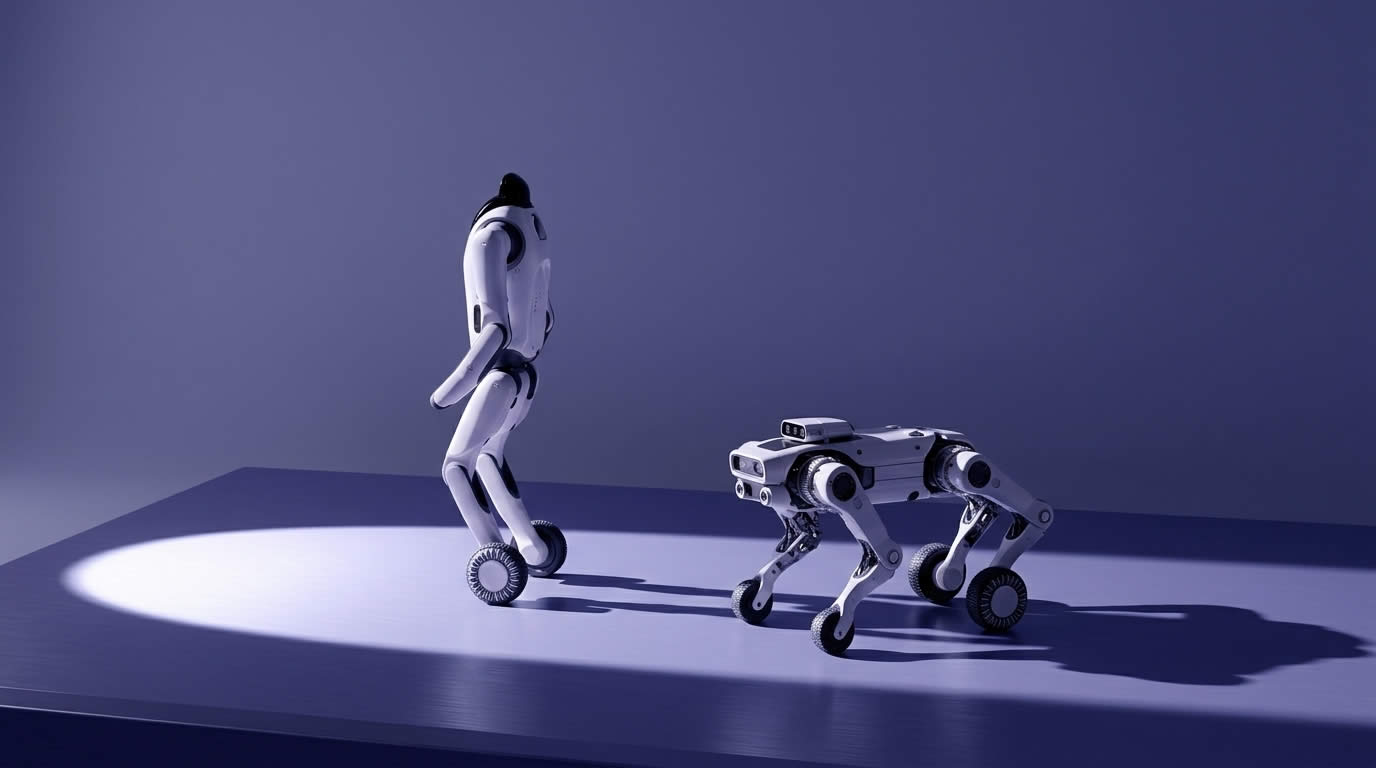
One approach verging on magical realism is robots that morph between configurations depending on context. PrimeBOT launched the Qiyuan T1 in July, billing it as “the world’s first transformable personal robot.” Built on a Transformer-based cross-morphology architecture, it switches autonomously between a wheel-legged humanoid form and a quadruped stance. Indoors, it operates as a compact wheel-legged humanoid with zero turning radius, gliding through living rooms and studies. Outdoors, it shifts into quadruped mode for grass, gravel, slopes, and stairs.
The quadruped configuration provides a stable locomotion base. The humanoid torso provides a manipulation interface. The transformability means both don’t have to be active at once—they take turns depending on the task.
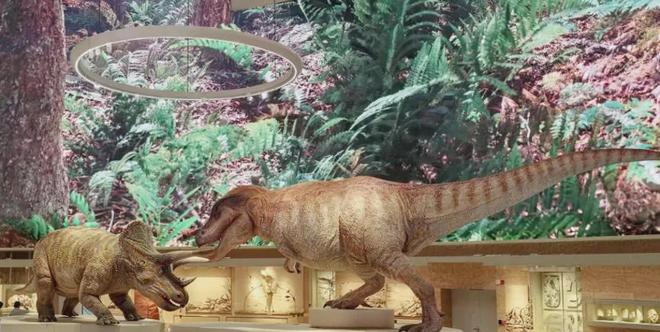
DOBOT skipped living animals altogether and built hyper-realistic embodied dinosaurs. The Bionic T-Rex spans 9 meters long and stands about 6 meters tall; the Bionic Triceratops stretches roughly 6.2 meters and stands about 3 meters. Technically speaking, dinosaur form factors are quadruped motion control pushed to the extreme limits of a massive biomimetic body. Joint torque, structural integrity, gait stability—every parameter has to balance “looks real” against “doesn’t collapse in motion.” DOBOT pulled this off at the 9-meter scale, which suggests quadruped technology is spilling into entirely new territories. Form mimicry is only the starting point; DOBOT is building an embodied agent with perception, decision-making, and physical action. The embodied AI industry has apparently discovered reverse evolution, jumping from humanoids to quadrupeds to creatures that went extinct 65 million years ago.
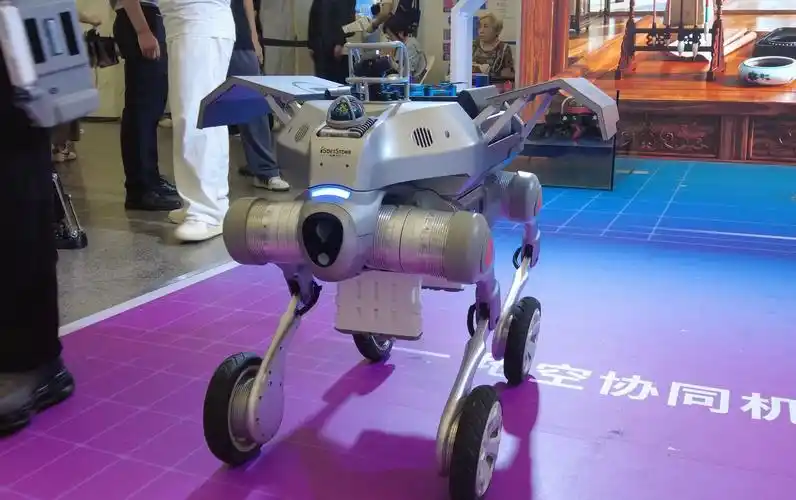
iSoftStone’s Tianqing F1 takes yet another fusion path: a quadruped with an integrated onboard drone, creating an air-ground integrated platform for “wide-area aerial coverage plus precision ground operations.” The quadruped handles every step on the ground; the drone sees everything from above. Their data streams merge into one system—ground blind spots are filled by the aerial view, while ground-level data adds detail to what the drone sees.
After all, a robot dog can’t see a rooftop no matter how well it walks. A drone can’t squeeze into rubble no matter how well it flies. Together, they effectively give the robot a set of eyes that can take off whenever needed.
The form factor explosion is just the surface
Beneath the morphing silhouettes, the quadruped robot industry is splitting along deeper lines.
In the consumer segment, quadrupeds are quietly shifting from “toy” to “functional entry point.” In the industrial segment, job roles are proliferating—from heavy industry to light manufacturing, from special operations to routine facility maintenance.
The underlying technology of quadruped robots is permeating every sector like water. Wheel-legged hybrids address energy efficiency. Rideable platforms address payload and human-machine relationships. Centaurs address manipulation capability.
These directions look divergent, but they share the same foundation: joint actuation, motion control, environmental perception, energy management. Once these building blocks become modular, standardized, and scalable, the quadruped robot stops being a product category and becomes a kind of “mobile infrastructure.” Anything can grow on top of it.
There’s also a counterintuitive truth here: the more form factors multiply, the more obvious it becomes that the body is no longer the moat. The brain is what decides winners. When the underlying capabilities are strong enough, the body can grow freely. When the embodied AI is smart enough, form factors can stretch infinitely.
Whatever shape quadruped robots take, they will ultimately grow into “whatever the scenario demands.”
Pet dogs took thousands of years to diversify into hundreds of breeds. Robot dogs might do it in a few decades.
