

BEIJING — At the China National Convention Center on the morning of September 4, Yuanshan Zhixing Technology did not send a robot out to dance or perform backflips. The company had one product to show: a robot built to help people with visual impairments move through cities on their own.
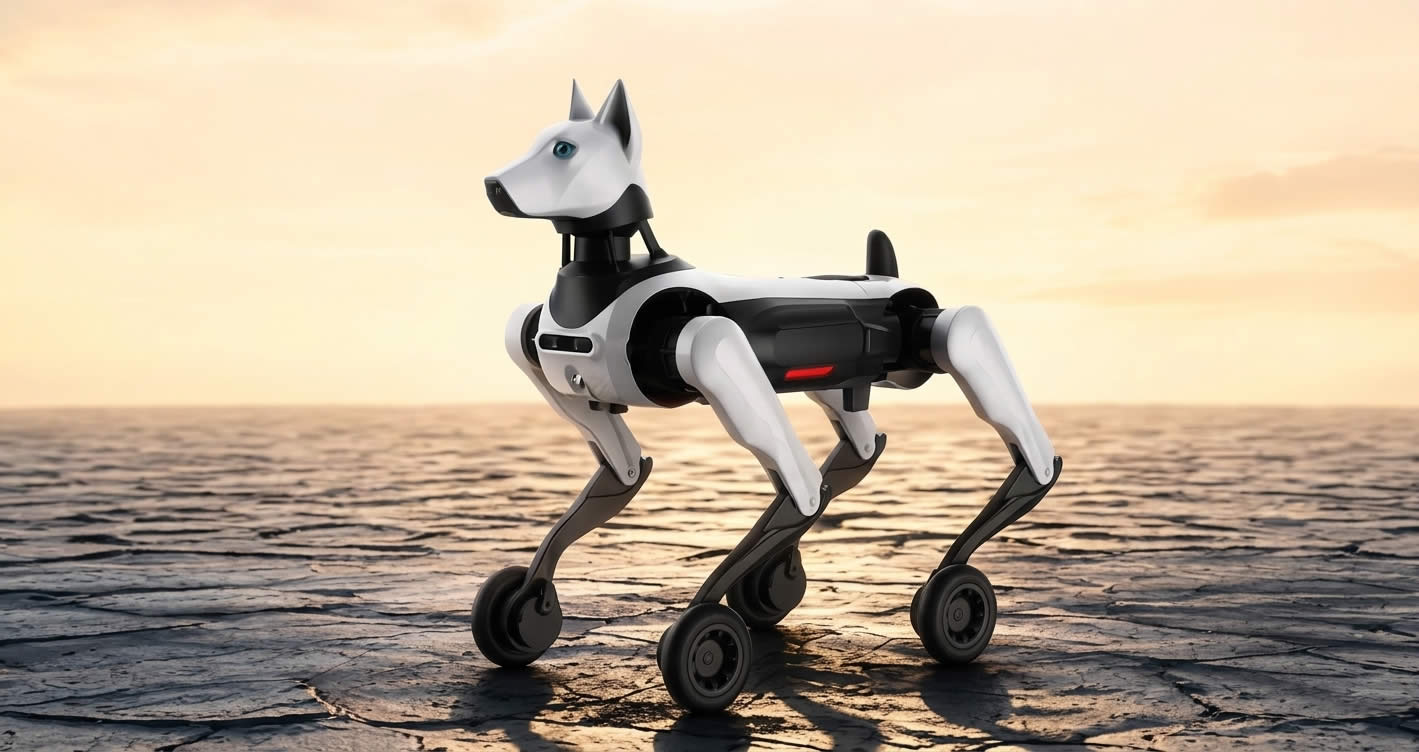
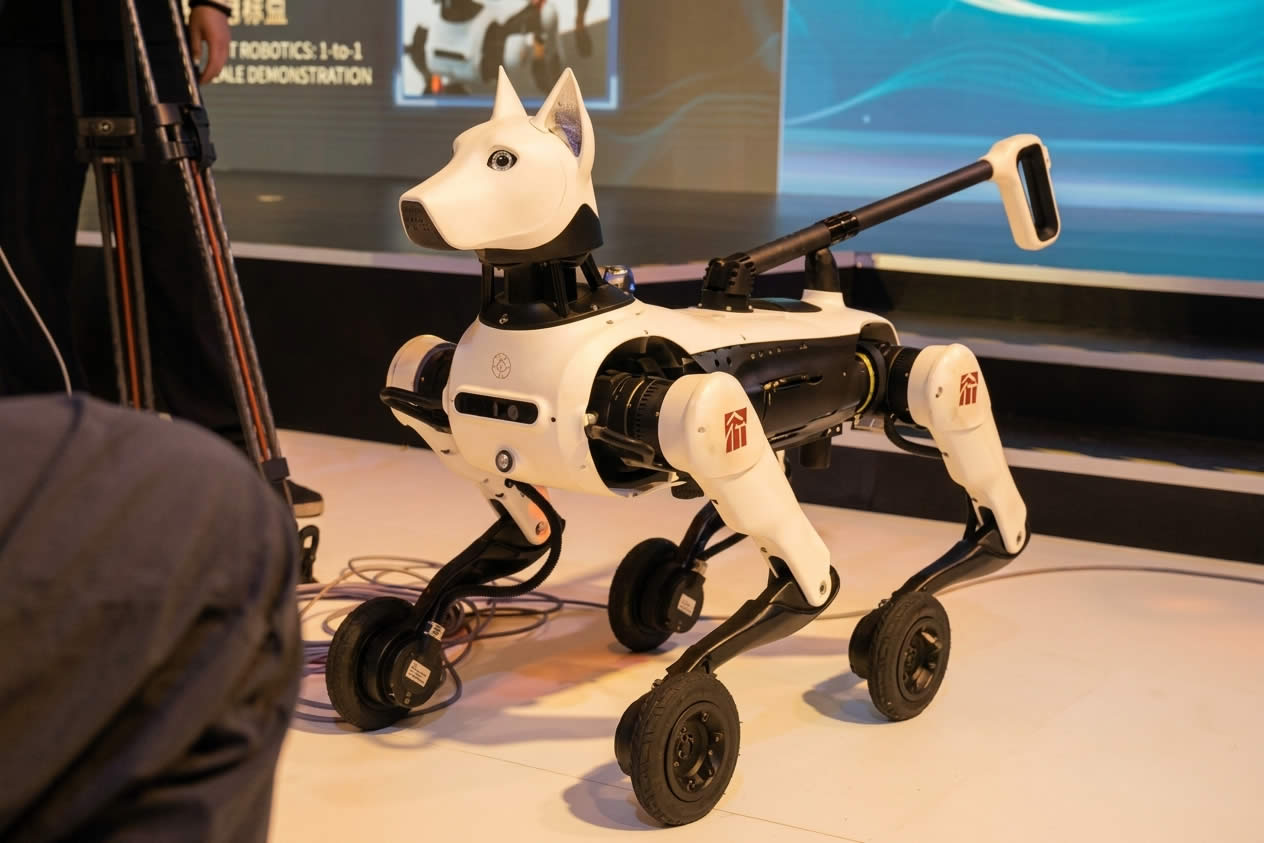
The robot is called Xiaoyuan. Its developer, Hangzhou Yuanshan Zhixing Technology, is a technology brand under Hangzhou Zhiyuan Research Institute, which is affiliated with China South Industries Group Corporation. The institute describes Xiaoyuan as the world’s first wheel-legged guide robot.
The scale of the problem is clear. More than 17 million people in China live with visual impairments, while the country has only around 400 trained guide dogs, according to figures cited by Chinese media reports. Training and placing a guide dog can take around two years, adding to the difficulty of meeting demand. The shortage means many visually impaired people have limited access to guide dogs, with some facing long waits for placement.
Xiaoyuan is designed to fill that gap.
A hybrid design for flat roads and stairs
The robot’s core feature is a hybrid wheeled-legged design. On flat ground, Xiaoyuan moves on wheels. The movement is quiet, which matters for users who rely on hearing to understand their surroundings. When the robot encounters steps, stairs, or curbs, it switches to legged mode and climbs.
Low-hanging branches and horizontal scaffolding on construction sites can be difficult to detect with a traditional white cane. Xiaoyuan is designed to identify such hazards early and slow down or steer around them.
According to the developer, the robot supports autonomous navigation in indoor and outdoor environments, including route planning, autonomous following, obstacle avoidance and dynamic adjustment. The developer says Xiaoyuan’s outdoor positioning error is below 30 centimeters, while its obstacle-avoidance success rate is at least 99 percent indoors and 96 percent outdoors.
The company says the robot was refined through extended testing with people with visual impairments, with adjustments made to leash tension, obstacle feedback and interaction logic.
From defense research to assistive mobility
Hangzhou Zhiyuan Research Institute was established in 2022 under China South Industries Group Corporation. It operates with the support of a national key laboratory, and its stated focus includes applying advanced sensing, control and navigation technologies to civilian products.
Xiaoyuan first appeared publicly at the 2026 World Robot Conference. A China Daily report on August 20 noted that the robot had already reached cooperation agreements with multiple local disabled persons’ federations and conducted pilot deployments in subway stations and shopping malls. The September 4 event marked Xiaoyuan’s official launch.
Hangzhou also provided a regulatory pathway. In May 2026, the city put into effect the Regulations of Hangzhou Municipality on Promoting the Development of the Embodied Intelligent Robot Industry, which established a fast-track mechanism for piloting and using new robotics products in real-world settings. Xihu District opened public roads, commercial areas, and industrial parks for real-world testing. Experience from those urban trials helped inform the development of Xiaoyuan’s navigation and obstacle-avoidance systems.
From waiting years to picking up a device
Yuanshan Zhixing has not disclosed pricing or initial delivery volumes. But the robot points to a different way of tackling a problem that has long been difficult to solve at scale: the shortage of trained guide dogs in China.
Unlike a guide dog, which requires years of training and individual placement, a robot guide could potentially be manufactured and deployed at scale. Whether Xiaoyuan can deliver on that promise will depend on its price, reliability and performance in everyday environments.
For the people it is designed to help, the real test will not be the robot’s performance on a convention floor, but whether it can make everyday travel easier and more independent.
