


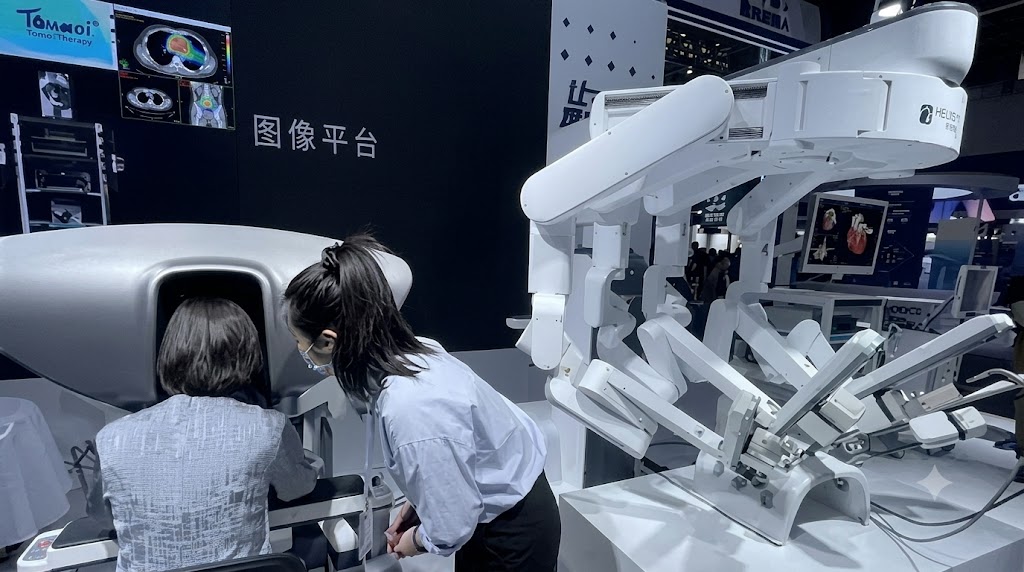
Chengdu/Bangkok, — A Thai surgeon sitting in Chengdu has removed a patient’s gallbladder in Bangkok using a Chinese-developed robotic system, marking the first cross-border telesurgery between China and Thailand and opening a new channel for medical cooperation.
Why Remote Surgery Was Needed
The patient, a 51-year-old Thai woman, had been suffering from persistent right upper abdominal pain caused by gallstones. Her case was complicated by hypertension, diabetes, and high cholesterol, which made conventional laparoscopic surgery riskier. Flying a Chinese specialist to Thailand would have been time-consuming, expensive, and might have delayed treatment.
At the same time, West China Hospital of Sichuan University and Thailand’s Nopparat Rajathanee Hospital were deepening their collaboration under the Belt and Road medical cooperation framework. After a joint assessment, the two teams chose the Toumai® laparoscopic surgical robot for a remote procedure, sparing the patient a cross-border trip while allowing specialists from both countries to work together.
The Toumai® system, developed by Shanghai MicroPort MedBot Group, had already received clearance from the Thai Food and Drug Administration for remote surgery. It is currently used by four top-tier Thai hospitals, and nearly 50 Thai surgeons have completed training and obtained operating permits in China — a foundation that made this transnational operation possible.
A 2,000-Kilometer Procedure with No Noticeable Delay
On April 21, teams on both sides went into the operating phase. The entire procedure ran over standard 5G networks, without relying on dedicated lines, keeping the setup flexible and cost-effective.
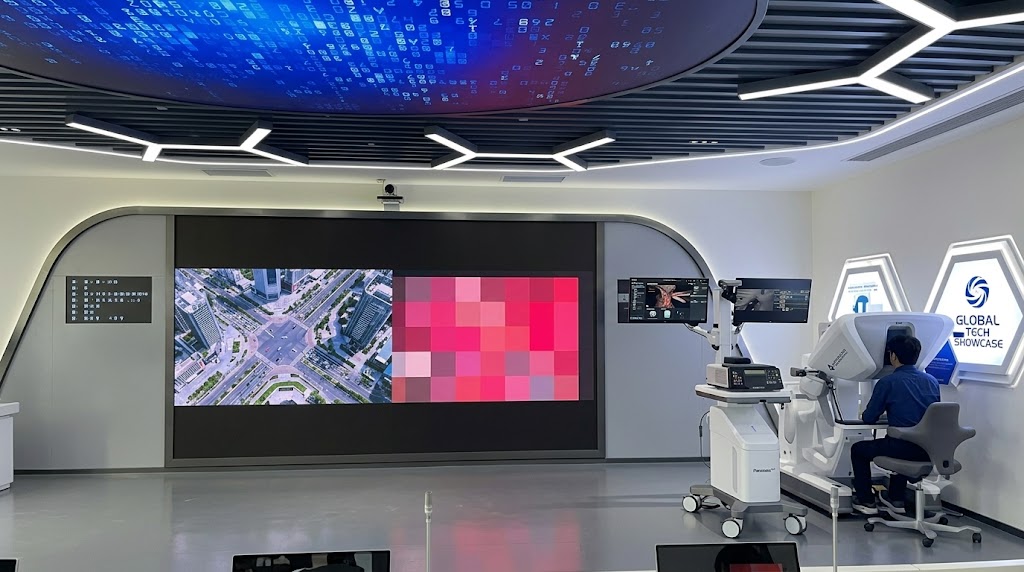
At the surgeon console in Chengdu: Dr. Pattharaporn Phetphosri, a Thai surgeon who had finished her training at West China Hospital and passed the qualification assessment, sat at the Toumai® console. The 4K 3D display showed a real-time, 10x magnified view from the operating room in Bangkok. She could see gallstone positions and surrounding blood vessels as clearly as if she were standing beside the patient.
Inside the operating room in Bangkok: The medical team at Nopparat Rajathanee Hospital completed disinfection, trocar placement, and pneumoperitoneum while staying in constant communication with the console in Chengdu, ready to respond to every instruction.
Once surgery began, Dr. Phetphosri guided the robot’s four arms using master controls. The mechanical arms moved with a precision of 0.1 millimeters, dissecting the gallbladder, clearing the stones, and removing the organ with no discernible tremor. Thanks to the stable 5G connection, commands were transmitted in milliseconds — no lag, no stuttering. The patient’s vital signs remained steady, and blood loss was minimal.
The operation took about 1.5 hours, roughly 30 minutes shorter than a typical laparoscopic gallbladder removal. The patient was able to eat and get out of bed the next day, went home after three days without any surgical complications, and achieved the expected treatment outcome.
“I felt virtually no delay during the whole procedure. The visual field the robot provided was exactly what I would see if I were in the operating room myself — the operation was smooth and precise. This gives us a lot of confidence in telesurgery,” Dr. Phetphosri said.
The Technology and the Partnership Behind It
The procedure was not a one-off experiment. It reflects years of China–Thailand medical collaboration and the maturity of domestically developed surgical robotics.
On the technical side, the Toumai® robot is a four-arm laparoscopic system with 7-degree-of-freedom arms, millisecond-level response, and 4K 3D high-definition vision. It is designed to cover a wide range of specialties and procedures. Crucially, it supports multiple communication modes — dedicated lines, 5G, broadband, and satellite — making it the first and only remote surgical system in the world with that capability. The system has obtained regulatory approvals in 12 countries and regions, with more than 800 remote surgeries completed globally, accounting for over half of all telesurgeries worldwide.
On the cooperation side, the operation is a direct result of West China Hospital’s Belt and Road international training program in minimally invasive liver surgery. The hospital has long worked with ASEAN countries on medical technology, personnel training, and telemedicine. It had already trained multiple Thai minimally invasive surgeons, and this remote surgery completed the “training plus practice” loop, pushing cross-border sharing of high-quality medical resources from concept to reality.
Dr. Nattapong Wongwiwat, Director-General of the Department of Medical Services at Thailand’s Ministry of Public Health, was at the Bangkok operating room to observe the milestone. He said the success relied on close teamwork between the two countries’ medical personnel, and that telesurgery robots could help narrow gaps in healthcare access, especially for patients in remote parts of Thailand.
Thailand’s Public Health Minister Pattana Promphat, speaking via video, called the surgery a model case. “By using telesurgery to treat a common disease like gallstones through Thai–Chinese cooperation, we have an opportunity to raise the standard of care in Thailand to an international level and create a valuable reference for the future of remote robotic surgery in the country,” he said.
What It Means for the Industry
The first China–Thailand remote robotic surgery is more than a bilateral breakthrough. It signals that Chinese-made surgical robots are ready for cross-border clinical use and opens a fresh path for high-end Chinese medical technology to go global.
In Southeast Asia, where medical resources are unevenly distributed, patients with complex conditions often face high costs, long waiting times, and cumbersome logistics when seeking care abroad. With the Toumai® system in place and remote surgery capability proven, patients in Thailand and neighboring countries can potentially access advanced minimally invasive treatment without leaving home, easing the resource imbalance.
For China’s medical robotics sector, the operation shows that the Toumai® system can perform reliably in a complex international environment, challenges the long-standing dominance of foreign surgical robots in telesurgery, and highlights China’s growing innovation capacity. Plans are already underway to connect Bangkok with hospitals in Chiang Mai and Songkhla as Toumai® robots are deployed in northern and southern Thailand, gradually building a remote surgical network across Southeast Asia.
West China Hospital intends to expand the range of conditions and settings for remote robotic surgery. It plans to establish a telesurgery link with Egypt in June, and several European countries including France have expressed interest in sending surgeons to Chengdu for training and to trial the Toumai® system. Step by step, Chinese surgical robots are moving onto the global stage, contributing to both medical equity and technological progress.
References
- Xinhua, “First remote robotic surgery between China and Thailand successfully completed,” April 22, 2026. Read Source
- West China Hospital, “West China Hospital completes first China–Thailand remote robotic surgery,” April 22, 2026. Read Source
- MicroPort MedBot, “Thailand’s first remote surgery completed — Southeast Asia enters the era of commercial telesurgery,” April 24, 2026. Read Source
- China.org.cn, “Asia-Pacific Community: When surgery defies distance: Landmark remote robotic operation deepens China-Thailand medical ties,” April 22, 2026. Read Source
- Khaosod English, “Thailand performs first cross-border robotic surgery,” April 21, 2026. Read Source
