


If there was one defining trend at previous editions of the World Artificial Intelligence Conference (WAIC 2026), it was the dominance of foundation models. Over the past few years, exhibitors largely focused on computing infrastructure, AI chips, large language models, and generative AI software. Hardware often played a supporting role.
That changed at WAIC 2026.
This year’s conference marks a noticeable shift in where China’s AI industry is placing its attention. Robots—particularly embodied AI and humanoid robots—have emerged as the biggest attraction across the exhibition halls, reflecting how the conversation is moving beyond AI models and toward physical intelligence.
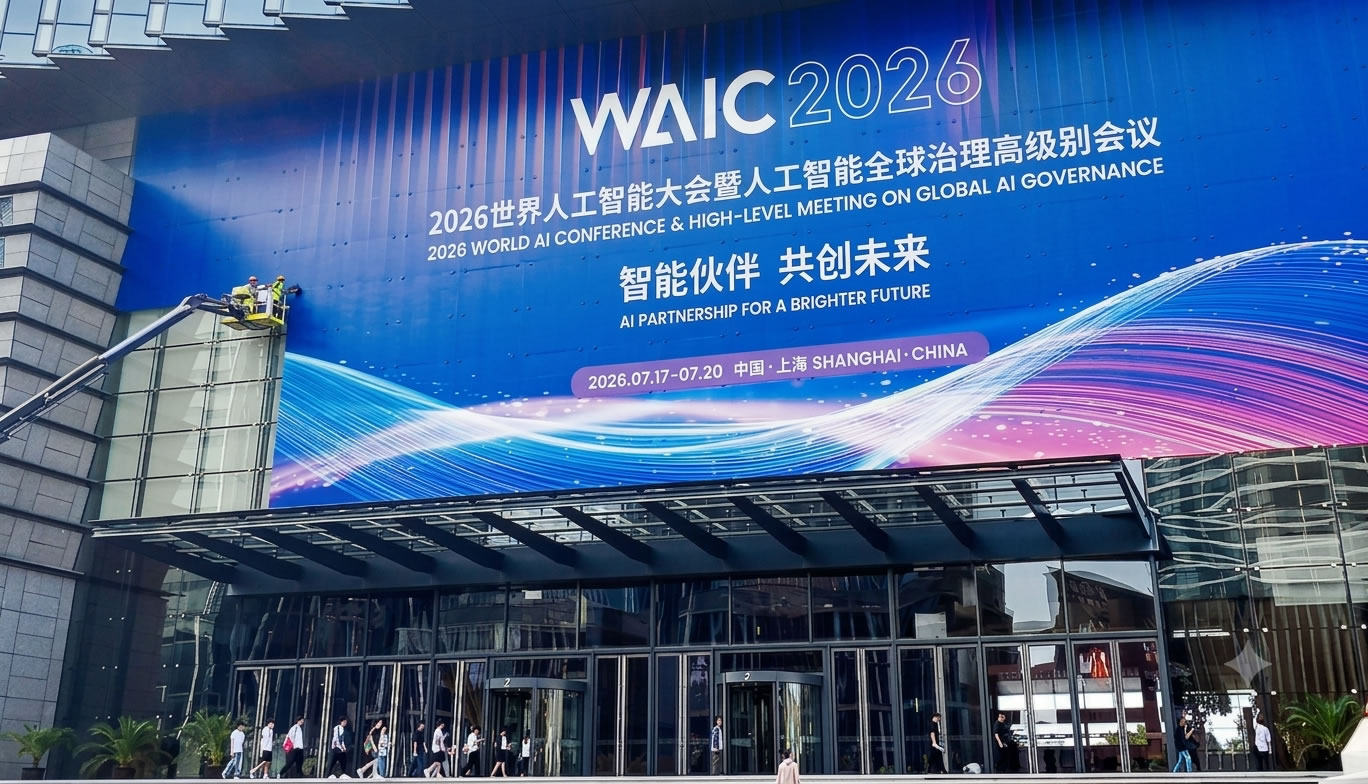
The 2026 World Artificial Intelligence Conference officially opened Friday in Shanghai under the theme “Intelligent Companions, Shared Future.” Running through July 20, this year’s event is the largest in the conference’s history. For the first time, WAIC spans three venues and four exhibition halls, covering more than 100,000 square meters. More than 1,100 companies are exhibiting, with organizers announcing over 300 global product debuts during the event.
Yet the biggest story is not the scale of the exhibition. It’s the changing role of robotics. What was once presented as just another AI application has become one of the conference’s primary industry showcases.
Humanoid Robots Move Into the Spotlight
WAIC 2026 has introduced a dedicated robotics exhibition hall (H3), bringing together nearly every major segment of China’s embodied AI supply chain. According to official figures, more than 200 robotics companies are exhibiting in the hall, while more than 300 robots are performing live demonstrations throughout the event.
The exhibition spans virtually the entire robotics ecosystem, including:
- Humanoid robots
- Mobile robots
- Actuators
- Dexterous hands
- Precision joints
- Electric motors
- Harmonic reducers
- Sensors
- AI software and robot operating systems
Unlike previous years, when many demonstrations focused on carefully choreographed proof-of-concept performances lasting only a few minutes, exhibitors this year are placing greater emphasis on sustained, practical operation. Across the exhibition floor, robots are carrying out continuous tasks including visitor reception, material handling, industrial assembly, facility inspection, and even artistic demonstrations such as painting. For the robotics industry, this represents an important shift. The question is no longer whether a robot can perform a particular movement. Increasingly, the focus is whether robots can perform useful work consistently in real-world environments.
Mass Production Becomes the Industry’s New Focus
Mass production is also emerging as a recurring theme throughout WAIC 2026. For years, many humanoid robots remained engineering prototypes or technology demonstrators. This year, however, several manufacturers are showcasing products designed for commercial deployment rather than laboratory testing.
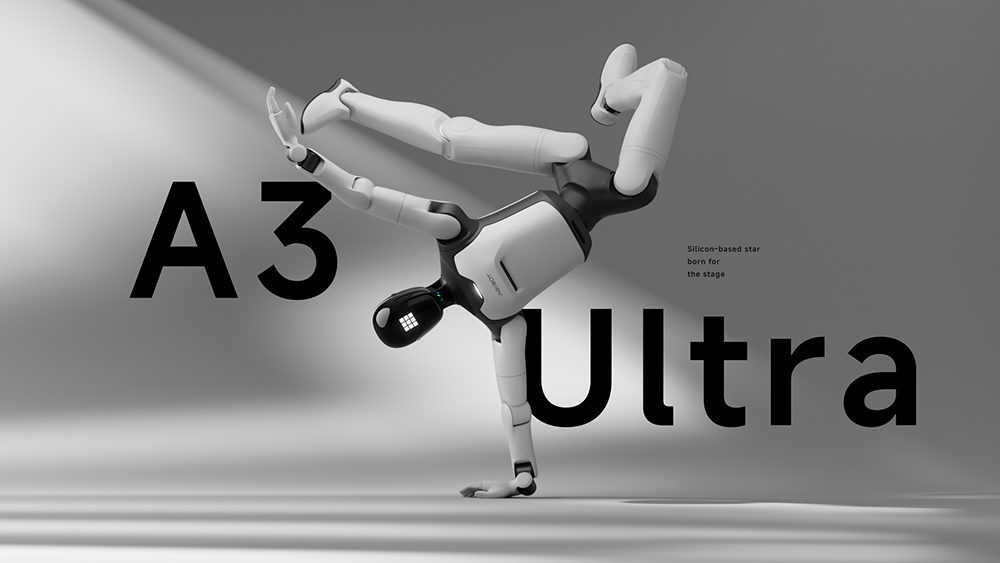
One of the most closely watched exhibits comes from AgiBot, which unveiled its Expedition A3 Ultra humanoid robot. Designed for commercial applications, the full-size humanoid features a 700 TOPS onboard computing platform and is intended for tasks including reception services, facility inspection, and a range of industrial and commercial operations.
Unitree Robotics is showcasing its latest G1 humanoid robot, the Go2 quadruped, and the GD01 rideable transforming robot platform. The company is also demonstrating a robotic manufacturing scenario that illustrates how robots could eventually participate in the production of other robots, highlighting the concept of an increasingly automated manufacturing ecosystem.
JAKA Robotics, for its part, is presenting a broad portfolio that spans wheeled robots, dual-arm robots, humanoid systems, and embodied AI platforms for industrial automation. Live demonstrations focus on factory applications such as material transport, assembly, and automated screw fastening. Together, these exhibits suggest that competition in the humanoid robotics sector is beginning to move beyond hardware specifications. Commercial deployment, operational reliability, and real-world productivity are becoming the industry’s new benchmarks.
Dexterous Hands Become One of Robotics’ Hottest Growth Areas
Beyond the full-body robots, one component is drawing just as much attention from engineers and investors alike: the dexterous hand. Manipulation has long been considered one of the biggest technical challenges facing humanoid robots. Walking has become increasingly reliable, but performing precise, human-like tasks with the hands remains far more difficult.
At WAIC 2026, a number of companies are showcasing next-generation dexterous hands capable of multi-finger grasping, compliant control, and fine manipulation. Live demonstrations include delicate tasks such as inflating and tying balloons, handling tools, and manipulating small objects—activities that demand a much higher level of coordination than simple pick-and-place operations. Advances in AI vision, force sensing, and motion control are helping make these systems more capable than previous generations. For many industry observers, dexterous hands have become one of the fastest-growing segments of the robotics supply chain, and one where Chinese manufacturers are making particularly rapid progress.
Manufacturing Remains the Fastest Path to Commercial Adoption
Although home robots continue to generate public interest, the exhibition floor tells a different story about where commercial opportunities exist today. Industrial applications remain the primary focus. Many of the live demonstrations revolve around manufacturing environments, where robots are performing practical, repeatable tasks rather than technology showcases.
Typical applications on display include:
- Automated material handling
- Intralogistics and parts delivery
- Motor assembly
- Factory inspection
- Flexible manufacturing
- Multi-robot collaboration
Compared with previous years, exhibitors are placing greater emphasis on continuous operation and workflow integration instead of isolated demonstrations. For robotics companies, manufacturing continues to offer the most mature business model, the richest source of operational data, and the clearest path toward large-scale deployment.
AI Agents Begin Moving Beyond the Chatbot
Hardware is only part of the story at WAIC 2026. Alongside the robotics hardware, AI Agents are taking on a far more active role in robot control and decision-making. While last year’s discussions largely centered on conversational AI, this year’s demonstrations show AI models moving beyond simple voice responses. Robots are beginning to understand natural language instructions, break complex objectives into executable tasks, and coordinate with factory management systems, logistics platforms, and digital twin environments. The result is a significant shift in how foundation models are being applied. Rather than serving as conversational interfaces, they are increasingly becoming the cognitive layer that enables robots to plan, reason, and execute real-world work.
A Clear Signal for the Robotics Industry
Perhaps the clearest signal from this year’s robotics exhibits is not about any single machine, but a broader shift in emphasis. In previous years, companies primarily sought to show that a robot could complete a single technical task. This year, the focus is on something much more practical—how robots can operate continuously, integrate into factories, support commercial deployments, and fit into existing industrial workflows.
That change may ultimately prove more important than the launch of any individual robot. It signals that China’s robotics industry is entering a new stage, where attention is moving from technical breakthroughs toward scalable commercial adoption. As more manufacturers expand production capacity, strengthen domestic supply chains, and deploy robots across manufacturing, logistics, and service industries, embodied AI is steadily transitioning from research laboratories into real industrial environments. WAIC 2026 offers one of the clearest snapshots yet of that transition in progress.
