

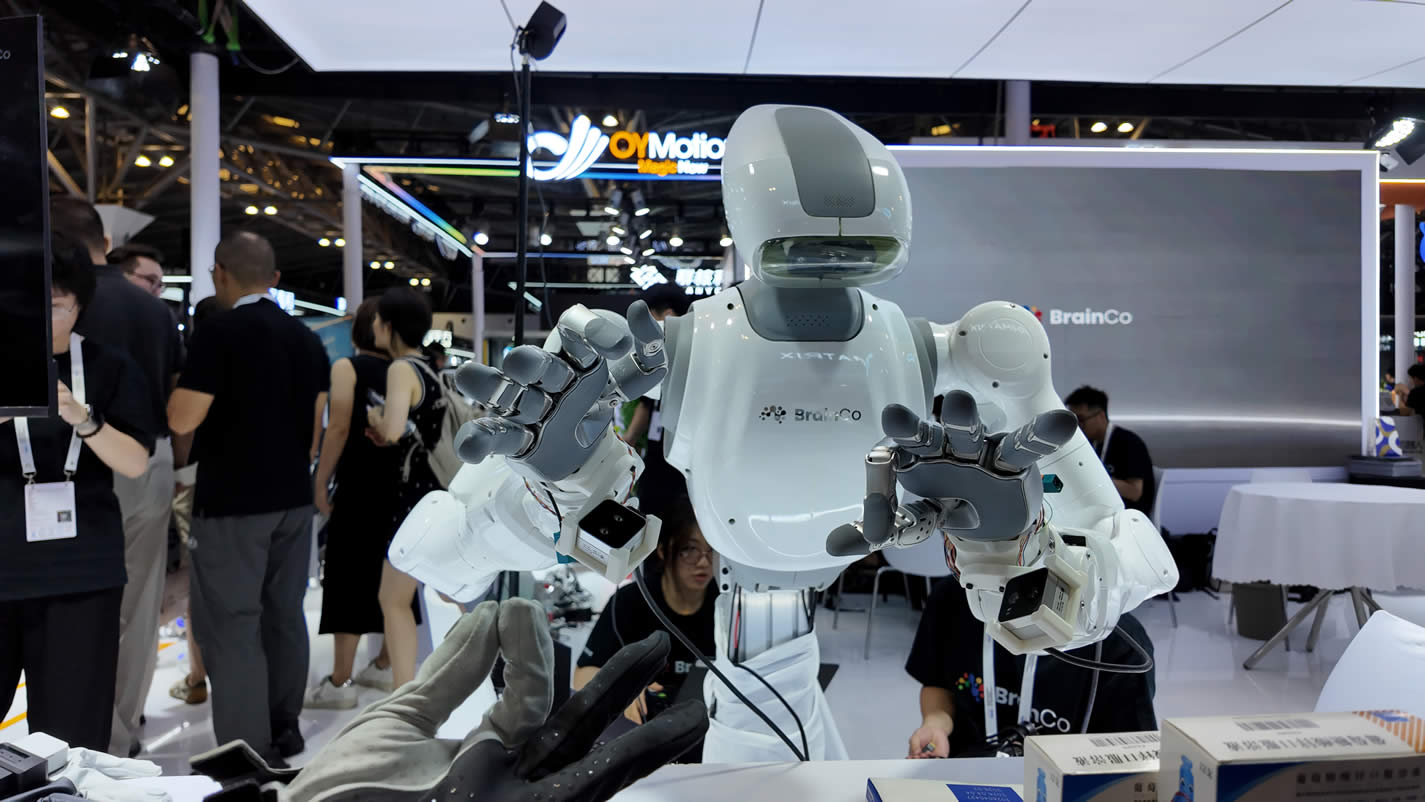
China’s humanoid robotics industry is entering a new phase, according to fresh data released by the Ministry of Industry and Information Technology (MIIT) on July 20. The country has developed more than 400 complete humanoid robot models, representing over half of the global total. Meanwhile, Chinese-made quadruped robots account for nearly 70% of worldwide sales, making China the dominant supplier in that niche segment.
The numbers tell a bigger story than just product counts. Compared with the past few years, when competition centered on tech demos and lab validation, China’s robotics sector has now built a full industrial ecosystem—covering R&D, manufacturing, supply chains, and real-world deployment.
From “Product Count” to “Industrial Scale”
For years, the global humanoid robot conversation was dominated by a handful of high-profile launches—Tesla’s Optimus, Figure AI, Agility Robotics’ Digit, and a few others. But China is following a different path.
Today, over 400 distinct humanoid models are available across the country, targeting applications ranging from industrial manufacturing and logistics to research, education, commercial services, and even home companionship. Companies like Unitree Robotics (with its H1 and G1 models), Agibot (with its Expedition series), Fourier Intelligence, Leju, and UBTECH have all rolled out mass-production or near-production platforms.
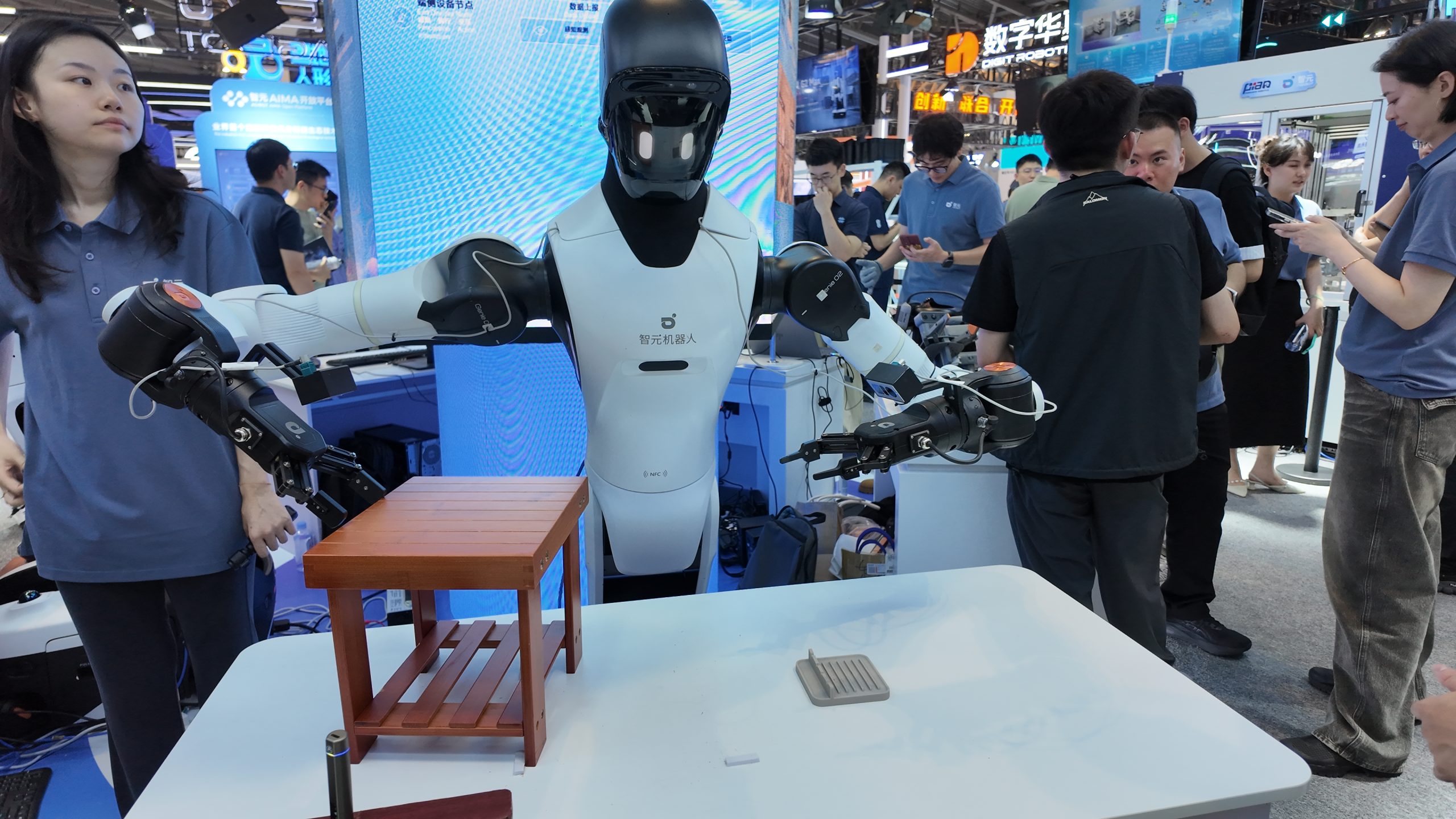
For overseas markets, this means the competitive battleground is no longer about who unveils a robot first. It’s about who can integrate supply chains faster, drive down manufacturing costs, and deliver reliable units at scale.
Over the past year, at international shows such as the World AI Conference in Shanghai, the World Robot Conference in Beijing, and Hannover Messe in Germany, more Chinese companies have been showcasing actual use cases—not just robots walking, dancing, or performing simple interactions. Robots are now entering factories, warehouses, inspection routes, power grids, and logistics operations. That shift matters more than the sheer number of models.
Quadruped Robots: China’s First Commercial Success Story
If humanoids are still in early industrialization, quadruped robots have become one of the most mature commercial products for Chinese robotics firms. According to the MIIT, domestic quadruped robots now account for nearly 70% of global sales.
Unitree has been one of the most active players worldwide, exporting to multiple countries and finding use in research, education, public safety, energy inspection, and consumer markets. Meanwhile, DEEP Robotics, Xiaomi Robotics, and others are expanding their lines, accumulating commercial cases in industrial inspection, grid maintenance, mining, and firefighting.
Quadrupeds enjoy more mature motion-control tech, lower costs, and clearer demand signals than bipedal counterparts, making them a primary revenue driver for many companies. Industry insiders often compare the trajectory to that of early drones—starting in professional sectors and gradually moving into consumer markets.
AI Infrastructure Is Accelerating the Industry
Robotics isn’t just about mechanical engineering. China’s sustained investment in AI computing power, communications networks, and edge devices is increasingly acting as the underlying infrastructure for robot development.
By the end of June, the country had built 5.102 million 5G base stations, with 5G-Advanced commercial deployment underway, 6GHz band trials already launched, and 6G R&D entering its second testing phase. Separately, the MIIT reports that AI adoption among large-scale industrial enterprises has surpassed 30%, and open-source large models have been downloaded over 10 billion times.
These figures don’t by themselves guarantee rapid robot adoption, but they do form the digital backbone that robots increasingly rely on. As more robots depend on vision models, voice models, and multimodal AI to handle complex tasks, local compute, cloud inference, and high-speed networking become critical. Whereas older robots ran on preset routines, future ones will compete on continual learning and autonomous decision-making.
Manufacturing Muscle Remains China’s Biggest Advantage
For the global robotics industry, China’s real edge isn’t any single technology—it’s the entire manufacturing apparatus. The MIIT noted that in the first half of this year, the value-added output of large-scale industrial enterprises grew 5.4% year-on-year, with 32 out of 41 industrial categories posting gains. In the first five months, the operating profit margin for such enterprises reached 5.66%, the highest since 2024.
In humanoid robotics, that manufacturing might translates to faster domestic substitution of core components, quicker supply-chain response times, and shorter product iteration cycles. China now has a complete chain covering reducers, servo motors, torque motors, sensors, controllers, batteries, and precision machining, allowing many robotics firms to develop products directly on top of a proven industrial base. This cluster effect is also why more international robotics companies are choosing to partner with Chinese supply chains.
The Next Phase: Competition Will Center on Delivery
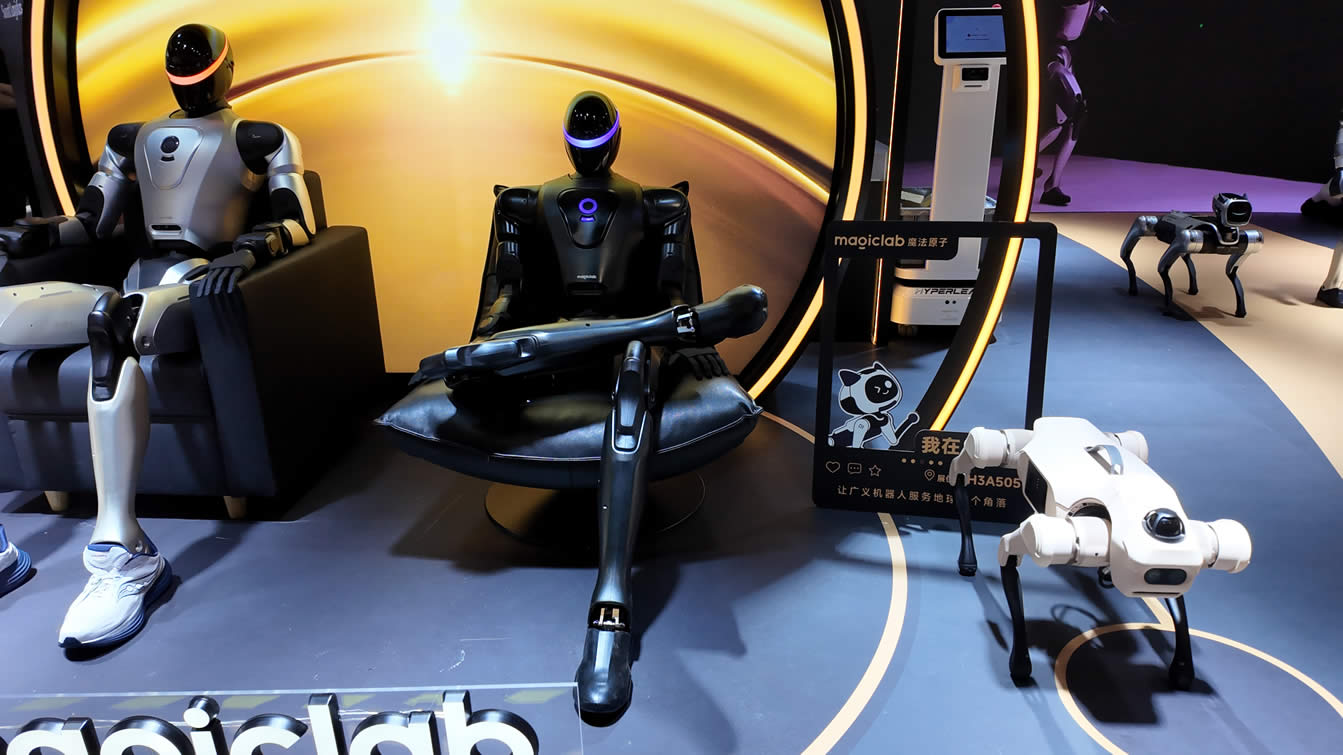
For the past few years, the humanoid robotics conversation revolved around technological breakthroughs. Now the industry is asking a different question: who can actually deliver?
From the World AI Conference to regional robot expos, more companies are announcing production schedules, order books, and commercial clients—not just showing off lab prototypes. For the global robotics sector, the metrics that will matter in the coming years are not how many new robots a company unveils, but how many it can consistently ship, and whether those machines genuinely boost productivity.
The MIIT’s latest figures provide a fresh lens: China has the largest number of humanoid robot models in the world and the largest robotics manufacturing system. The next stage will move from product launches to volume production, and from technical validation to commercial returns. For the industry at large, that may be the real inflection point.
