


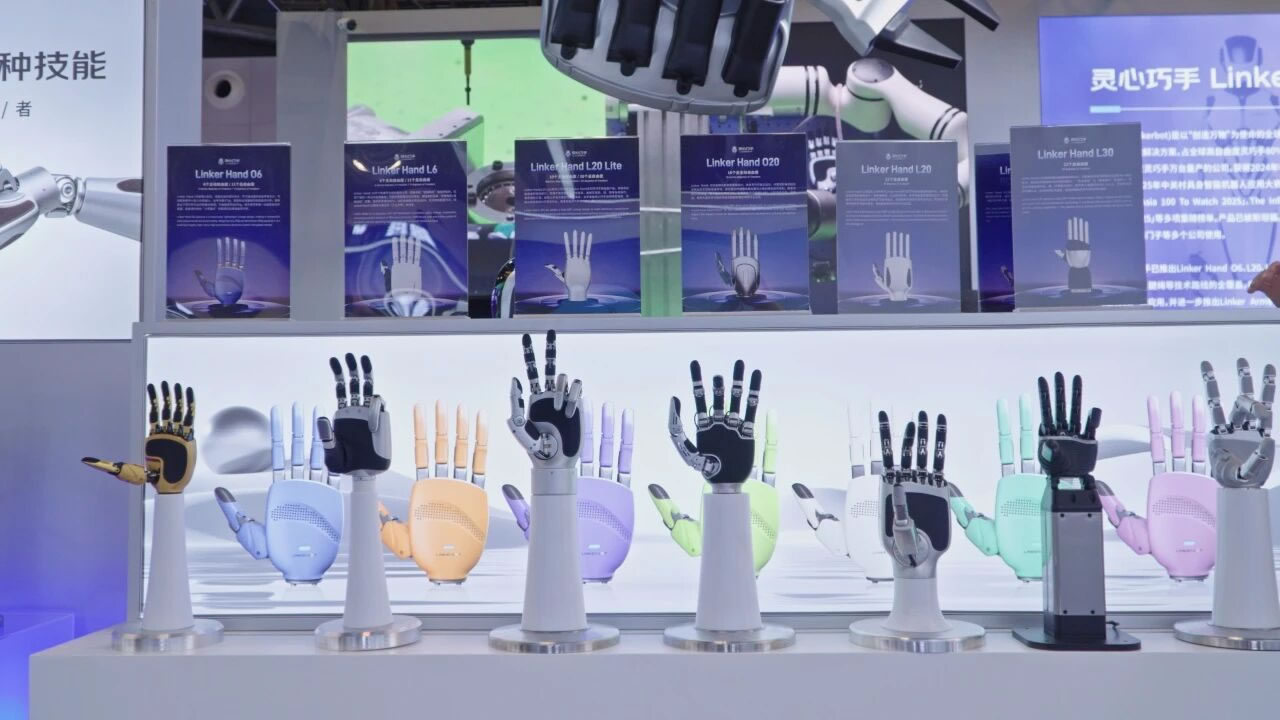
At WAIC 2026, the biggest attraction was not just the humanoid robots on display, but the technologies and suppliers working behind them. Inside Hall H3, humanoid robots of various designs were demonstrating their capabilities. Some were bipedal and walking steadily, others were rolling on wheels, while dexterous hands grabbed objects on display stands. Visitors from sectors ranging from manufacturing to healthcare to investment queued up enthusiastically to shake hands and test the robots’ tactile response.
This year, embodied AI was elevated to a core track alongside intelligent computing at WAIC. The surge in foot traffic at H3 was a telling sign—the industry is rapidly moving from concept to commercial reality. But a more significant structural shift was unfolding beneath the surface. The component zone drew crowds just as dense as those around the complete robot units.
Key components are no longer hidden in the procurement lists of manufacturers; they are taking center stage. They are now defining product performance, dictating technological roadmaps, and even speaking directly to end users. Inspire-Robots had a long queue of visitors playing rock-paper-scissors with its F1 Series dexterous hand. At the Link-Touch booth, engineers crowded around a six-axis force sensor with 0.1% FS accuracy, repeatedly testing the haptic feedback and drilling into technical details. Over at LinkerHand, a fully automated assembly line where dexterous hands assemble dexterous hands drew a flurry of camera flashes.
Consider the numbers. Joints account for nearly 60% of a humanoid robot’s total cost, making them the single most expensive component. The cost of a dexterous hand has dropped from seven figures in 2024 to the 10,000-yuan range in 2026—a decline of over 90%. In the niche of six-axis force/torque sensors for humanoid robots, domestic Chinese players have already captured over 70% of the market. The shift suggests that the balance of power in robotics is beginning to move.
After a day of touring the floor, three distinct dynamics came into focus. They all point to the same conclusion: as humanoid robots evolve from “standing up” to “doing useful work,” the real revolution is happening in the joints, the fingertips, and the force-sensing hardware.
Dexterous hands become the first supply-chain battleground
As the primary interface between robots and the real world, the dexterous hand was the undisputed star of Hall H3. Both in terms of exhibitor count and variety, it outshone every other component category. Since early 2026, these hands have been transitioning from “lab-only” to “mass-production ready.”
Data from GGII shows that China’s dexterous hand market sold roughly 19,200 units in 2025, up 236.84% year-over-year. That figure is expected to hit 70,200 units in 2026, a 265.63% jump, with projections topping 430,000 units by 2030. Currently, the dexterous hand accounts for 17% to 18% of a humanoid robot’s total cost, making it the highest-value single component.
From Inspire-Robots’ comprehensive product matrix to RUIYAN’s budget-friendly offerings, from LinkerHand’s direct-drive approach to YQ Bionic’s high-fidelity bionic flagship, the sector is pivoting from technical demonstrations to practical applications, and from custom builds to mass manufacturing. The localization rate has surged from below 30% in 2024 to over 55%, with sub-10,000-yuan products now widely available. In the first quarter of 2026 alone, nearly 5 billion yuan was poured into the dexterous hand sector—70% more than the total for all of 2025. Investors are voting with their capital — the inflection point for scale is here.
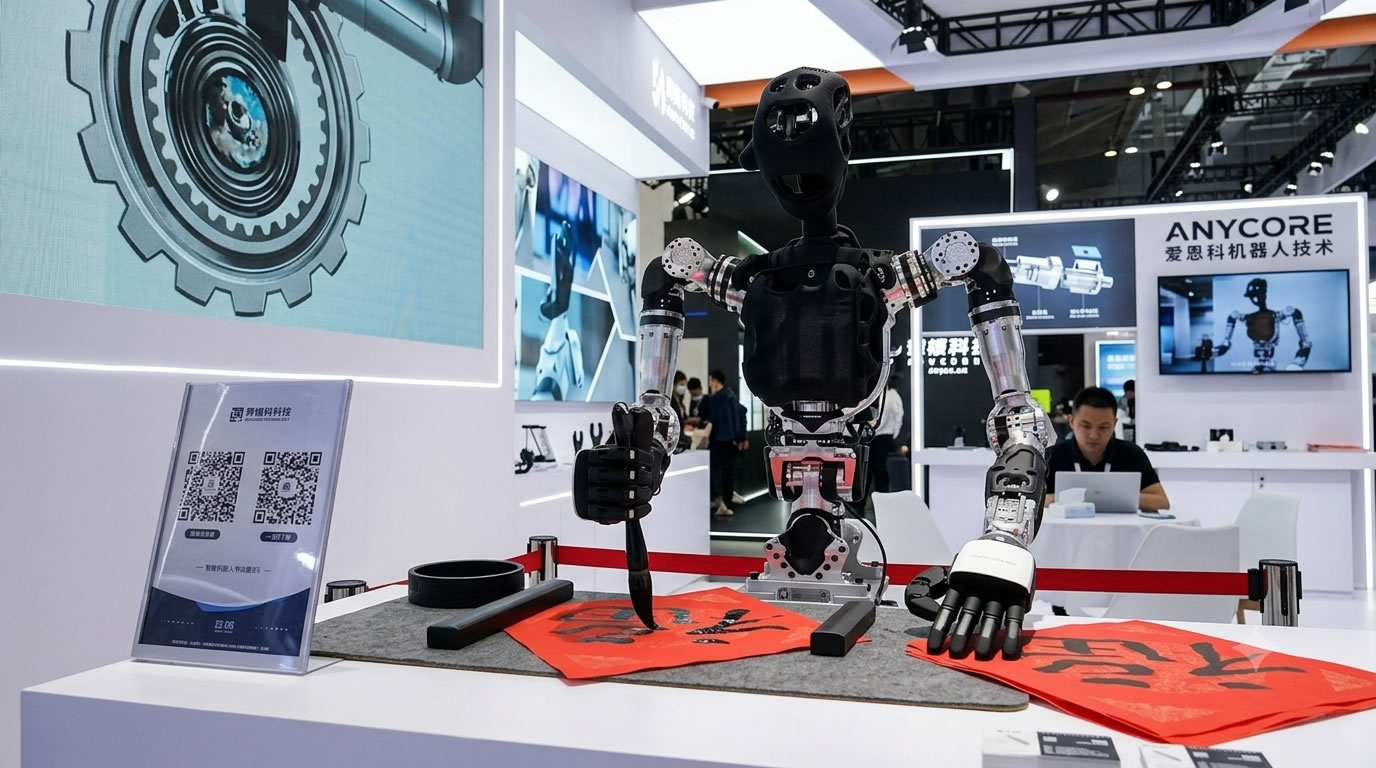
Inspire-Robots arguably had the densest demonstration schedule on the floor, covering everything from calligraphy and valve-turning to gesture following and the rock-paper-scissors game. The company presented its full six-series lineup this year. The H1 Mini targets smaller humanoid bodies with a compact, high-output design; the F1 series emphasizes rigid, all-metal durability; the G2 offers 13 active degrees of freedom for a balance of precision and power; and the E2 stands tall as a “heavy lifter” with a 15kg payload. The DFX and BFX classics address high-volume shipping and rapid response needs respectively.
Since debuting China’s first commercial dexterous hand in 2020, Inspire-Robots has spent six years building a complete product portfolio. Its “scenario-defines-product” strategy appears validated. In 2025, it became the world’s only manufacturer to ship over 10,000 units in a single year. With its new Changshu smart manufacturing base coming online just a week before WAIC, production capacity is expected to scale to over 50,000 units annually.
ChangingTek displayed its main four product lines, spanning industrial dexterous hands, collaborative hands, parallel grippers, and heavy-duty grippers. Its flagship CTDH5F80 (“Shuqiao”) is the world’s first dexterous hand to support adaptive left/right-hand switching. Using a tendon-driven transmission, the CTDH5F80 can toggle between left and right configurations in real time while maintaining independent finger control. It features a 50N maximum grip and ±0.1N force control, making it suitable for complex tasks in space maintenance and lab automation. Another offering, the CTDH3F110 (“Jiuzhang”), is a three-finger dexterous hand rarely seen on the floor, tailored for high-precision flexible assembly and precision manufacturing. Rather than chasing unlimited degrees of freedom, ChangingTek defines each product by specific operational tasks.
Meanwhile, an art-infused robot band took over the technical hall. In reality, this was LinkerHand’s dual-humanoid piano performance. The Linker Hand units ran a deep learning music emotion model, striking the keys with nuance and “breath” rather than mechanical repetition, showcasing the product’s exquisite control. At WAIC, LinkerHand showcased its entire new product series based on three technical routes—linkage, tendon, and direct drive—with the highlight being the world’s first mass-produced direct-drive dexterous hand from a fully automated line.
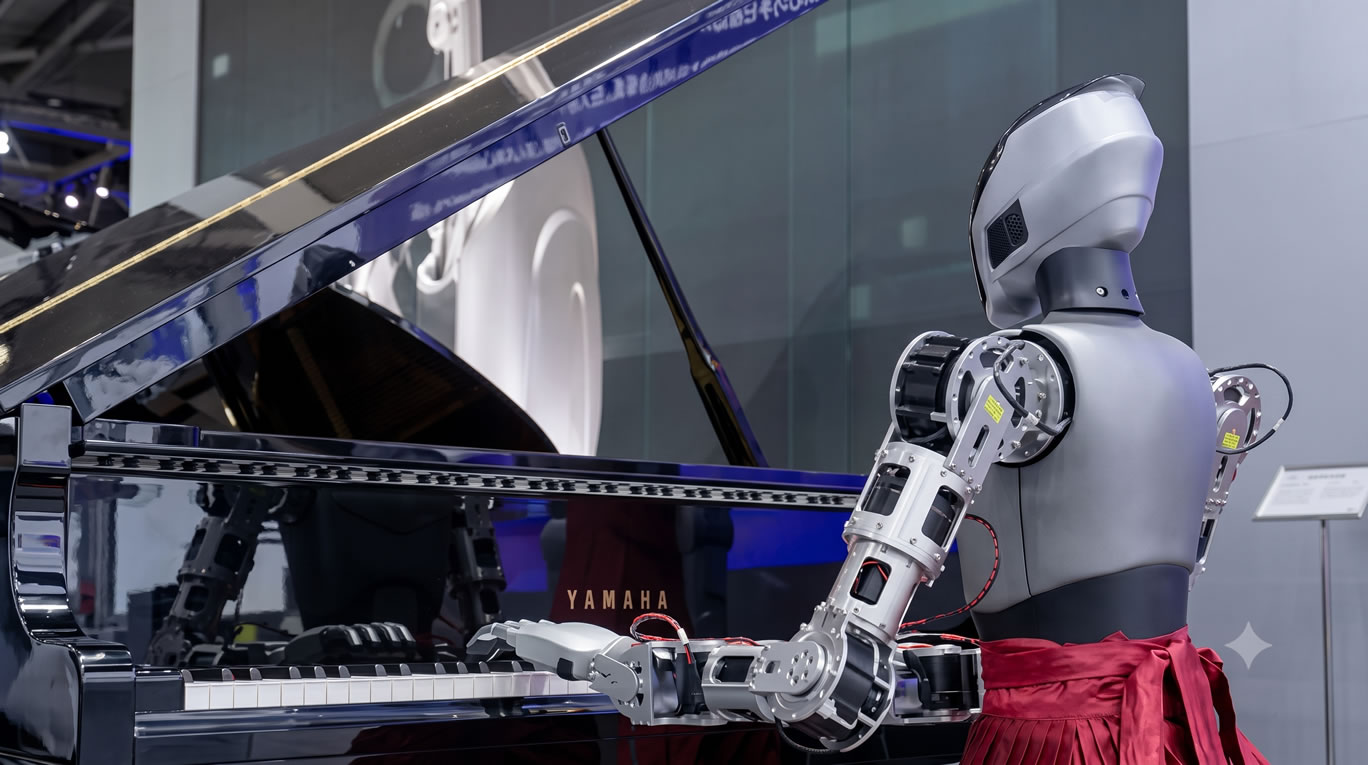
LinkerHand also teamed up with Boundless AI (Zhizai Wujie) to launch the D1 desktop dexterous robotic arm. The D1 integrates a robotic arm, a dexterous hand, and an active vision system, covering the entire pipeline from data acquisition and training to deployment for research and education. The company notes that D1 is about to enter volume production. On the other side of its booth, LinkerHand showcased its “dexterous hand assembly line” where multiple dual-arm workstations, equipped with Linker Hand, performed synchronized assembly. As embodied AI transitions from labs to industrial deployment, LinkerHand is taking an alternate path—rather than just flaunting novel individual skills, it is building the foundational capacity for robots to reproduce themselves. If this scales, it will fundamentally reshape the industry’s cost structure and expansion logic.
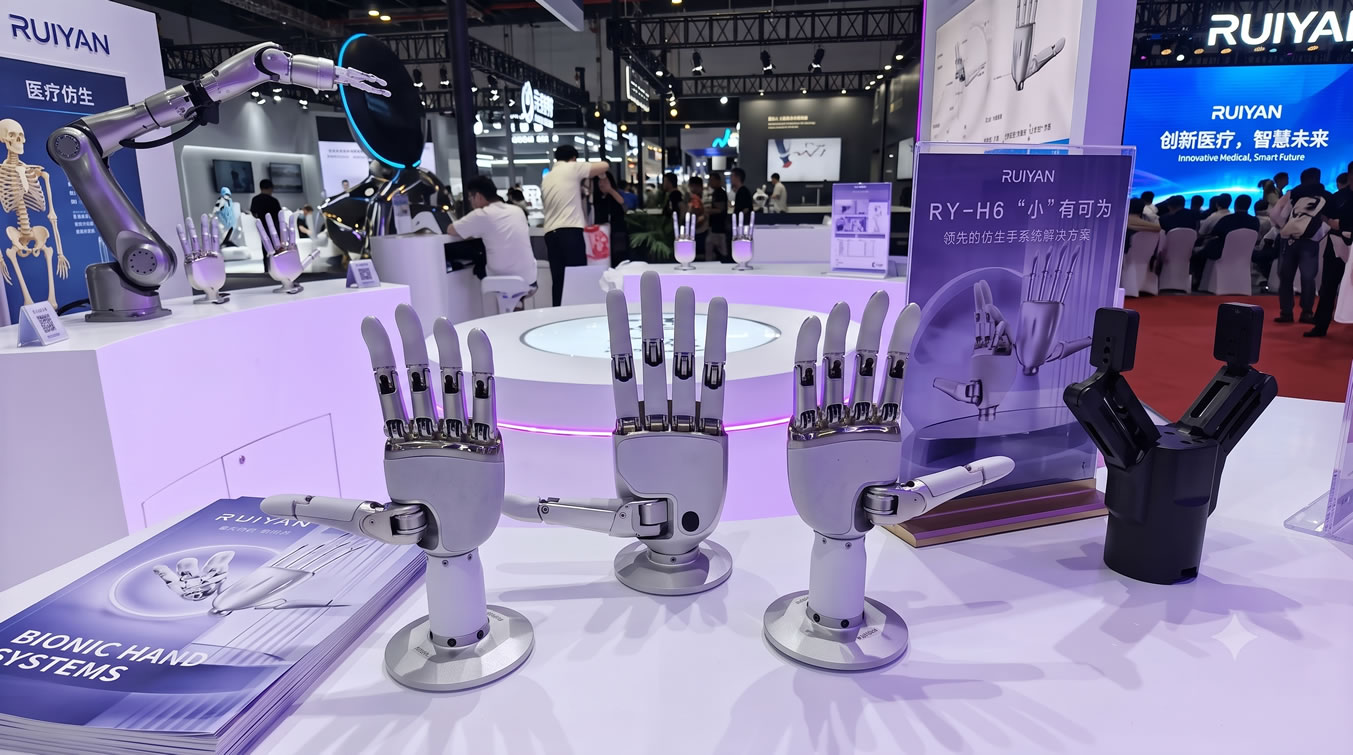
RUIYAN, which claims to be the exclusive dexterous hand supplier to dozens of domestic embodied AI firms, showcased all five of its products for the first time in a “real machine matrix.” The flagship RY-H1 boasts 16 active degrees of freedom, 21 motion joints, and 16 built-in high-speed micro hollow-cup motors. Its tactile version integrates eight three-dimensional force sensors with a minimum sensing force of ≤0.1N and resolution of 0.01N. The remaining four models form a clear tier: the RY-H2 prioritizes reliability and longevity while pushing high-quality dexterous hands into the 10,000-yuan bracket; the RY-H5 targets heavy-load handling and precision assembly; the RY-H6 focuses on extreme miniaturization (weighing just 278g and measuring 155mm, smaller than an average adult female hand); and the RY-E1 is a desktop-level interactive terminal. These five offerings span flagship performance, extreme cost-effectiveness, micro-embedding, and industrial-to-desktop applications. RUIYAN’s “saturation” strategy is based on a core belief: there is no single correct form for a dexterous hand—only the optimal solution for a specific scenario.
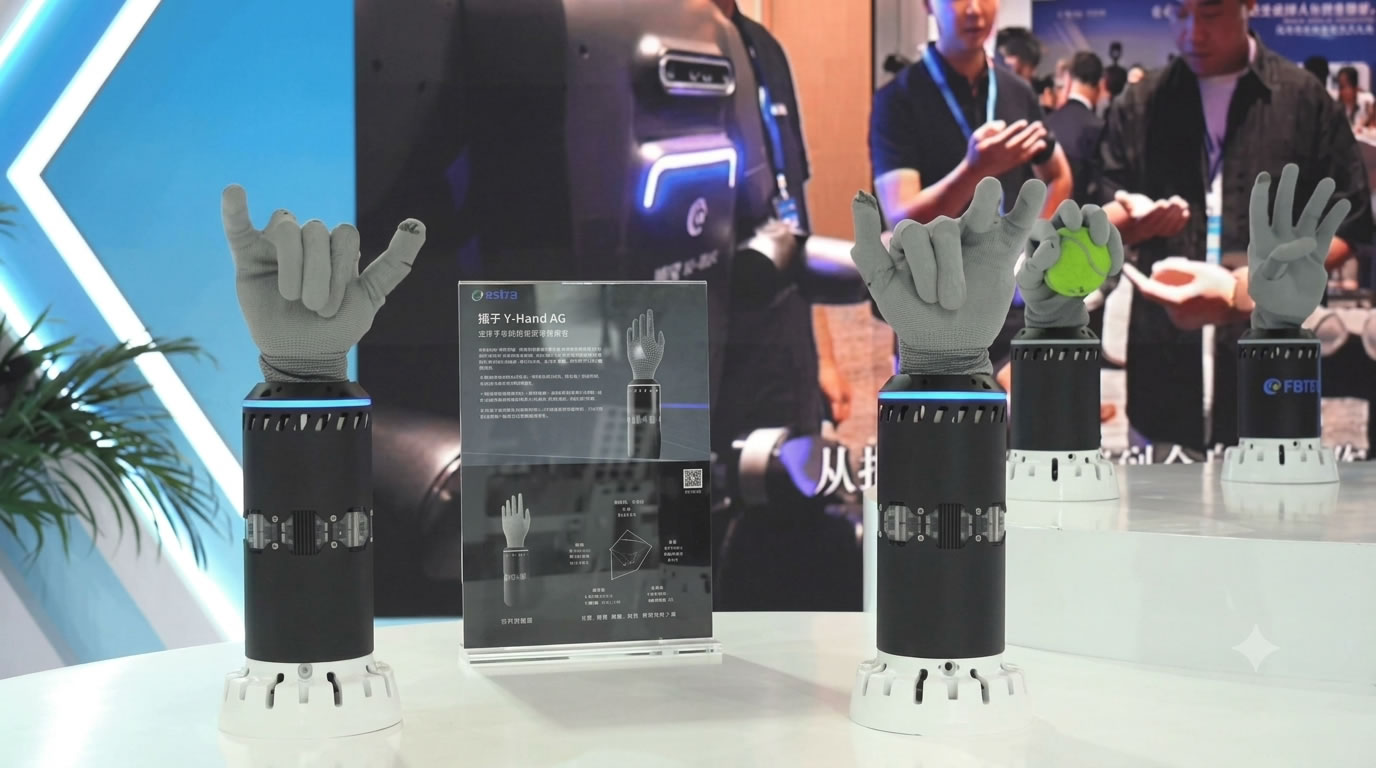
YQ Bionic(YueQuan) ran live demos across its four product lines, featuring the Y-Hand M2, X-Hand M1, YQ Motors series, and the W-Bot 2.0, a wheeled humanoid with the world’s smallest chassis footprint. The crowd favorite, Y-Hand M2, leveraged founder Professor Ren Lei’s pioneering bio-inspired tensegrity robot theory to achieve three breakthroughs. First, it abandons traditional rigid hinges to replicate the natural 6-DOF motion of biological joints, massively improving flexibility. Second, it uses self-developed magnetic integrated artificial muscles that mimic the biomechanics of human skeletal muscle, achieving a high power-to-weight ratio in a fully integrated drive-transmission-power system. Third, its bio-inspired multi-layer soft-rigid coupling design achieves system-level power transmission, energy management, and environmental interaction. With 38 degrees of freedom—the highest globally—the Y-Hand M2 can accomplish all 33 categories of human-like dexterous manipulation with a success rate above 96%. The W-Bot 2.0 is built on a compact 0.2 m² chassis, capable of lifting 20kg per arm and reaching working heights from ground to 2.2 meters. YQ Bionic is pursuing a fully self-developed path, creating everything from core components to the complete system in-house.
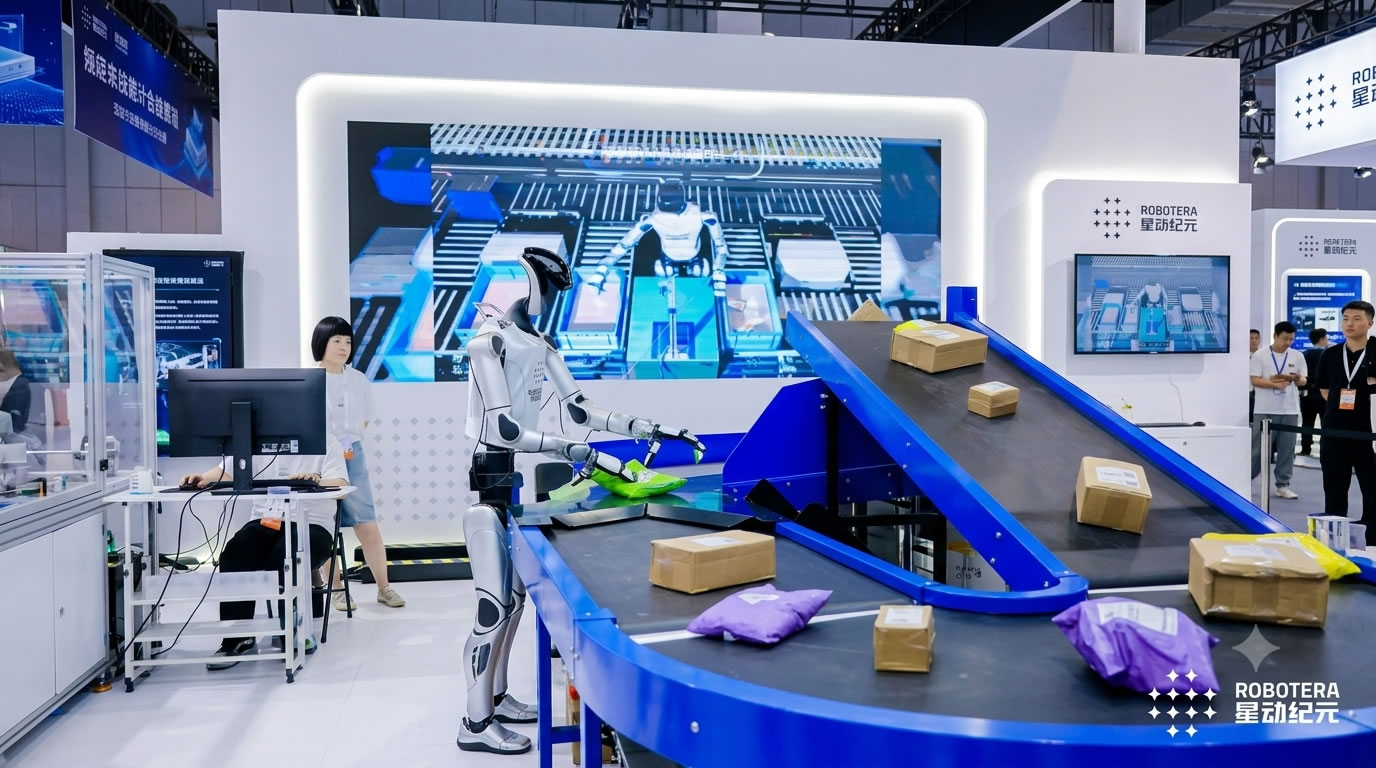
RobotEra showcased its fully direct-drive XHAND series at WAIC. The flagship XHAND 1 Pro packed 21 active DOFs, a 135° finger extension angle, a grasping diameter of over 160mm, and 18 distributed tactile sensors (0.1-25N range, 0.01N resolution), making it one of the most technically analyzed products on the floor. The entry-level XHAND 1, with 12 active DOFs and an 80N grip, can handle tasks ranging from parcel sorting to screwing. RobotEra also brought its full-size bipedal Star Era L7 and commercial service bot Star Era Q5, alongside an embodied logistics solution that the company claims is the first to achieve product-market fit. The XHAND series serves as the “execution terminal” for its self-developed ERA-42 embodied AI brain, forming a closed “brain-body-hand” loop. This integration sets RobotEra apart from pure component vendors. Under the philosophy that “hardware must be built for AI,” the design of its dexterous hand is inherently driven by the needs of its large model.
Building a prototype takes three months; scaling to a thousand or ten thousand units takes years. The sub-10,000-yuan era has opened the market door, but long-term survival hinges on reliability and delivery capacity—the unglamorous threshold that separates the gimmicky from the truly industrial.
Force sensing emerges as the missing link for deployment
As humanoid robots move from labs into factories, homes, and hospitals, a fundamental question emerges: robots now have “eyes” and a “brain,” but they lack the “sensory nerves” to feel the physical world. In this trillion-yuan industrial transformation, force sensors are shifting from supporting players to the key enablers of large-scale deployment.
This sentiment was validated repeatedly at WAIC. The booths of Link-Touch, KUNWEI, and SRI (Sunrise Instruments) drew throngs of engineers and industry insiders keenly discussing technical specs. The industry widely regards 2026 as the first year of mass humanoid deployment, with force sensing referred to as the “last millimeter” separating robots from reliable real-world operation.
Link-Touch presented its full lineup of humanoid-specific six-axis force/torque sensors, general-purpose six-axis units, and joint torque sensors. “The leading humanoid robot manufacturers are basically all our clients,” a Link-Touch representative explained. “The market share data is essentially a recognition given by the downstream factories through their orders.” According to GGII, Link-Touch has captured 72.6% of the domestic humanoid six-axis force sensor market. Major players like Agibot, Galbot, Xiaomi, UBTECH, EngineAI, and Galaxea AI are all using Link-Touch sensors in volume.
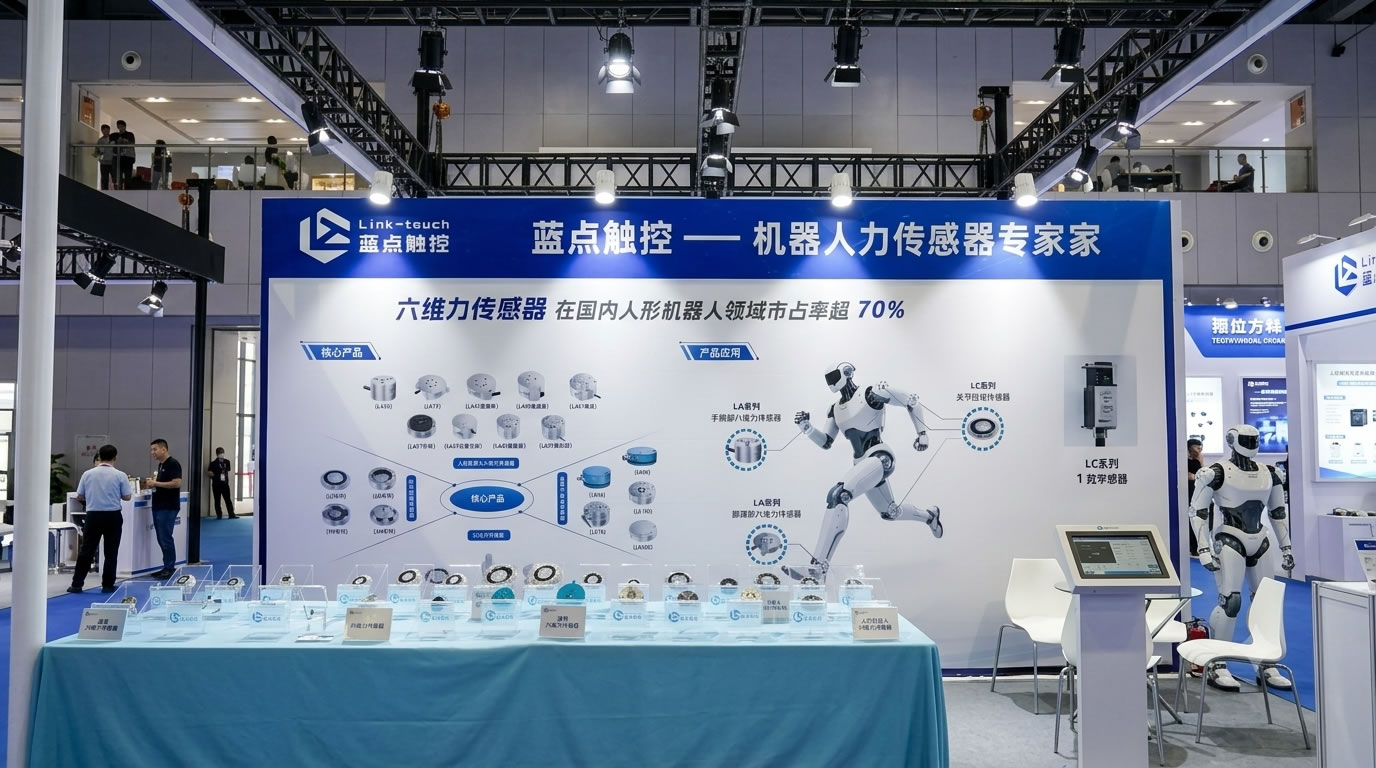
On the tech side, Link-Touch’s sensors offer 0.1% FS accuracy, over 10kHz high-frequency response, and 500% overload resistance. The company has reduced sensor volume by 90% and weight by 80%. “In core metrics like crosstalk suppression, our measured results have surpassed foreign brands,” the team claimed. More importantly, the company has achieved a monumental jump in production capacity. It recently completed a super-factory in Guangdong covering over 10,000 square meters, housing China’s first fully automated force sensor line. The design capacity reaches 1 million joint torque sensors and 200,000 end-effector six-axis sensors annually, dragging core component supply from fragmented production into the era of standardized, high-volume manufacturing.
KUNWEI approaches the sector from a standards perspective. The company is the lead drafter of the national standard GB/T43199-2023, Testing Specification for Robot Multi-axis Force/Torque Sensors. Before this standard was released, testing methods and evaluation criteria were inconsistent across the industry. KUNWEI chose to define what “good” looks like through national regulation.
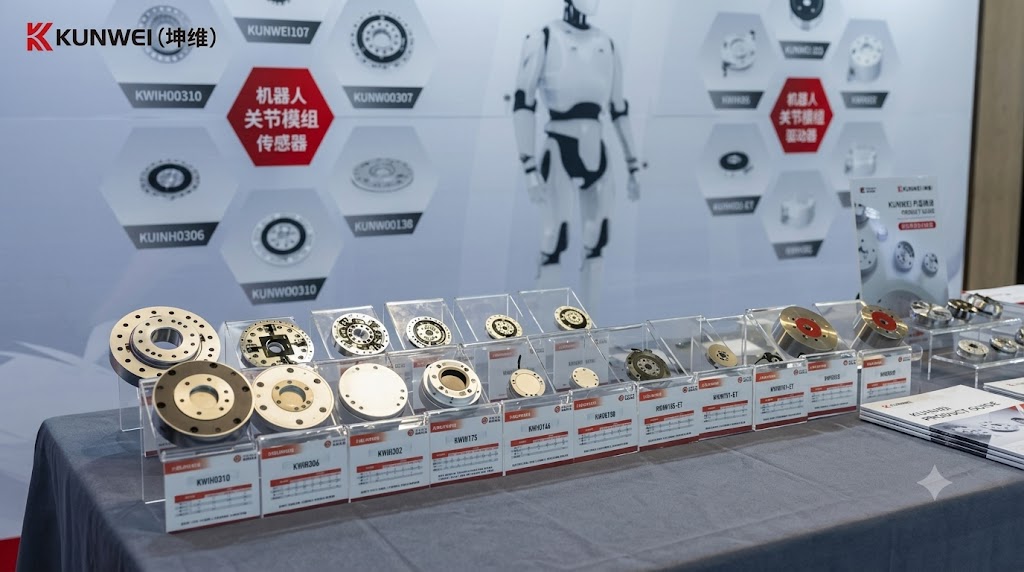
At WAIC, KUNWEI featured its HRS Humanoid Series six-axis force sensors, designed specifically for robot wrists and ankles, achieving accuracy better than 0.1% FS. Data shows KUNWEI holds a 53% share of six-axis force sensor shipments in China’s intelligent robot sector, ranking first for years. In the collaborative robot subsegment, its market share exceeds 70%. The HRS series is already shipping in bulk to clients like UBTECH, Xiaomi, Agibot, and Galbot. By the end of June 2026, the company had achieved annual capacity of 60,000 units and is scaling up to 120,000 units.
SRI(Sunrise Instruments) made its debut with the C Series, a specialized six-axis force sensor. Unlike general-purpose products that require adapter flanges, the C Series is optimized for cobots and humanoids, featuring a smaller footprint, single-sided mounting, and high reliability. The entire series boasts better than 0.5% FS accuracy with up to 3x overload protection. The patented single-sided mount eliminates the need for a flange, significantly reducing integration complexity for robot manufacturers. SRI also exhibited joint torque sensors as thin as 7mm, with diameters ranging from 20mm to 200mm and torque ranges from 10Nm to 800Nm. Additionally, the M3612X series six-axis force platform, covering 1,250N to 10,000N and 500 to 2,000Nm, is built for biomechanical analysis and robot testing in walking, running, and jumping scenarios.
While each company takes a different approach, they are all heading to the same destination: force sensors are shifting from an optional extra to a standard requirement. The next round of competition isn’t about whether a robot can sense, but how accurately it perceives and how reliably it delivers.
Components move upstream into intelligence and data
Beyond selling hardware, a wave of component makers is pivoting to selling systems, data, and intelligence. This isn’t just value-add; it’s a fundamental shift from “supplier” to “co-creator” within the industry chain. The booths of Tashan Technologies and BODEN AI offered the clearest signals of this trend.
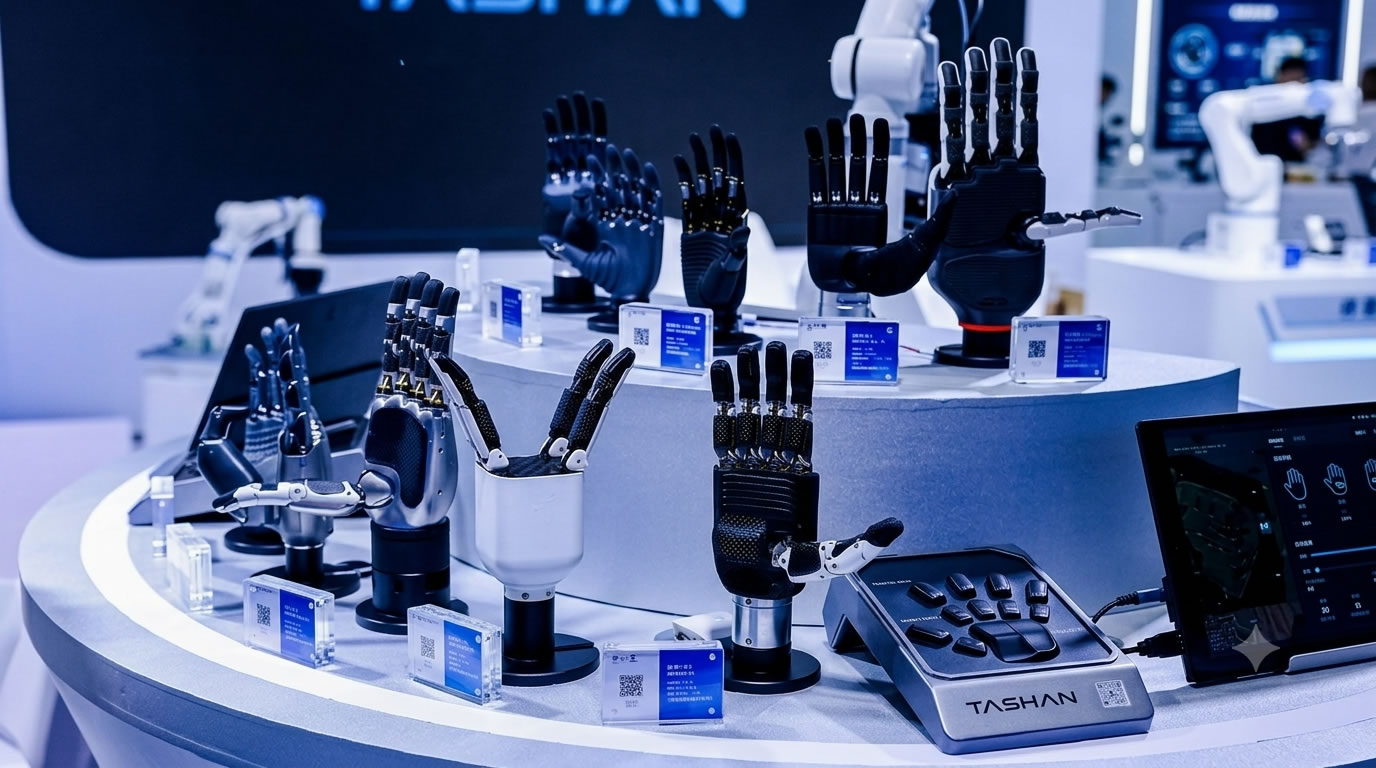
Tashan Technologies launched the world’s first dynamic tactile sensing chip, the Emerald E10A. Using a proprietary analog-to-spike conversion (ASC) module, the chip converts tactile signals directly into pulse outputs, bypassing the slow analog-to-digital-to-software conversion chain found in traditional solutions. With a standby current of just 0.9µA, time resolution of 2.9µs, and measurement frequency exceeding 300kHz, its ultra-low power consumption makes distributed tactile sensing across a robot’s “skin” feasible—evolving robots from having “sensitive fingers” to having a “sensing skin.” Tashan claims an 80% market share in the tactile sensor segment for humanoids, with order volumes in the first half of this year quadrupling year-over-year. Monthly shipments are now in the tens of thousands of units, with over 180 industry partners onboarded.
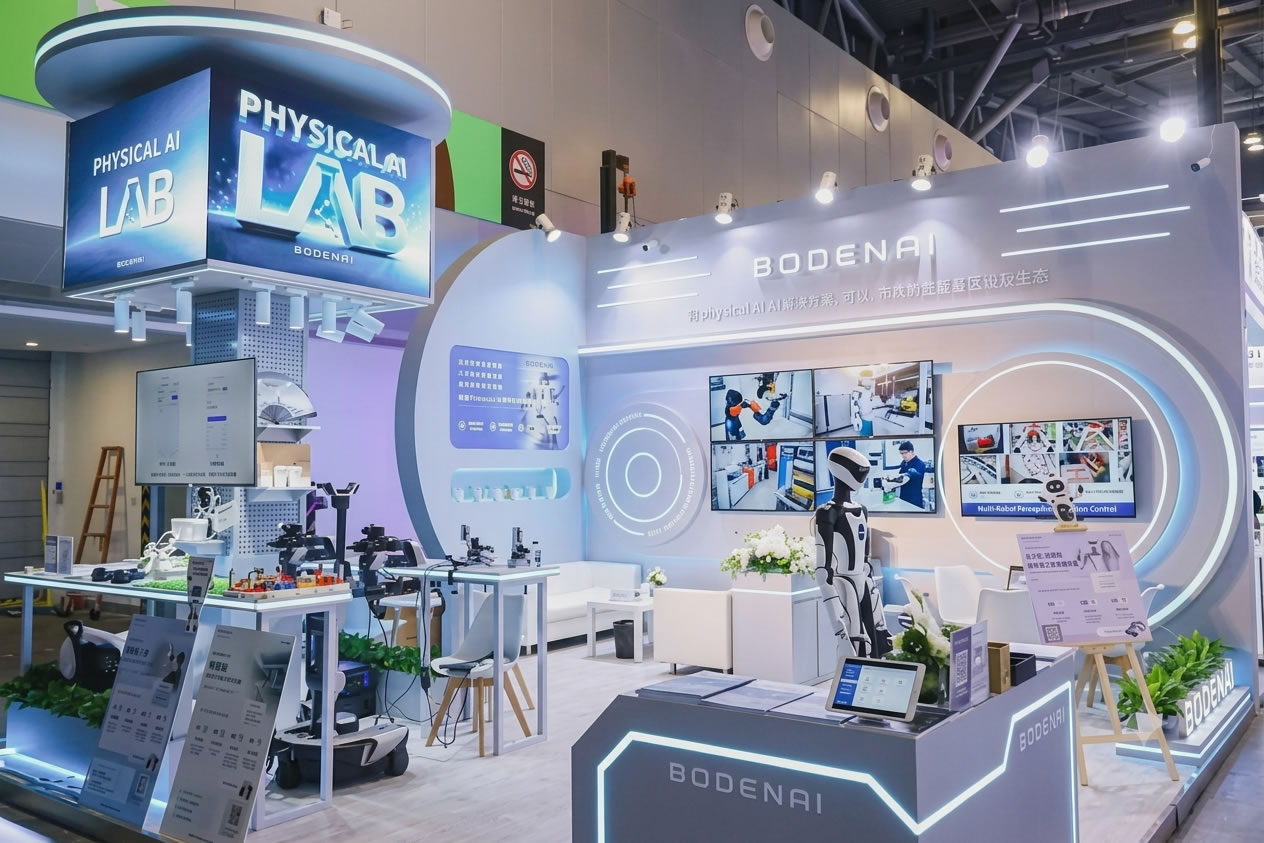
Training embodied AI models requires massive real-world physical interaction data, which is notoriously expensive and inefficient to capture. BODEN AI’s Boden Physical AI Lab is taking an infrastructure approach to solve this. Dubbed the world’s first immersive experiential lab for Physical AI data infrastructure, the lab follows a “Real → Train → Validate” philosophy. BODEN has set up three embodied AI training grounds in Ningbo, Huzhou, and Ma’anshan, occupying over 30,000 square meters in total. They have deployed nearly 500 robots of various models and thousands of self-developed data collection devices, enabling an annual output of 500,000 hours of real-machine training data and millions of hours of ego-centric scene data. BODEN does not make robots nor train models, but it is establishing itself as the indispensable data pipeline for the entire supply chain.
DexForce (DexForce Technology) released a slate of core technologies and implementation results at WAIC, showcasing a clear technical roadmap: helping robots evolve from “understanding the physical world” to “getting work done.” The company open-sourced AlignedDexWorld, the world’s first large-scale spatio-temporal action alignment dataset bridging human, simulation, and real-world robots. The dataset aims to solve the “negative transfer” problem caused by heterogeneous data in embodied model training, providing a standardized and reusable base for large-scale training. DexForce also publicly introduced DexVerse™, a generative simulation engine. This domestic infrastructure leverages self-developed physics engines and generative simulation to quickly convert real scenes into interactive virtual training environments. On the application front, DexForce showed a robot capable of completing autonomous retail scanning operations—the only one of its kind on the floor. The robot demonstrated steady “act-observe-decide” capabilities, supported by continuous demos in phone packaging, coffee-making, and chess-playing, verifying the generalizability of its technology across industrial and service scenarios.
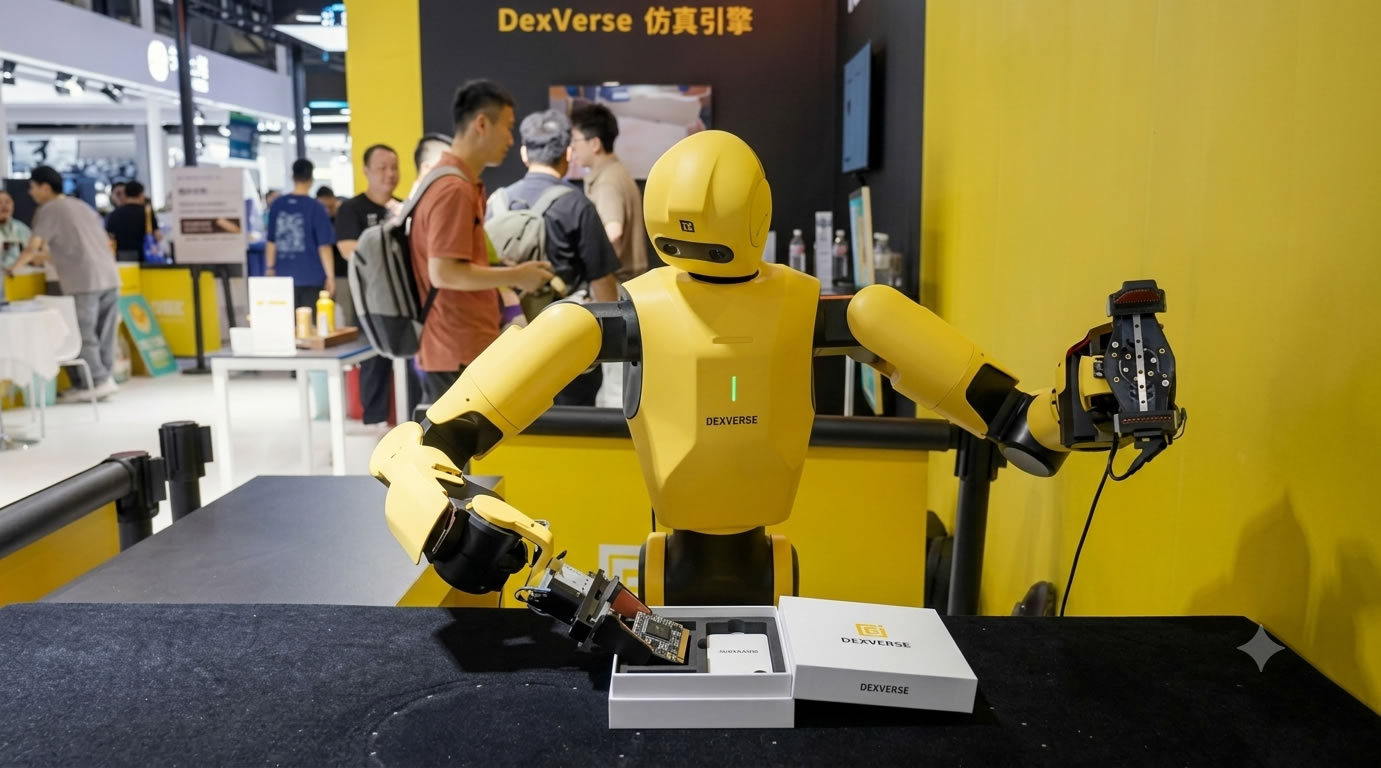
DexForce has built a full-stack internal technology loop covering “data alignment → simulation generation → model cognition → real-world deployment,” providing the industry with tangible and scalable embodied AI productivity.
Walking through the cavernous exhibition halls feels like walking through the timeline of embodied AI itself. The next competitive dimension is no longer about who makes parts cheaper or stronger, but who builds smarter perception and denser datasets. Chinese companies are building much of the infrastructure that could shape the next phase of embodied AI.
