


Shanghai in July 2026 – temperatures approaching 40°C – but that didn’t stop the crowds from flooding into the World Artificial Intelligence Conference (WAIC).
This year’s WAIC scaled up even further, with exhibition space topping 100,000 square meters for the first time. More than 1,100 companies showed up, showcasing thousands of AI technologies and products. Among all the noise, one shift stood out as the most telling signal: robots are no longer just a subcategory of AI exhibits. They have become one of the core industry tracks of the conference itself.
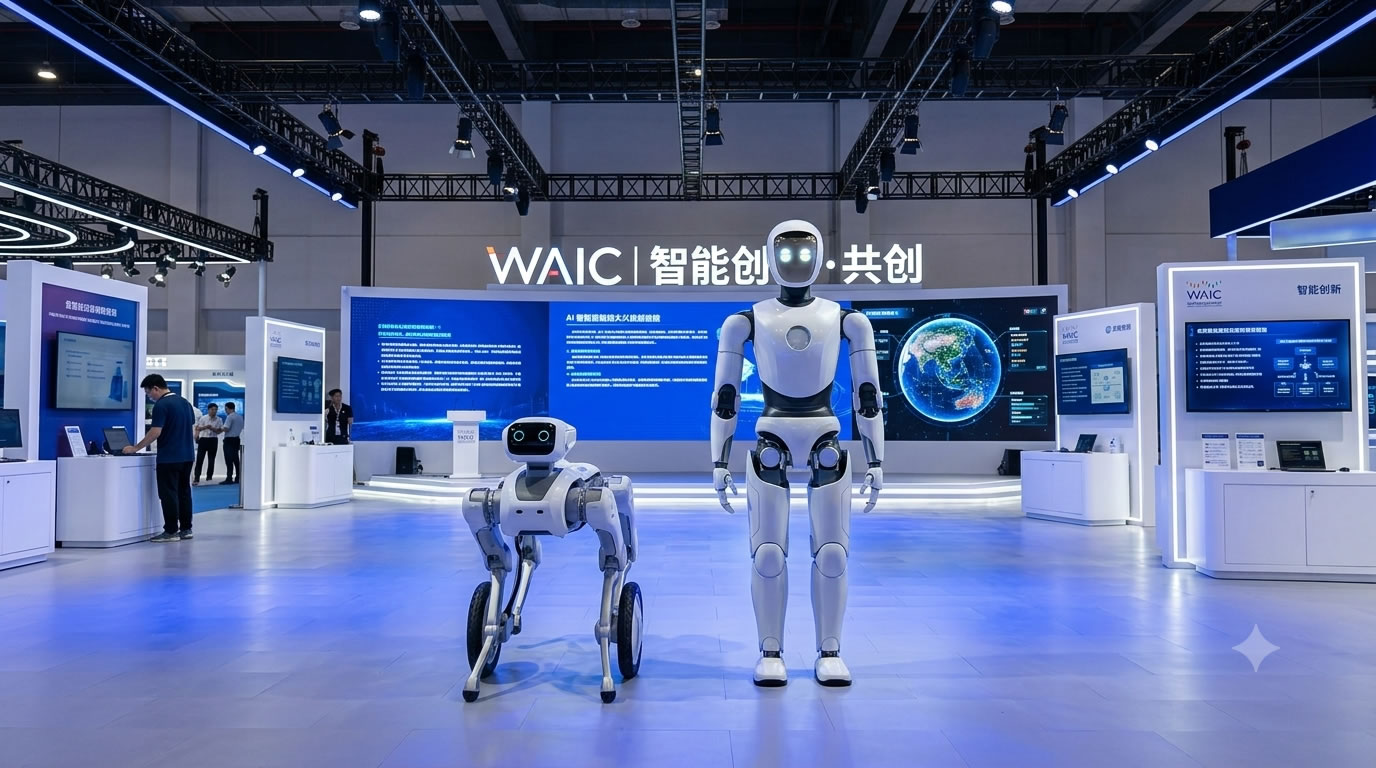
In Hall H3 at the Shanghai World Expo Exhibition & Convention Center, embodied intelligence got its own dedicated zone for the first time, sitting alongside intelligent computing as a flagship theme. According to on-site figures, the event featured over 200 embodied AI terminals—humanoids, quadrupeds, wheeled-legged robots, and a range of new platforms aimed at industrial and service applications.
But more revealing than the sheer number is what’s actually changing in the robot business.
For the past few years, the conversation has been dominated by humanoid robots. Companies competed on whether their robots could walk steadily, pull off complex moves, or even demonstrate backflips, dancing, and coffee-making.
At WAIC 2026, however, the robots on the floor told a very different story.
Humanoids still drew plenty of attention, but they were no longer the only act in town. More and more companies are exploring different structural designs: large rideable platforms, robots that can switch their form, hybrid machines that combine wheels and legs, and even robotic horses built for harsh industrial environments.
That shift points to a much more practical question:
What form should an embodied AI robot take?
The answer depends on the task. It’s not one fixed shape—it depends entirely on the use case.
From “Building a Humanoid” to “Picking the Right Robot for the Job”
Walk into the robot hall at WAIC, and Unitree Robotics’ booth is still one of the busiest spots.
The company’s G1 humanoid demonstrated agile movement, jumps, and dynamic balancing—continuing its strength in motion control. But what really drew the crowds this year was a very different machine: the GD01 rideable transforming robot.
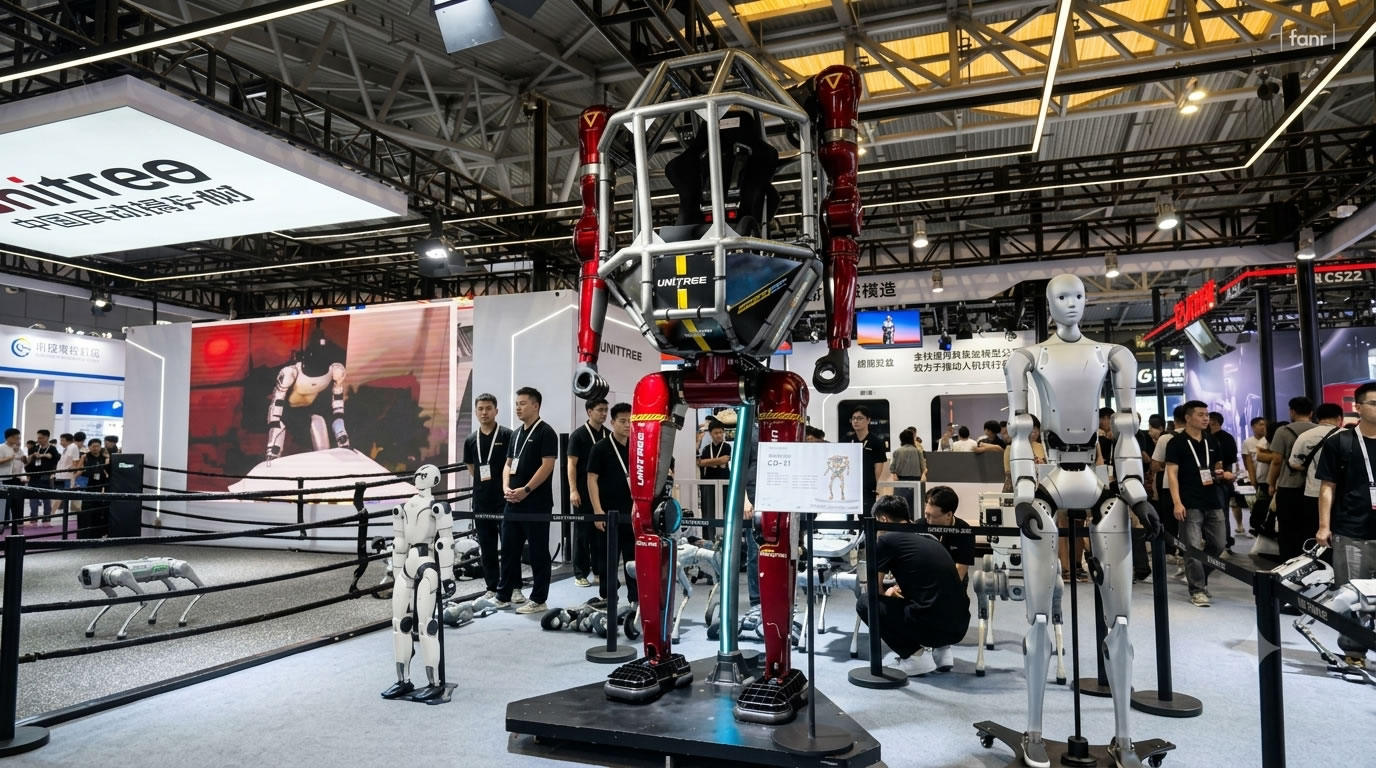
Standing about three meters tall, this platform can switch between bipedal and quadrupedal modes using proprietary control algorithms. It represents a new direction: a robot doesn’t have to mimic the human body. It can change its locomotion style based on the environment.
Similar thinking showed up elsewhere.
Qiyuan Robotics presented its T1 personal robot, which uses a wheeled-leg hybrid structure and can shift between humanoid and quadrupedal configurations, alongside its lighter Q1 model. Compared with pure wheeled robots, these machines handle rougher terrain better; compared with traditional quadrupeds, they still offer some human interaction capabilities.
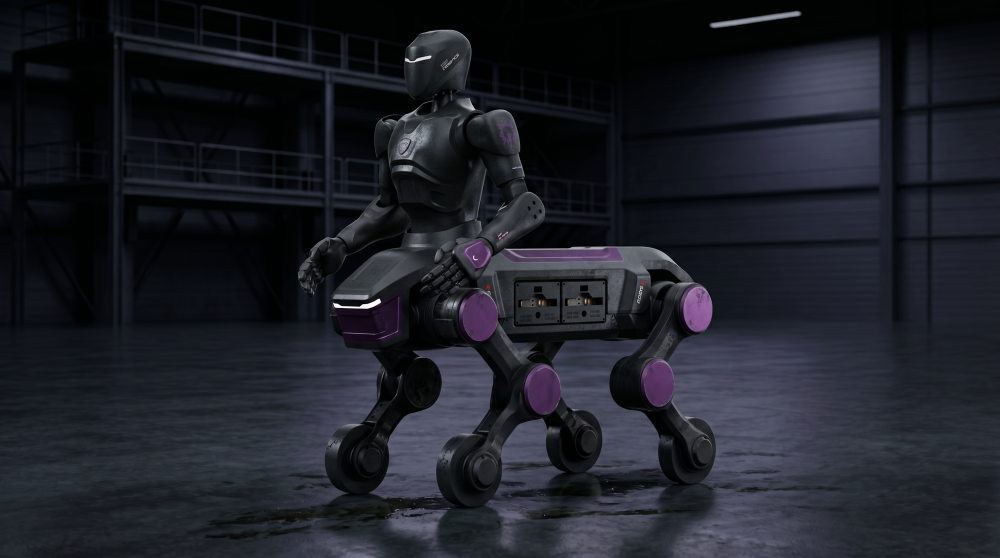
Runke Juneng, meanwhile, took a more industrial route.
Its “Centaur” wheeled-legged robot combines dual-arm manipulation with a four-wheeled mobile base. It keeps a human-like upper body for operation, while the wheeled-leg chassis boosts payload and mobility.
This design isn’t trying to look human. It’s optimized for steel mills, mines, energy facilities, and emergency rescue—places where robots face heat, dust, uneven ground, and extended operating hours, not aesthetic imitation.
Modular Robots Are Becoming Another Path
Beyond changing the external shape, some players are trying to make the robot body itself more flexible.
LimX Dynamics showed its TRON2 series, built on a modular design that lets users assemble different configurations—biped, wheeled-leg, or dual-arm platforms—depending on the task. The company also showcased its Luna and Oli models, along with its self-developed COSA humanoid brain system.
On-site, the robot even formed a centaur-like structure through module combinations, used for load transport and complex mobility tasks.
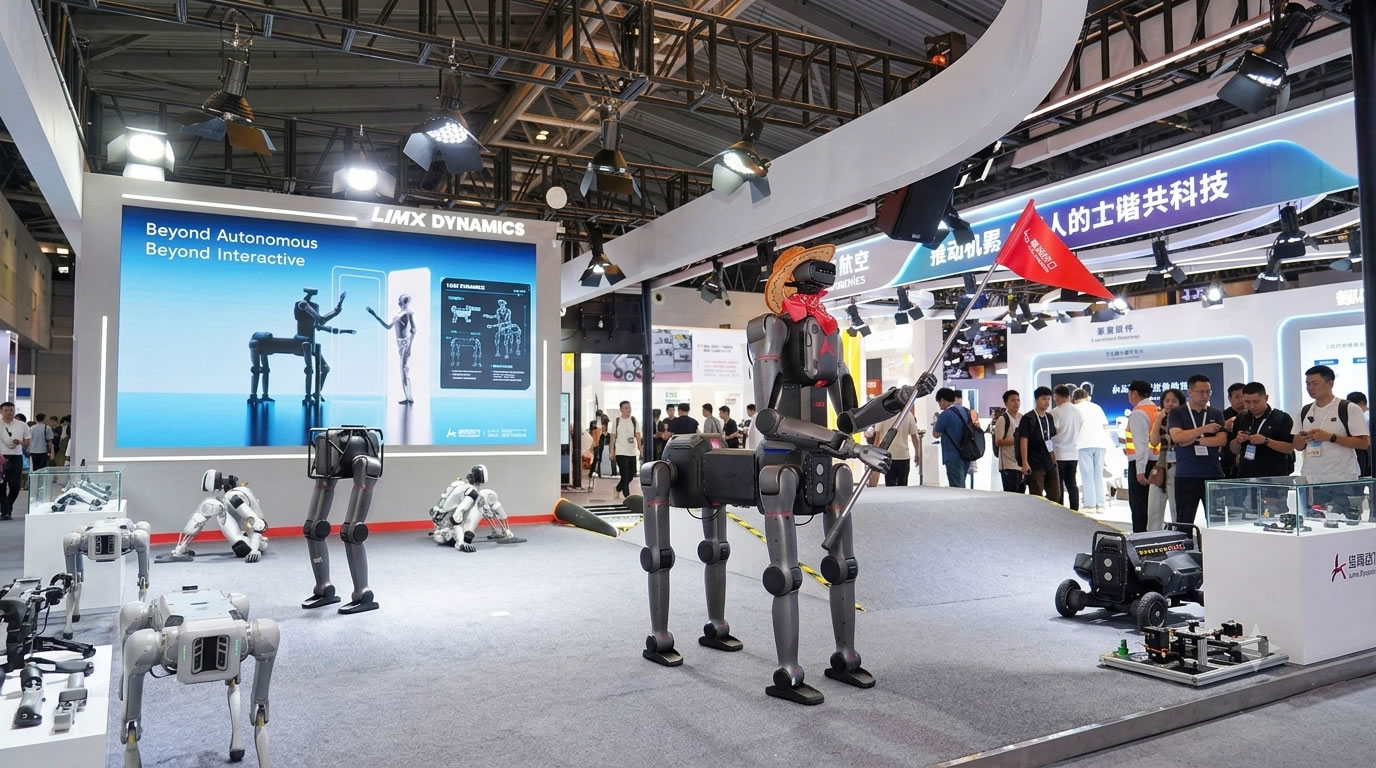
Instead of manufacturing one fixed robot, the company offers a platform that can be reconfigured as needed. LimX’s products target different use cases—developer training, motion-control research, and commercial demonstration—aiming to cut the cost of redesigning hardware for every new robot project.
“Robot Horses” Emerge as a New Form
Outside humanoids, quadrupeds and robot horses are gaining traction.
DaxAI, a relatively new exhibitor at this WAIC, has doubled down on the “robot horse” concept, unveiling a heavy-duty platform.
Its Qiji T1000 robot horse claims a maximum payload of 1,000 kilograms, targeting industrial transport and special-environment operations.

Compared with humanoids, the horse-like structure is better suited for carrying loads and navigating rough terrain. In logistics, mining, and power-grid inspection, stability and payload capacity often matter far more than appearance.
Across the exhibition floor, companies are moving from “what a robot should look like” to “what a robot needs to accomplish.”
From Home Companions to Industrial Inspections—Robot Shapes Begin to Split by Scenario
Outside humanoids, service and home applications were also prominent at WAIC this year.
Fourier Intelligence didn’t focus on showing off a single robot’s capabilities. Instead, it presented a full product portfolio built around rehabilitation, service, and home care.
Its GR-3 humanoid is positioned as a smart assistant for home and elderly-care settings, with on-site demos covering simple interaction, object handling, and household tasks.
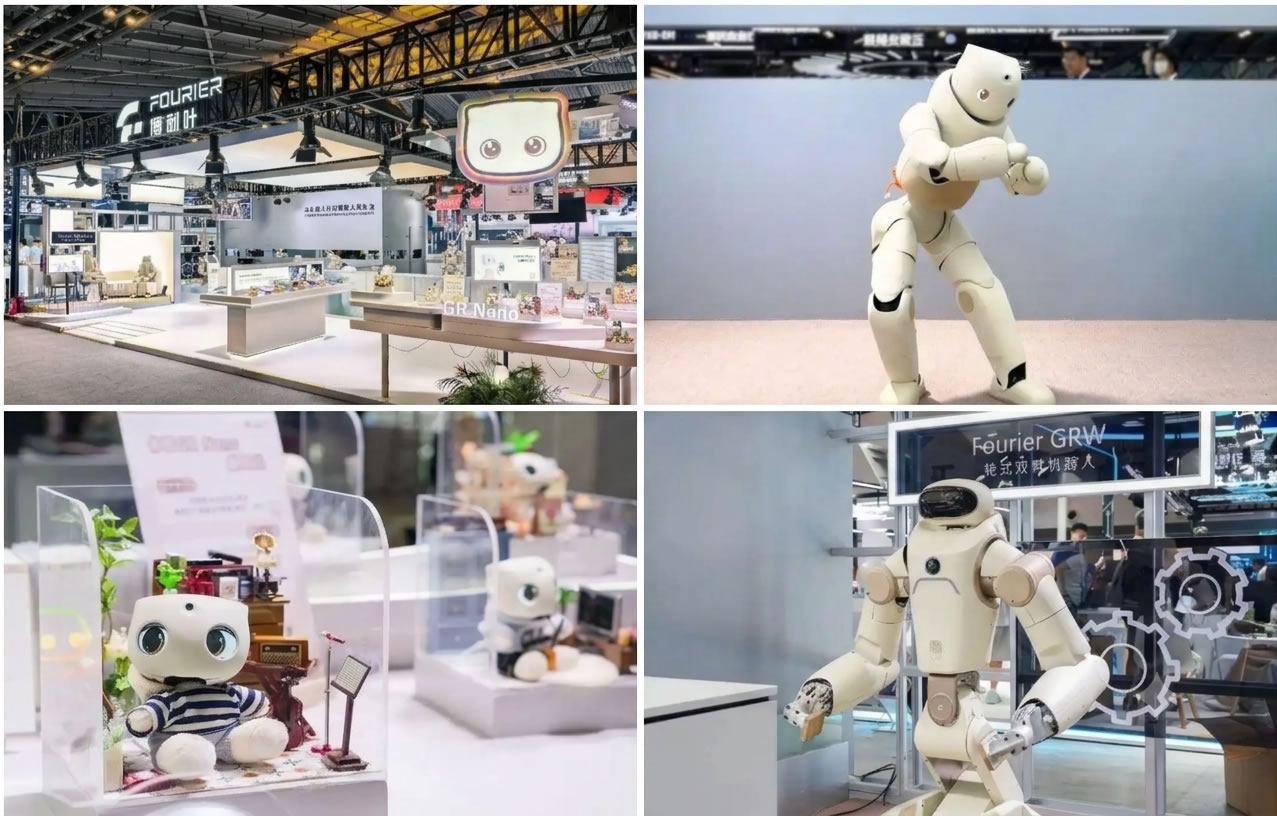
Alongside that, the company showed the GRW wheeled dual-arm robot, aimed at rehab assistance and aged-care scenarios that require higher load capacity; and the GR Mini and GR Nano, targeting public service, commercial operations, and lighter personal companionship.
Fourier isn’t betting on a single robot. Its product portfolio already reflects different application scenarios. For home environments, a humanoid may have better interaction advantages. For fixed-space service tasks, a wheeled platform could be more efficient. For long-term care, safety and reliability may trump looks.
Deep Robotics showcased a multi-form portfolio covering quadrupeds, wheeled-leg robots, and humanoids.
Its “Jueying” series of quadrupeds are designed mainly for industrial inspection—equipment monitoring, temperature readings, meter checks. In power and energy sectors, quadrupeds have already found early commercial adoption.
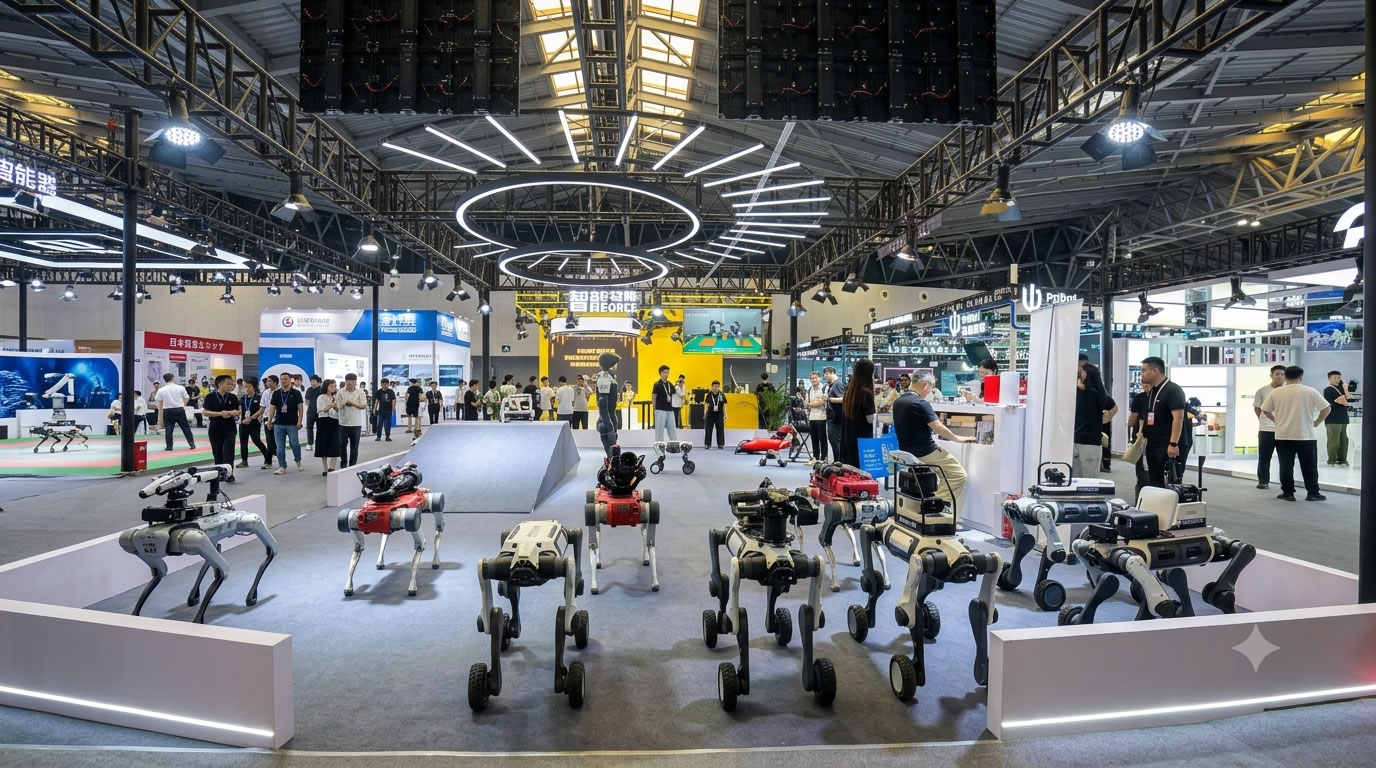
The company’s Lynx S10 wheeled-leg robot emphasizes lightweight deployment—total weight under 20 kilograms, portable by a single person and ready to go quickly.
While humanoids are still in the exploration phase, quadrupeds and wheeled-leg robots have already carved out clear application paths in some industrial settings. More and more companies are now building multiple robot structures in parallel.
“One Brain, Many Bodies”: The Competition Is Shifting to the Intelligent System
If the past few years were about mechanical hardware, WAIC 2026 sent another strong signal: the core battle in robotics is moving from the “body” to the “brain.”
“One brain, many bodies” was a recurring phrase on the show floor.
The premise is simple: the same AI system can be adapted to different robot hardware, allowing the robot to pick the right body for each task instead of building a new intelligence stack for every form factor.
This parallels the smartphone industry. Hardware makers once competed on phone designs and casings; later, the operating system and ecosystem became the real differentiators. Robotics may be going through a similar transition.
Pudu Robotics showcased its Physical Agent full-stack architecture during WAIC. The system has three layers: the Pudu FM foundation model, the Pudu Agent OS for planning and execution, and a top layer that connects to different robot forms.
Under this model, specialized robots, human-like robots, and humanoids can all share the same intelligent infrastructure. For example: a food-delivery robot handles high-frequency repetitive tasks; a human-like robot enters complex commercial environments; a humanoid explores more general human-robot collaboration.
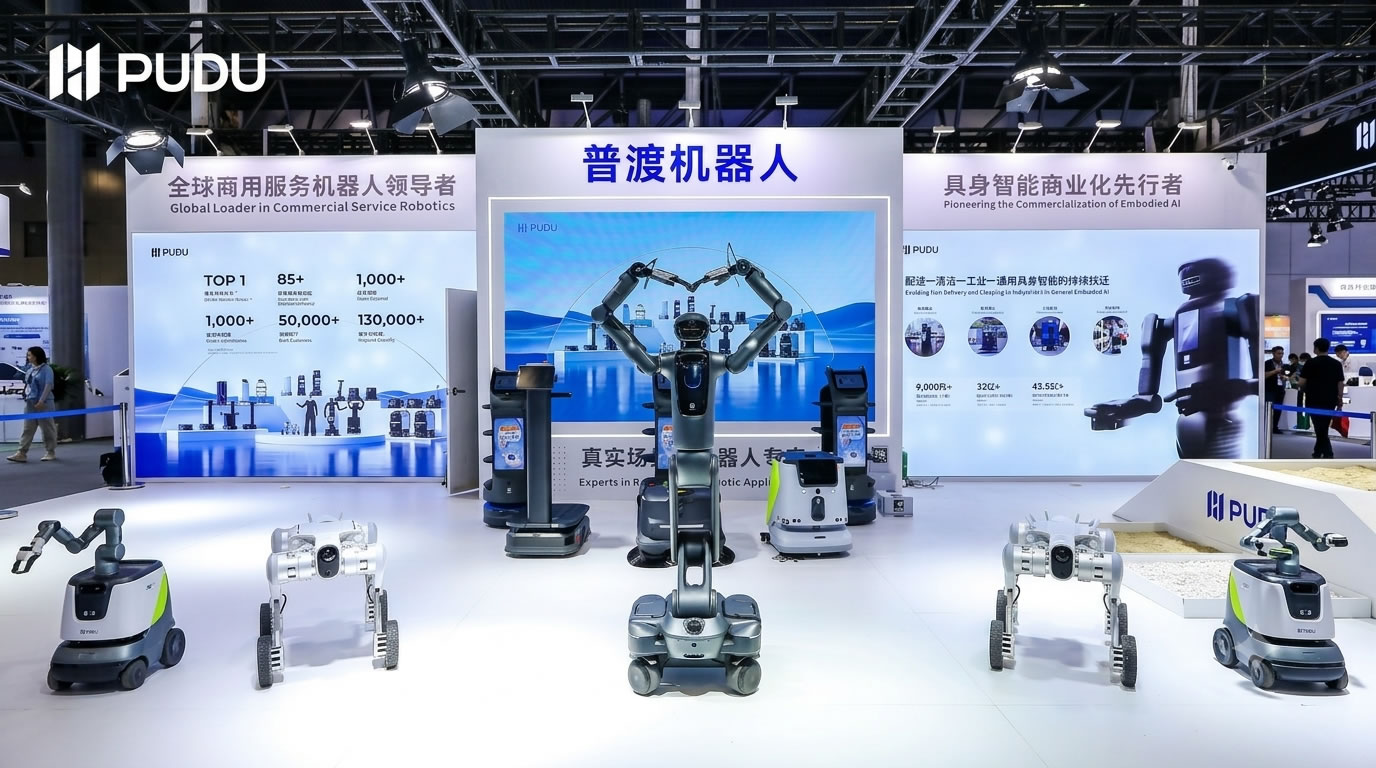
These robots aren’t competing—they become different execution platforms under one intelligent system.
Ant Group’s Robbyant (Lingbo) smart pharmacy solution demonstrated “one brain, many machines” in practice.
The system uses multiple robots to handle drug identification, picking, and delivery. On-site, the robots had to process more than 3,000 types of medicines, from order receipt to final handover.

In a pharmacy, the robot doesn’t need a human shape. It needs accuracy, reliability, and space efficiency. The deployment footprint is about 2.5 square meters—a real-world constraint that shows what commercial settings actually demand.
RoboScience, a first-time WAIC exhibitor, showed another angle. It demonstrated a robot system based on its Visics general-purpose embodied foundation model. In the demo, different brands of dexterous hands could plug into the same intelligence system and complete grasping tasks.
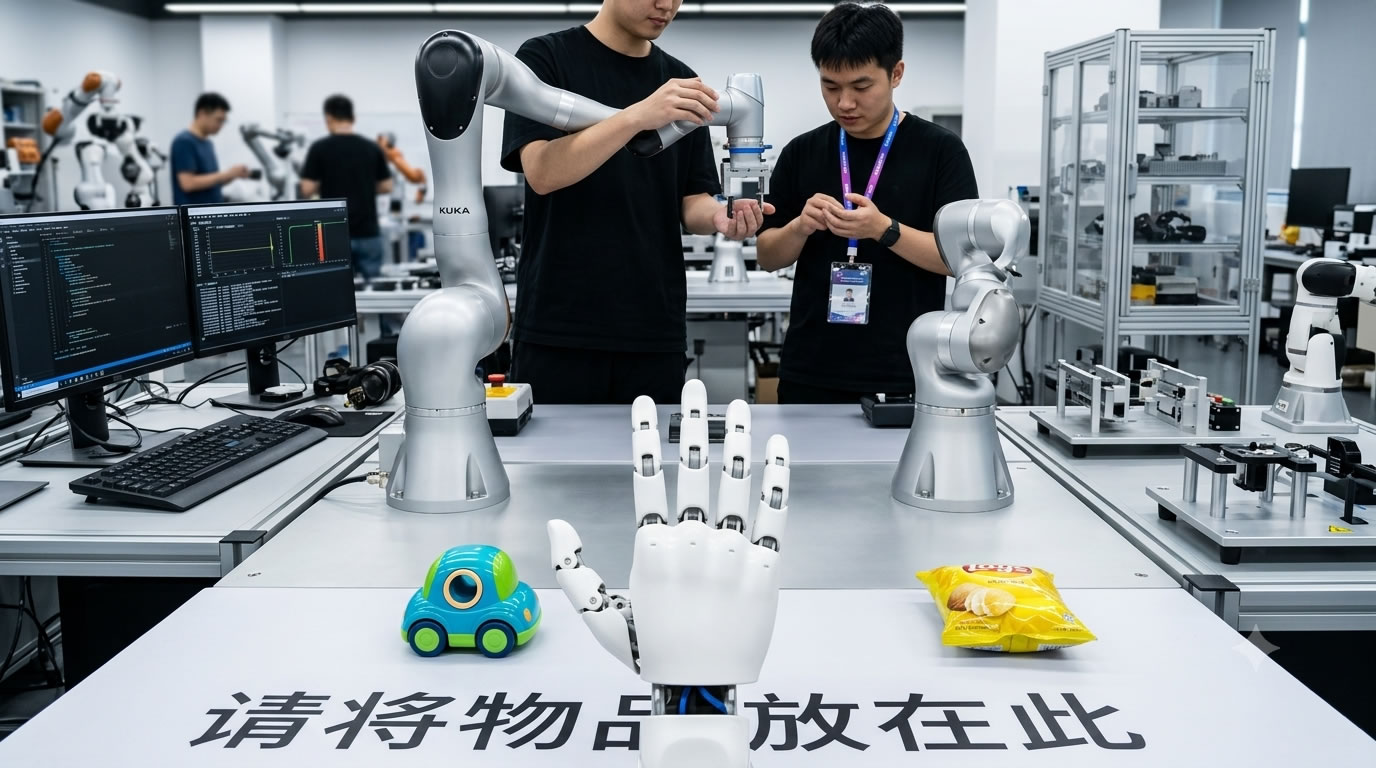
Cross-hardware adaptability is a key enabler for scaling embodied AI. Right now, the industry still faces a big problem: different companies have different hardware, different control systems, and different data pipelines. If every robot requires retraining its own model, large-scale deployment will stay limited. So getting AI models to transfer across robot platforms has become a major research priority.
From Single-Robot Demos to Multi-Robot Coordination
Mech-Mind Robotics demonstrated an embodied AI system for industrial settings. Two robots worked together on material handling, assembly, and transport between workstations.
Unlike conventional industrial robots that rely on fixed programs, the new generation uses vision, AI models, and environmental understanding to handle more complex and variable production tasks.
Manufacturers have struggled with traditional industrial robots that excel at repetitive motions but require extensive reprogramming for small-batch, high-mix production. Embodied AI aims to give robots stronger adaptability.
MagicLab showed its self-developed general embodied model, Magic-VLA K02. Live demos included box stacking and sealing, folding soft garments, and packing a suitcase.
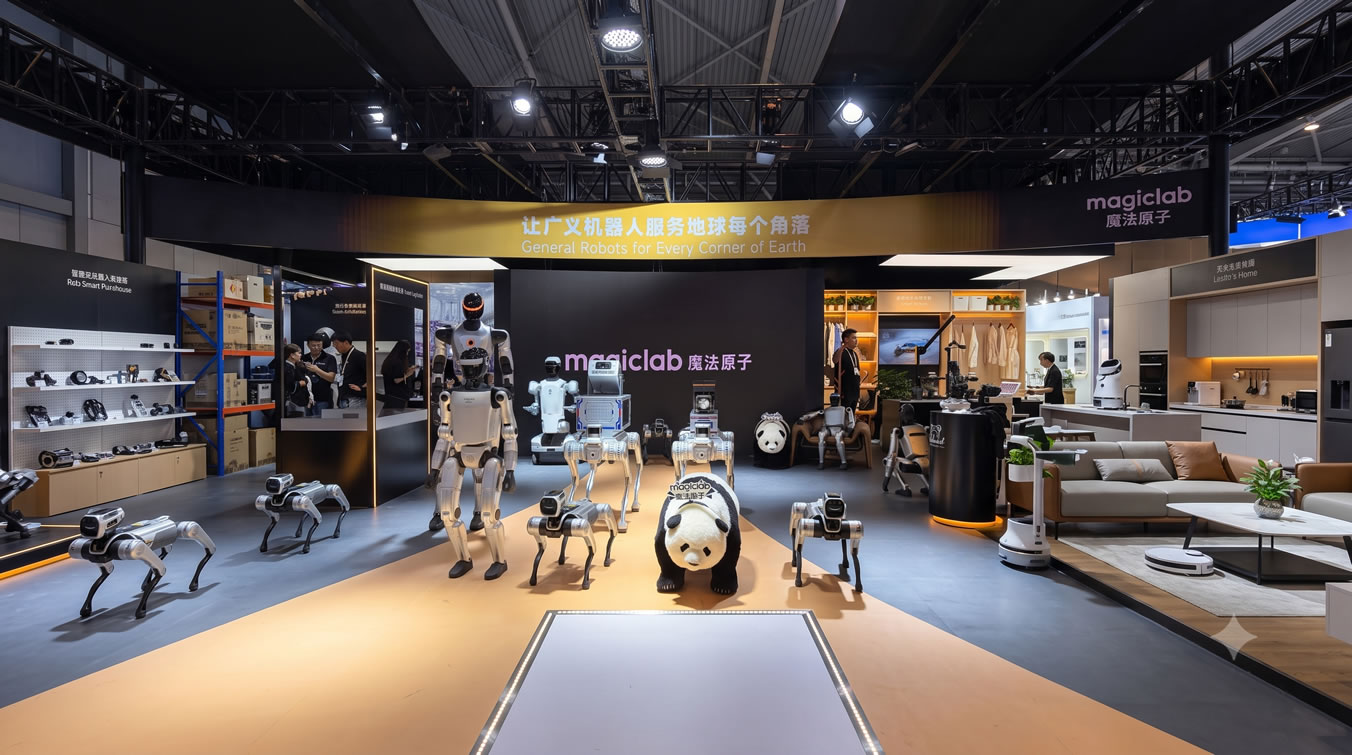
What these tasks have in common: object positions, shapes, and states are not completely fixed. The robot has to adjust its actions based on real-time visual feedback, not just follow a preprogrammed trajectory.
Moving robots from executing programs to understanding tasks is a key direction in embodied AI research.
The Industrial Logic Behind the Explosion of Robot Shapes
The rapid increase in robot forms reflects an industry entering a new phase. In recent years, the focus was on proving that the technology works. Now companies are tackling a different question:
Where exactly do robots create value?
Capital has also fueled this shift. In China, funding for embodied AI has kept rising, with a flood of startups entering robot hardware, algorithms, core components, and application development.
At the same time, policy and supply-chain development are pushing robots toward scalable manufacturing. Chinese industry regulators have repeatedly signaled support for humanoid robotics and encouraged deployment in manufacturing, services, and elderly care.
Some companies have already set volume-production targets, hoping to move from lab prototypes to commercial deliveries in the next few years.
Still, large-scale adoption faces real hurdles. Robots need to solve more than just movement. Challenges include: long-term reliable operation, cost reduction, data acquisition, safety control, and adaptation to complex environments.
At WAIC, robots spent less time performing stunts and more time demonstrating actual work. The demos were filled with real tasks: carrying, assembling, inspecting, caring, and logistics.
The Future of Robots May Not Be One Shape, but an Entire Ecosystem
The biggest takeaway from WAIC 2026 isn’t how many degrees of freedom a robot has, or how impressive a stunt it can perform.
What matters more is that the industry is converging on a new consensus:
A robot’s body should be determined by the task, not by imagination.
Humanoid robots still have real value, especially in environments that need to be highly compatible with human spaces.
But they won’t be the only answer.
The future robotics ecosystem will likely include humanoids, robot dogs, wheeled-leg machines, industrial arms, and all kinds of specialized platforms—all sharing the same AI brain, choosing different bodies for different jobs.
For the embodied AI industry, the real competition is just beginning. The next phase isn’t about who builds the most human-like robot. It’s about who can get robots to actually work in the real world.
