


If you have ever walked into a parcel sorting center, you never forget the tension—packages racing down conveyor lines, every second counting.
Over the past few years, logistics lines have become highly automated. But one stubborn blind spot remained: traditional industrial robot arms are great at handling neat cardboard boxes. When they face floppy plastic mailers, odd-shaped items, or parcels with the shipping label facing down, they often fail. The job still falls to rows of workers standing beside the line, manually flipping and straightening piece after piece.
A New Pair of Hands on the Conveyor
That grunt work has just found a new solution.
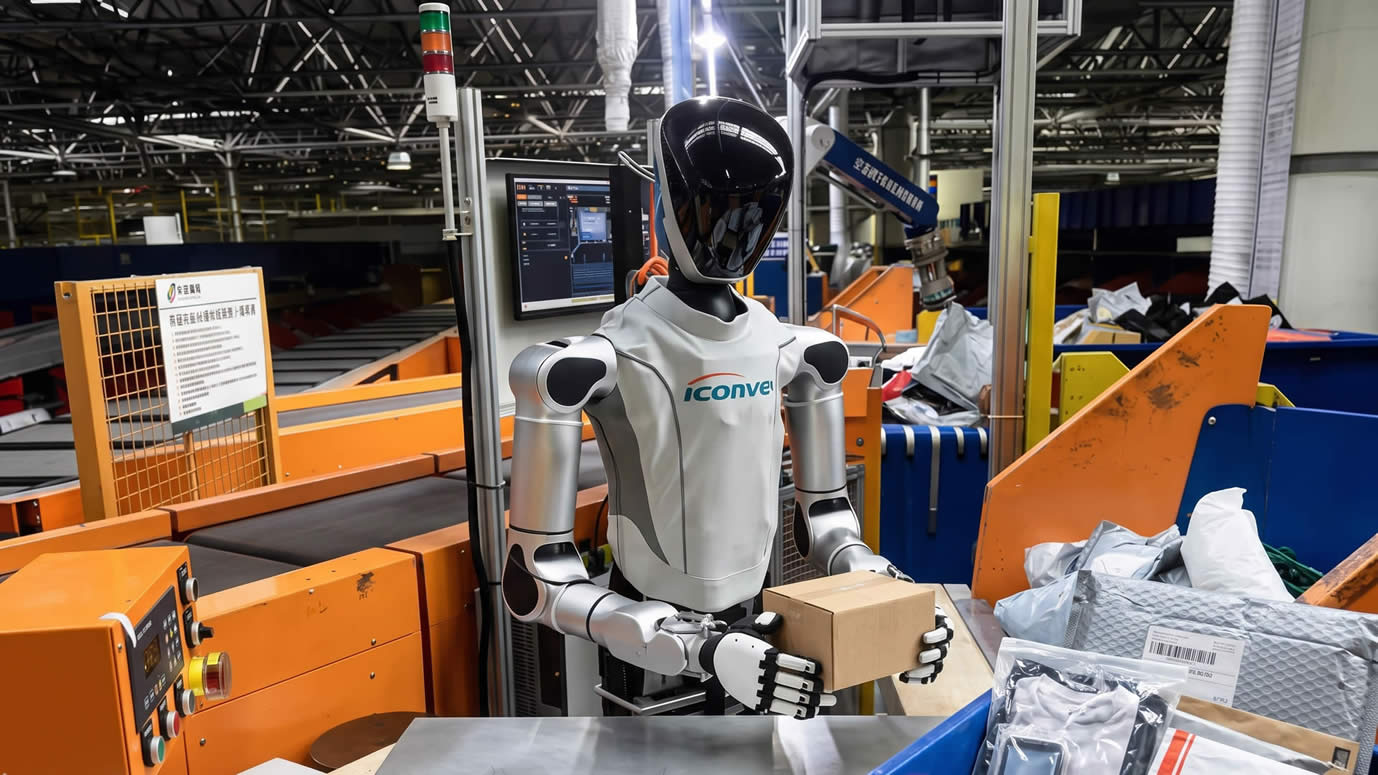
At the Guangzhou postal distribution center of China Post, a live high-speed sorting line has taken on an unusual new hire: the Robot Era M7, an embodied logistics robot. And it has not been brought in for a pilot. It has been placed directly into the most critical role on the line—the feeding station.
Watch the M7 in action, and it becomes clear this is nothing like the big, clunky industrial arms of the past. There is no pneumatic suction cup that can only grip flat surfaces, no rigid industrial gripper. Instead, the M7 is fitted with a five-fingered dexterous hand called the Robot Era XHAND1.
A soft mailer weighing a few dozen grams tumbles down the conveyor. The robot spots the parcel, judges its position the way a human hand would, picks it up, flips it nimbly to check that the shipping label faces up, and places it precisely into the correct chute. The pick-flip-place motion runs in one fluid sequence, with no one watching over it or stepping in.
The Mountain Behind a Simple Flip
That seemingly simple pick-flip-place routine is actually a major mountain to climb in robotics.
Until now, making a robot handle such non-standardized work meant engineers writing endless lines of code to cover every possible shape and material. Every time a new type of packaging appeared, the system had to be re-tuned, and the cost was punishing. The M7 can do this because it has, for lack of a better phrase, grown a brain.
Learning on the Job: The ERA-42 Brain
It runs on Robot Era’s own embodied brain, ERA-42. The clever part is that engineers do not need to hand-code each movement. The system merges what it sees (perception), what it decides (decision-making), and what its hands do (execution). It collects data from real work and learns as it goes—more like taking on an apprentice who gets better the more they work. That brings the cost of deployment and maintenance down dramatically.
Goodbye Demos, Hello Production Floor
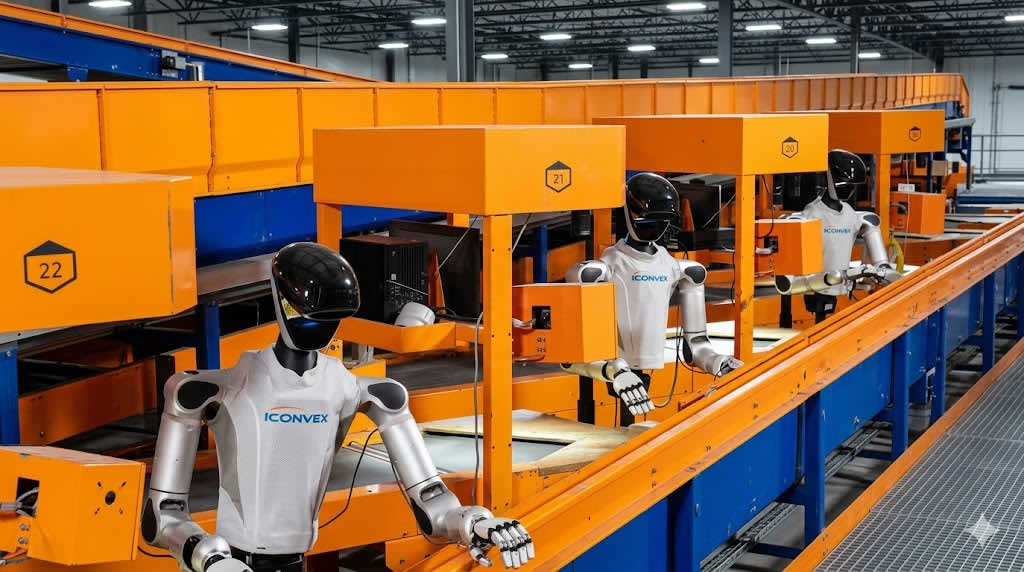
For a long time, a common critique in the tech world has been that embodied intelligence is trapped in the lab: fine for demo videos, or for doing a flip and pouring a drink at an expo.
The M7 running a full production process at China Post’s Guangzhou hub is a pretty substantial answer to that. It is one of the few real-world cases where embodied intelligence has achieved product-market fit in logistics, and it drags this cutting-edge technology right into the dirt—proving it can keep working reliably on an industrial floor that is dirty, demanding, and has almost no tolerance for error.
Your Next Package, Sorted by a Robot
As hardware costs keep coming down, the repetitive, physically draining jobs may soon be taken over by these tireless, dexterous hands. Your next parcel might just be the one it placed onto the sorting line.
