


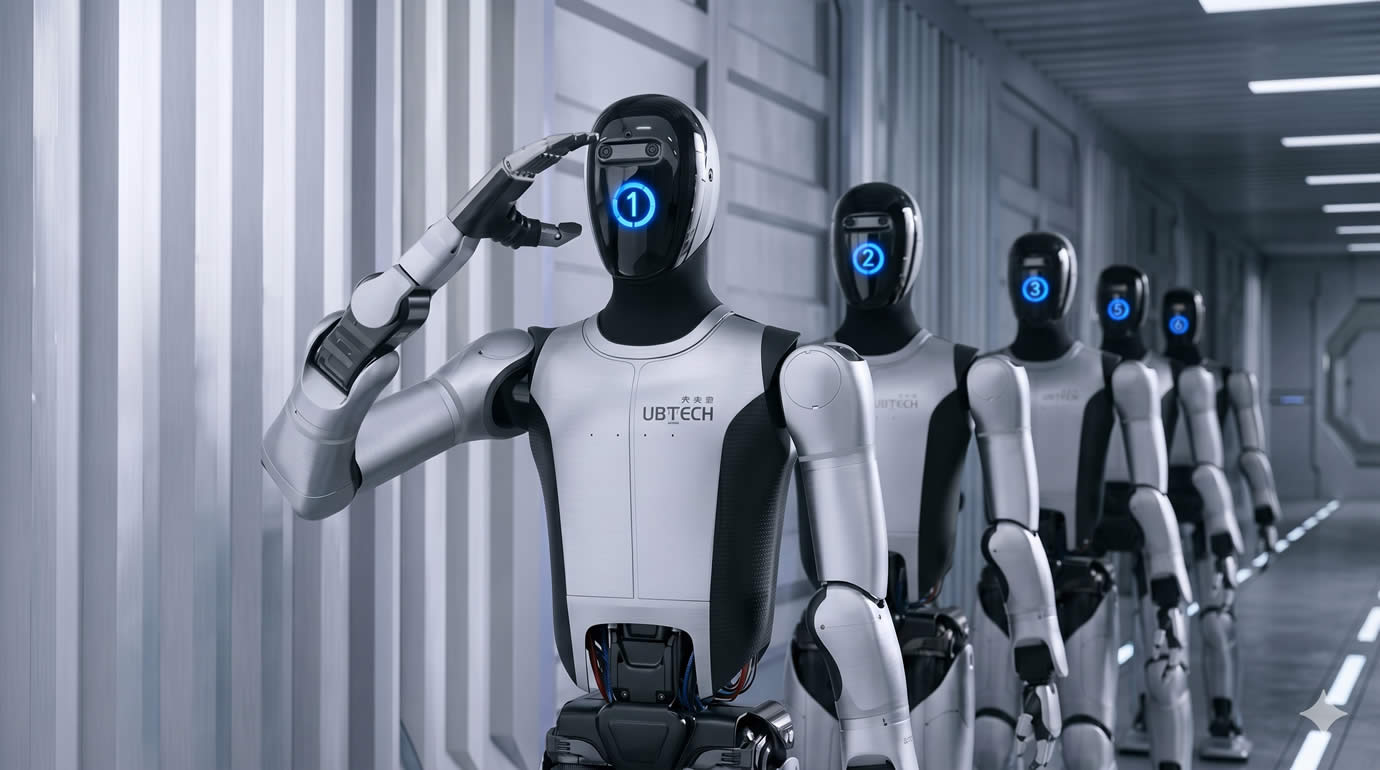
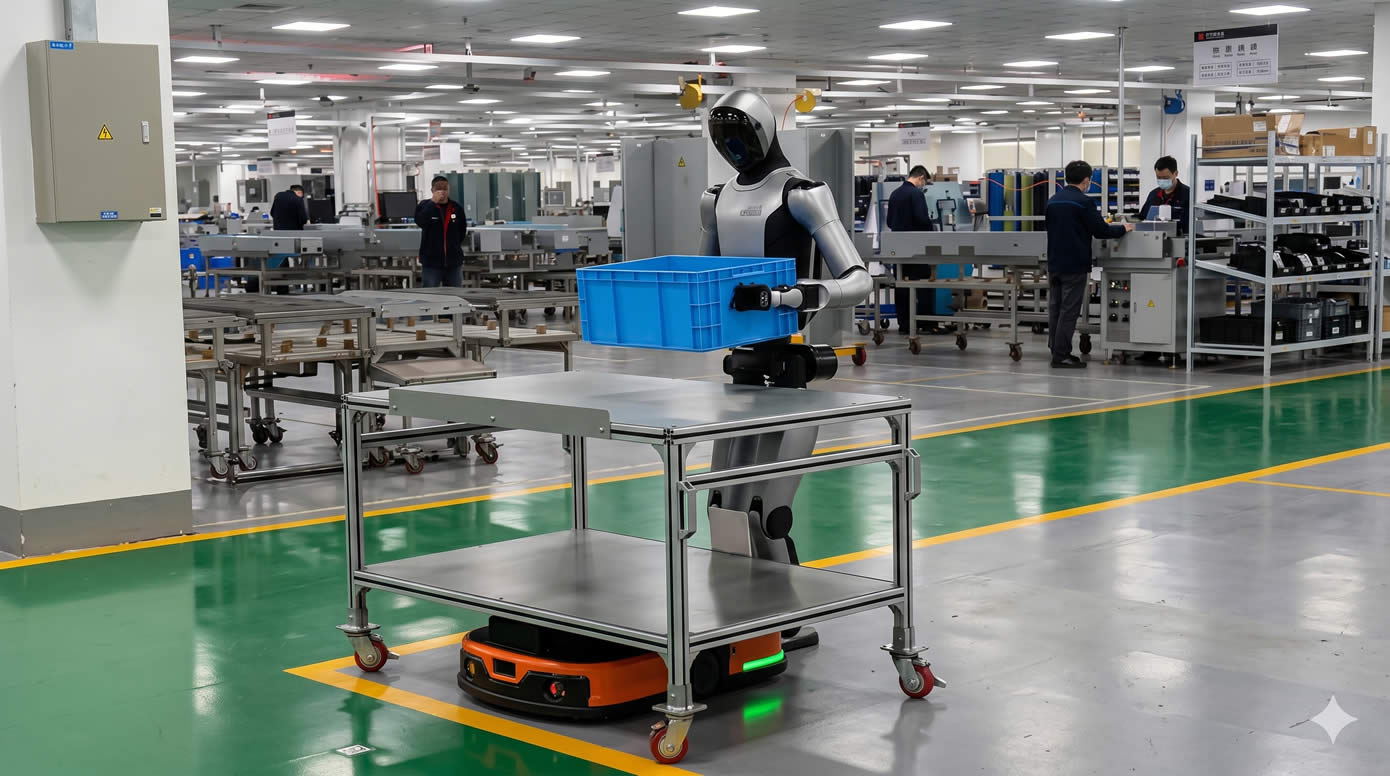
On May 11, Japanese industrial conglomerate Hitachi announced a strategic partnership with UBTECH, China’s first publicly listed humanoid robotics company. Hitachi has already begun testing UBTECH’s industrial humanoid Walker S2 in some of its manufacturing environments, and the two companies plan to deepen collaboration across elevators, building systems, healthcare, semiconductor equipment, and smart logistics.
The deal is significant on its own, but it’s also the third time in just over a month that a major Japanese player has chosen to work with UBTECH.
Rewind to early April. Honda Trading, a subsidiary of the Honda Group, announced a partnership with UBIQ, a UBTECH subsidiary, to explore humanoid robots for automotive manufacturing and warehouse logistics. Later that same month, Japan Airlines kicked off a ground-handling experiment at Tokyo’s Haneda Airport. The trial puts UBTECH humanoid robots to work on baggage handling, passenger guidance, and equipment inspection.
Honda, JAL, Hitachi — three iconic names in Japan, all turning to the same Chinese humanoid robot maker within weeks. Their near-simultaneous moves expose a striking irony.
Japan is not a latecomer to humanoid robotics. It was the pioneer. In 1996, Honda’s P2 became the first robot to walk naturally on two legs. ASIMO, which debuted in 2000, was the world’s first true humanoid robot and a national symbol of Japan’s technological prowess.
But now, as the conversation shifts from “tech demos” to “production-line deployment,” Japanese firms are not waiting for a domestic solution to mature. They are importing proven Chinese hardware. That tells you a lot about where the global humanoid robot industry stands right now.
Why Japan needs Chinese robots
The recent rush of deals is no coincidence.
Japan is one of the fastest-aging countries on earth, and its working-age population keeps shrinking. Labor-intensive jobs — airport ground handling, factory assembly lines — are getting harder to fill by the year. Humanoid robots, which can fit directly into human work environments without forcing facilities to retrofit, are seen as one practical fix for the labor shortage.
But Japan’s own path toward commercial humanoid robots has been slow. Nikkei Asia has reported that very few humanoids are actually available for purchase in the Japanese market, making it tough to exclude Chinese products in the near term. The Japanese weekly Shukan Gendai has pointed out that China’s advantage in robotics comes from rapid trial-and-error and a faster, more flexible decision-making rhythm than Japan’s.
When domestic options can’t keep pace and labor shortages won’t wait, Chinese robots get the call.
Take the Haneda experiment. JAL’s reasoning was simple. The terminal is already built. Traditional wheeled robots would need expensive infrastructure changes. A humanoid, by contrast, can step into the existing workflow almost seamlessly. UBTECH’s robots were chosen because their form and function directly answer that practical demand.
On the factory floor, Hitachi and Honda are looking at the same thing: concrete tasks. Elevator equipment operation, auto parts handling, warehouse sorting. No showy tricks, just machines that work. That’s what resonates with industrial buyers.
Beyond Japan — a global pattern
Zoom out a little, and it’s clear this isn’t just about Japan.
In late 2025, Texas Instruments, the U.S. semiconductor heavyweight, reached a strategic cooperation with UBTECH and began purchasing robots for its production lines. In early 2026, Airbus, the European aerospace leader, signed on to deploy UBTECH robots in its aircraft manufacturing plants. Then last month, the European robotics integrator Terra Robotics became UBTECH’s exclusive distributor for the German-speaking market, with the first batch of dozens of robots entering the logistics centers of drugstore chain ROSSMANN for warehousing and order-picking.
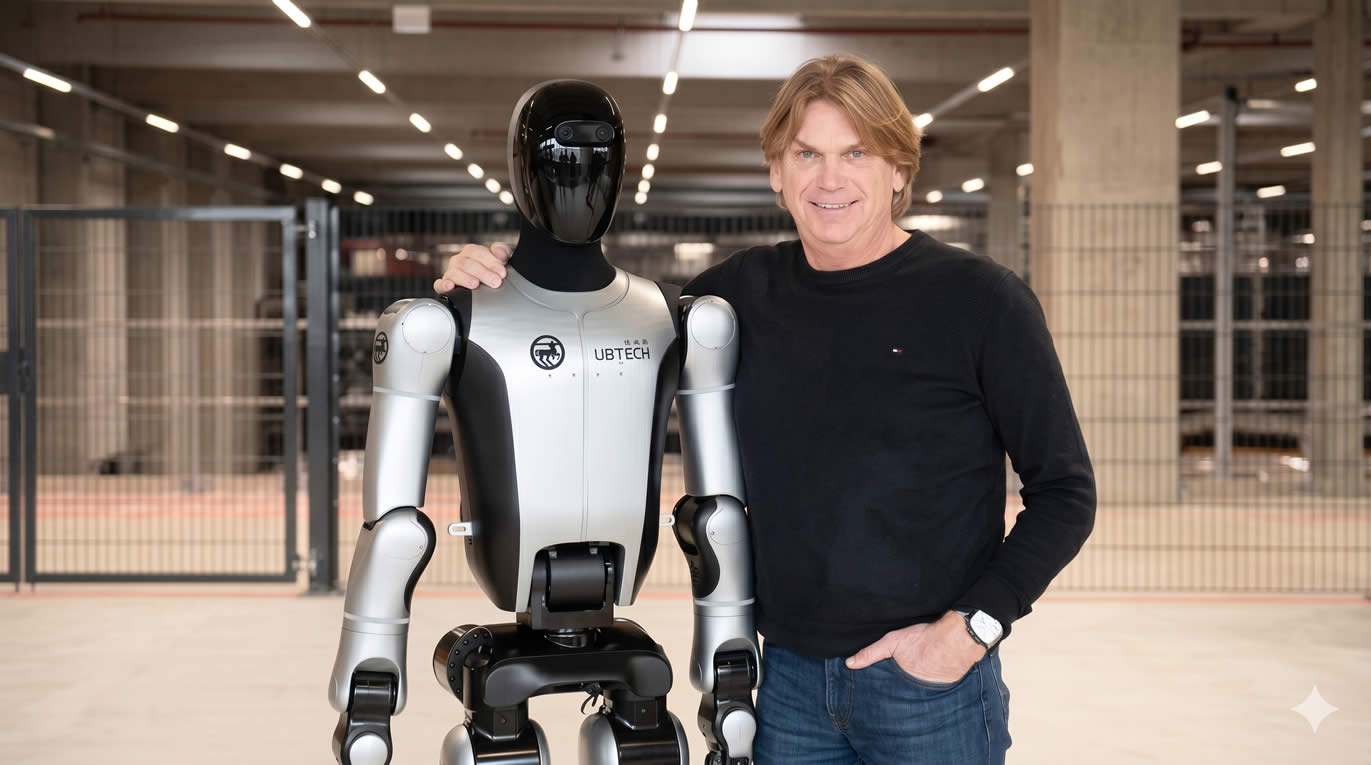
Add the fresh Hitachi deal and the earlier Honda Trading partnership, and UBTECH’s international client roster now includes Fortune 500 companies across Asia, North America, and Europe.
The list is worth a closer look. Texas Instruments makes semiconductors. Airbus builds aircraft. Hitachi spans elevators and industrial gear. ROSSMANN is retail logistics. The common thread: these are all core industrial and commercial operations where stability, precision, and adaptability are make-or-break. To sign one such partner might be luck. To sign several in quick succession suggests the robots have moved past the lab stage and into real, paid commercial validation. UBTECH has said it expects its industrial humanoid production capacity to reach 10,000 units in 2026.
When global giants vote with their wallets, China’s competitiveness in humanoid robotics becomes hard to ignore.
How China got ahead
Why have Chinese humanoid robots been able to go from lab to production line faster?
One big answer lies in the depth of China’s supply chain.
Over the past decade, China has seen successive booms in new energy vehicles, drones, and consumer electronics. Each left behind a mature, deeply integrated supplier network. A full-sized humanoid robot with a high degree of freedom can involve tens of thousands of parts — motors, batteries, sensors, reducers, controllers. Many of these components overlap directly with those other industries. Technologies for motor miniaturization, high-density batteries, and precision sensor mass production can be reused in robotics almost as they are.
More importantly, these suppliers are clustered. The manufacturing hubs of the Pearl River Delta and Yangtze River Delta pack R&D, production, assembly, and testing into a radius of just a few hundred kilometers. A humanoid robot going from design to finished machine often doesn’t need to travel farther than one city, or even one industrial park, to coordinate the entire chain.
The result: faster scale-up and tighter cost control.
A telling comparison comes from Japan’s RT Corporation. In media interviews, the firm noted that after hardware development is done, Chinese teams typically need about three weeks for software debugging. Japanese teams need about four and a half. The gap reflects exactly the difference in supply-chain maturity and responsiveness.
Hardware is only half the picture, though. To work in settings as varied as auto plants, aircraft factories, and retail warehouses, the robots also need a capable “embodied brain.”
UBTECH has put serious money here. Since its founding in 2012, it has invested nearly 1.9 billion yuan (roughly $260 million) in embodied intelligence R&D over the last four years. The core is Thinker, a foundation model that serves as a cognitive base, giving the robot visual-semantic understanding and task planning, plus fast reactions and sharp spatial awareness. In authoritative benchmarks for embodied intelligence models under 10 billion parameters, Thinker took first place in nine categories, outperforming models from Nvidia, ByteDance, the Beijing Academy of Artificial Intelligence, and others.
Building on Thinker, UBTECH developed Thinker-WM, a world model that works like a simulation engine — rehearsing future scenarios internally and progressively generating coherent motion sequences for long-duration tasks. It also built Thinker-VLA, a closed-loop vision-language-action model. Thinker-WM recently claimed the top spot on the Libero benchmark, a key embodied intelligence standard, beating out teams from Nvidia, Physical Intelligence (a company founded by former Google DeepMind researchers), and Xiaomi.
Meanwhile, UBTECH’s Walker S series has already accumulated hundreds of millions of industrial training data points from real jobs in automotive, 3C electronics, and smart logistics, feeding that experience back into better algorithms.
One hand: a low-cost, high-efficiency hardware supply chain. The other: a cross-sector embodied intelligence system. That combination is what lets Chinese humanoid robots carve out space in global markets.
A practical solution goes mainstream
The Hitachi-UBTECH partnership sends a clear signal: Chinese humanoid robots are becoming a mainstream solution for industrial upgrading and for coping with aging workforces and labor shortages.
This is more than a jump in order books. It’s a shift in identity — from lab curiosity to production-line labor.
Faced with severe worker shortages, Japan’s homegrown humanoid projects have been hampered by long R&D cycles and a disconnect from real commercial needs, leaving urgent positions unfilled. UBTECH, by focusing on specific jobs — elevator assembly, auto manufacturing, airport ground handling — and sticking to a “no retrofitting, just plug in” philosophy, hit the pain point Japanese giants are actually dealing with.
When global players like Texas Instruments and Airbus, from completely different industries, start making the same choice under the same labor pressures, the conclusion writes itself: on today’s production lines, the technology that solves real human problems wins.
These partnerships aren’t just a rational pivot for Japanese companies. They’re part of a quieter reshaping of the global industrial landscape — one where Chinese humanoid robots are turning a long-held sci-fi concept into a practical tool, right now.
