


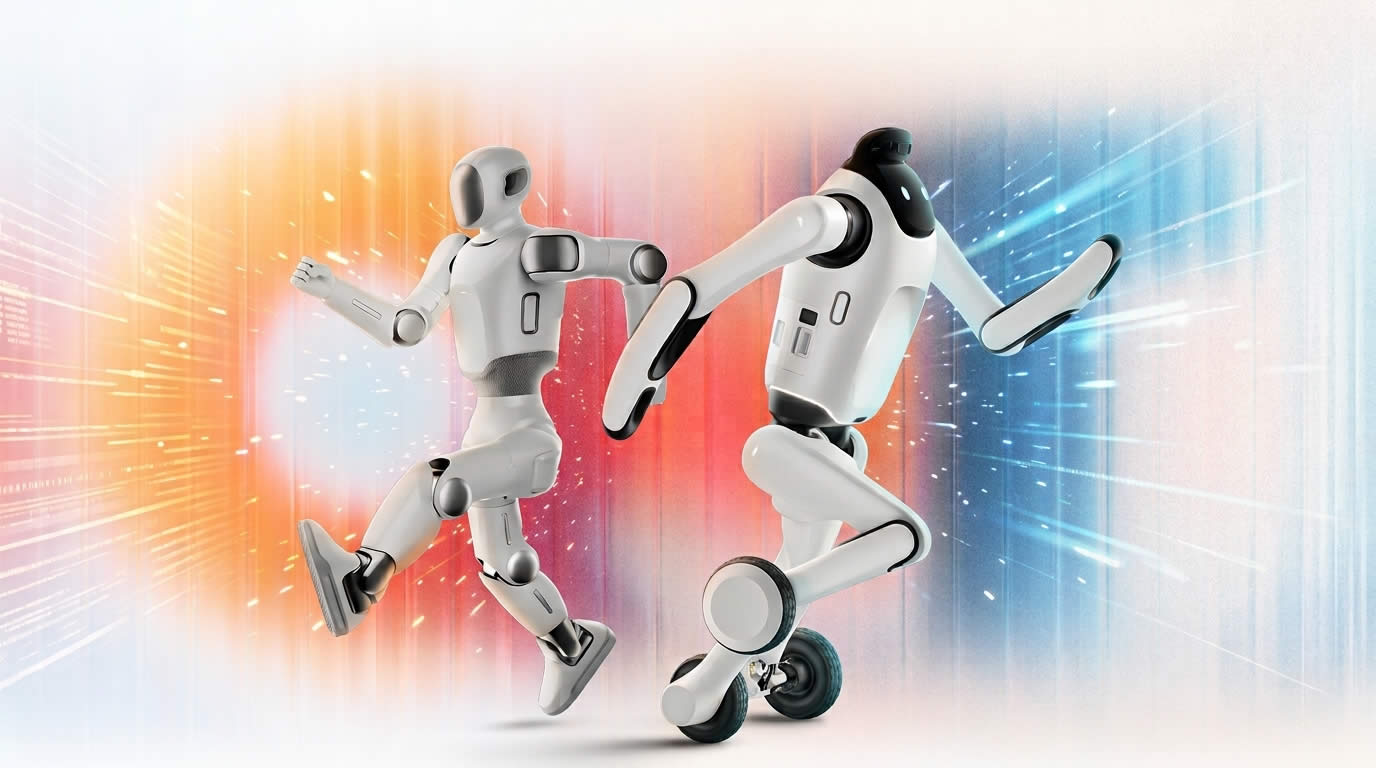
PrimeBOT wants to put a personal robot in your living room. The company’s real challenge isn’t building one — it’s giving people a reason to keep it there.
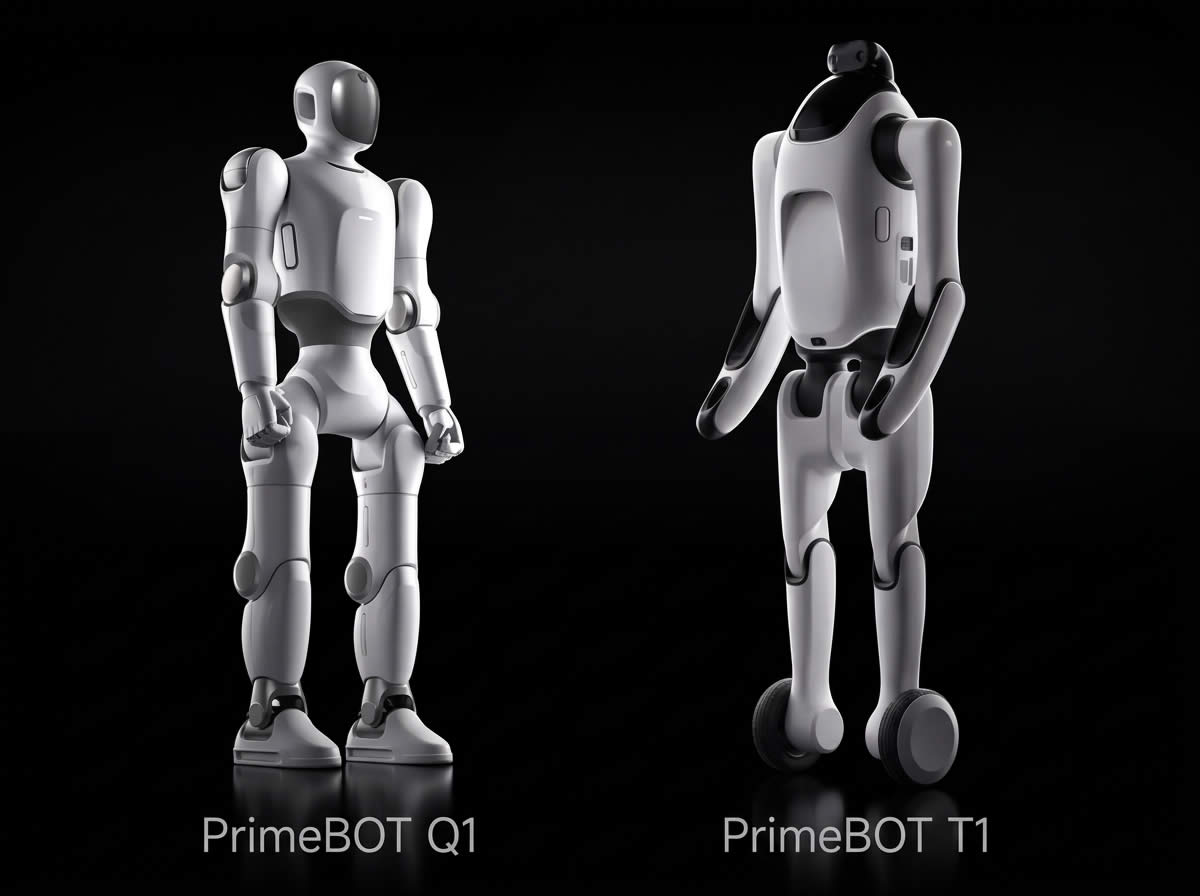
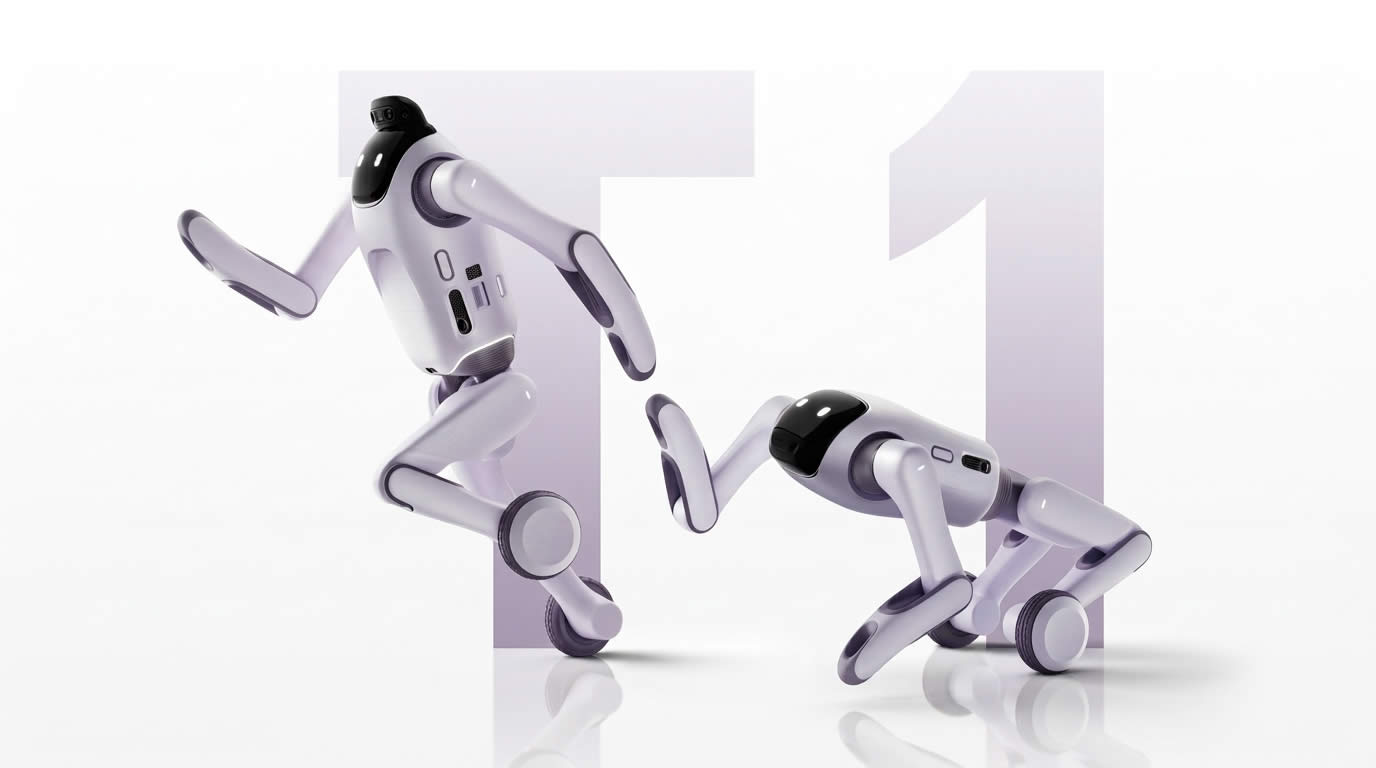
On September 20, PrimeBOT launched two personal robots in Shanghai, the Q1 and T1, both priced from RMB 19,999 (about $3,000). The Q1 is aimed at home companionship, interaction, and developer use. The T1 adds a transformable design that switches between a wheeled humanoid form and a quadrupedal mode.
At RMB 19,999, both models sit firmly in the consumer-robot market. But for PrimeBOT, the harder problem isn’t hitting a sub-$3,000 price point. It’s convincing ordinary households to keep using the thing months after the novelty wears off.
That’s what makes this launch worth watching. PrimeBOT isn’t framing the Q1 and T1 as merely cheaper humanoid robots. The company is trying to build an entire product system around personal robotics — hardware, AI capabilities, and an ecosystem for developers and users alike.
Pricing, specs, and what you actually get
The lineup spans several versions. The Q1 and T1 base models are priced at RMB 19,999. The Q1 Explorer Edition is priced at RMB 26,999, and the T1 Pro at RMB 29,999. The robots went on sale on September 20, with deliveries scheduled from October 1 in order of purchase. Authorized experience stores are operating in seven Chinese cities.
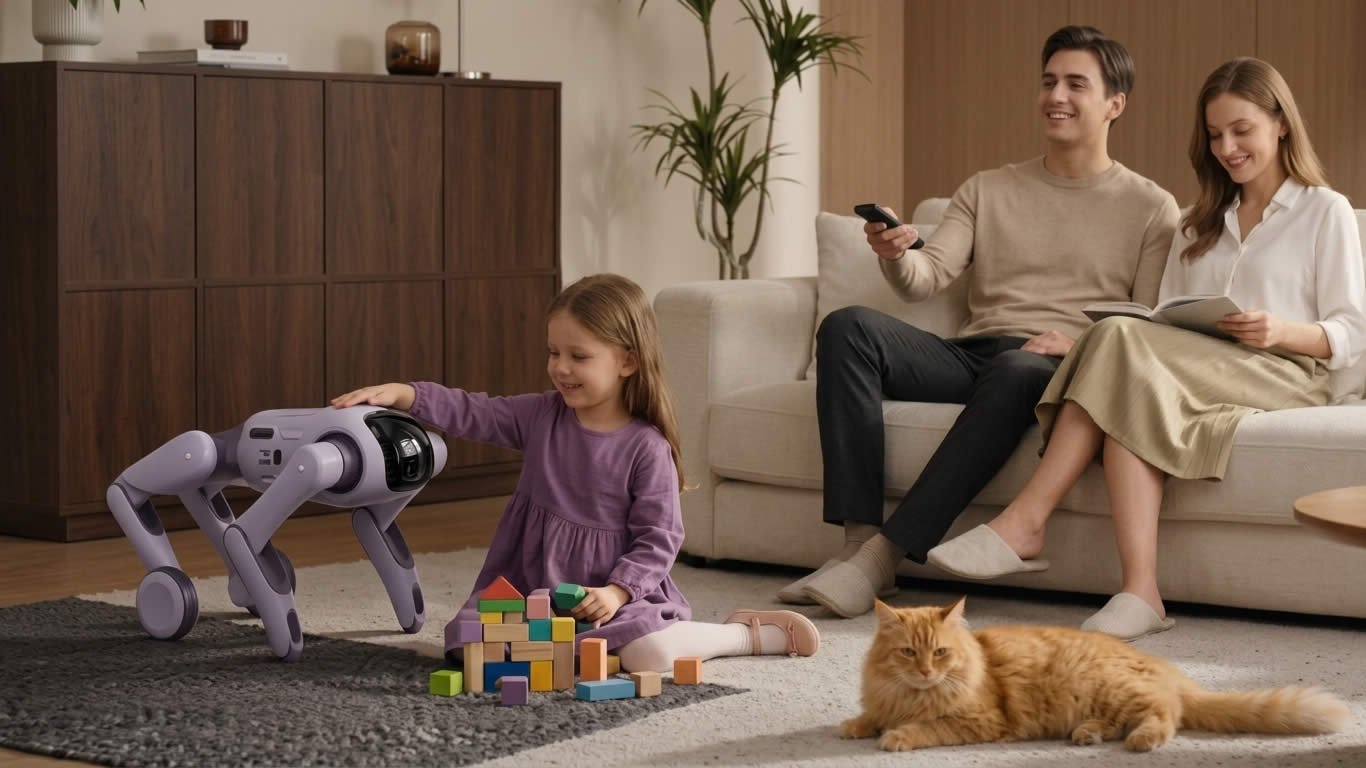
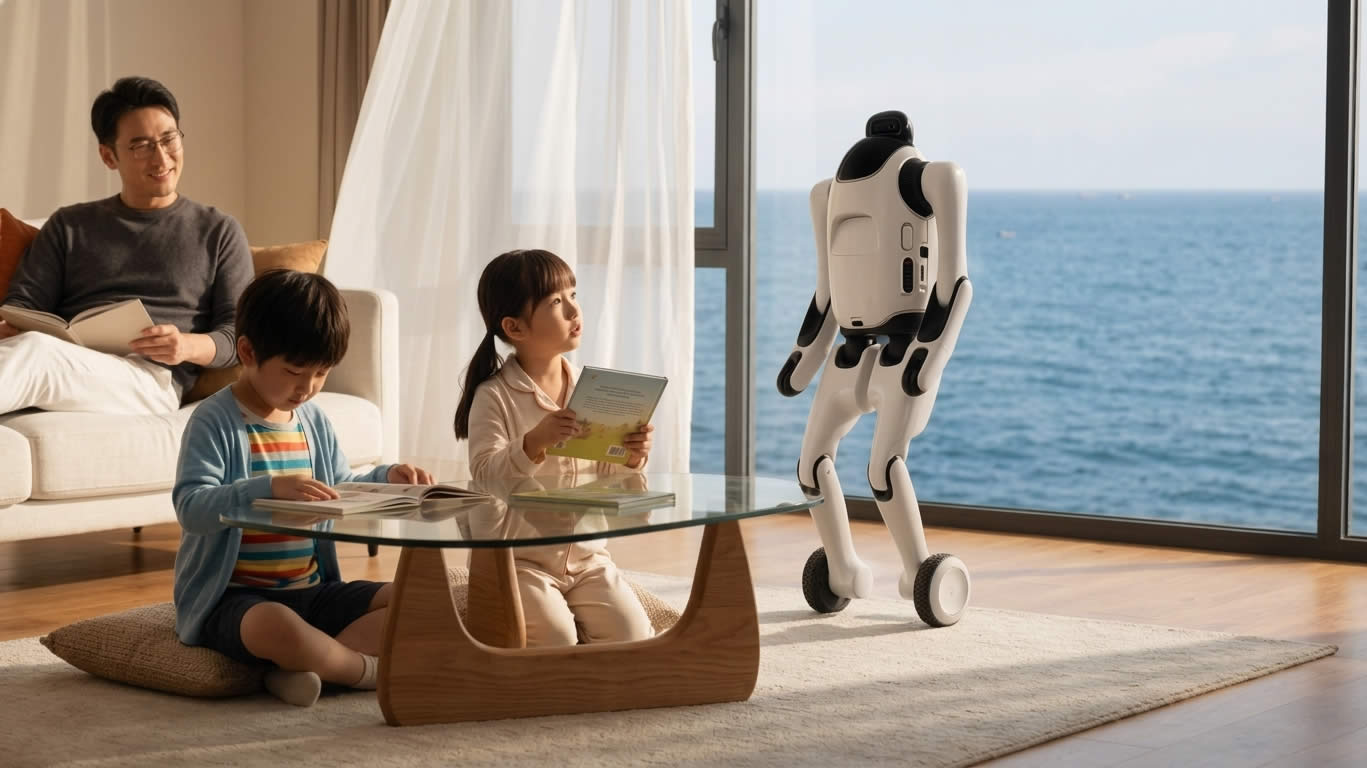
The Q1 stands about 88 centimeters tall and weighs around 15 kilograms. The T1 is roughly one meter tall and weighs about 16 kilograms. Neither is designed as a conventional industrial humanoid. The Q1 leans toward home interaction, education, tech-toy appeal, and use as a development platform. The T1 uses its mechanical structure and control system to shift between wheeled humanoid and quadrupedal modes.
That positioning matters.
For the past few years, most humanoid robots in the Chinese market have been built around industrial applications, exhibitions, research, or commercial services. For consumers, the bigger question has been what a robot like this is actually useful for at home.
PrimeBOT is trying to answer a more practical question: what should a personal robot actually do for its owner, and how much of that experience can the owner shape?
The company calls the Q1 a personal robot and emphasizes that users can modify and extend it. It supports an SDK, an HDK, and select hardware interfaces, so owners aren’t limited to out-of-the-box functions — they can develop new capabilities and external structures.
The Q1, for instance, has a replaceable shell that users can customize via 3D printing. The T1 turns form-shifting into a practical feature, with different configurations for different mobility needs.
The more important shift is that manufacturers are beginning to treat personal robots as upgradeable platforms rather than fixed-function hardware.
Home isn’t a smaller factory
The real difficulty shows up after the robot enters a home.
Factory robots typically work in controlled environments, with defined tasks and objects presented in predictable ways. Homes are different. Furniture moves. Floors collect clutter. Adults, children, and pets wander into the robot’s path without warning. Object sizes, positions, and usage patterns are impossible to predefine.
PrimeBOT’s management acknowledged this in interviews. The company has tested robots in home environments and gathered extensive user feedback. For a product genuinely sold to households, stability, consistency, long-term operation, and whether users actually stick with it matter more than a single impressive demo.
CEO Tian Hua and Chief Scientist Dong Hao both identify generalization as the key problem for home robots.
Completing one task does not mean a robot can generalize to a broader class of tasks.
Grabbing an object once in a lab isn’t hard. In a home, the same robot might face objects of different sizes, tables of different heights, varying lighting conditions, and placements it has never encountered.
This is why PrimeBOT separates interaction intelligence from task intelligence. Today’s robots can already deliver decent experiences in voice, vision, and human-robot interaction. But genuinely complex household tasks still require more data, stronger generalization, and long-term operational validation.
The company believes task intelligence will take time to reach ordinary homes and has outlined a multi-year roadmap for expanding robot capabilities. PrimeBOT’s timeline is the company’s own assessment, not an independently established industry timetable.
The other bet: let users build the robot
More unusual was the emphasis PrimeBOT placed on developers and users.
The company introduced PrimeFlow, PrimeToolkit, PrimeHub, and PrimeStore.
PrimeFlow focuses on robot appearance and personalized content. Users can design shells, movements, expressions, sounds, and some personality settings. PrimeToolkit targets developers, handling skill development, testing, and distribution.
Under PrimeBOT’s plan, users won’t just buy a robot and wait for the manufacturer to add features. They can become creators of robot content and skills themselves.
The idea has parallels to smartphone app ecosystems, but robot platforms face higher technical barriers. Phone apps run on standardized computing platforms. Robot skills ultimately have to interact directly with mechanical structures, sensors, actuators, and the physical world.
A function written by a robot developer has to run reliably in reality, not just execute correctly on a screen.
Their prospects will depend on how usable the development tools are, how open the hardware interfaces prove to be, and whether users are willing to spend time creating for the platform.
PrimeBOT says its developer ecosystem has attracted more than 1,000 developers and plans to invest RMB 1 billion over five years to build it out. The company has also partnered with universities, education platforms, and content and service companies.
For now, those figures describe an ecosystem still being built, not a mature robot application market.
AI Still Has to Work Through the Body
Beyond software, PrimeBOT is building its own AI stack, including PrimeMotion, PrimeGo, and PrimeVista, with plans for higher-level capabilities like Harness Agent and PrimeMind.
PrimeBOT’s approach is to treat the robot as a system that combines perception, motion control, task execution, and interaction, rather than as a standalone language model.
For home robots, that distinction matters.
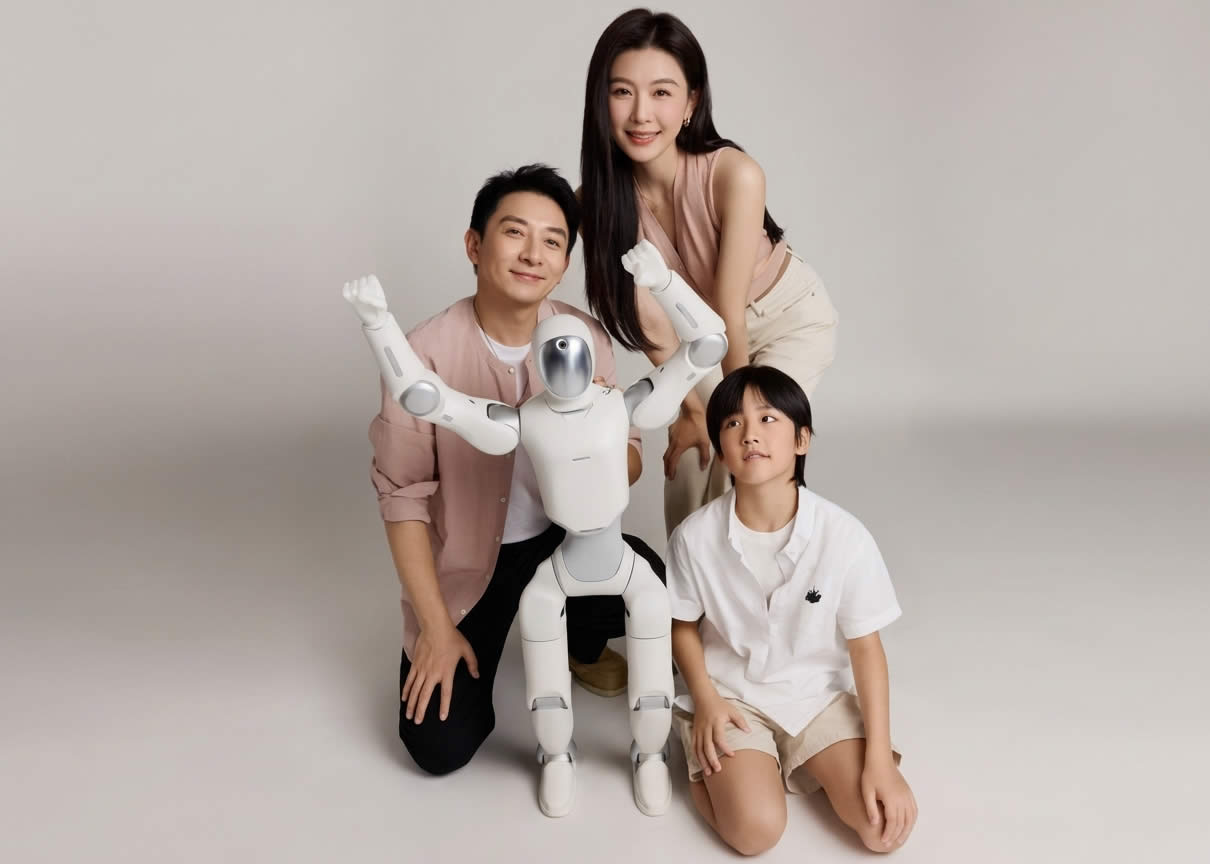
A useful home robot has to do more than chat or follow fixed commands. It needs to understand its surroundings, follow people, handle simple tasks, and interact consistently with different members of a household.
The T1 Pro adds an NVIDIA Orin Nano computing platform, 360-degree obstacle avoidance, autonomous recharging, voice summon, and follow-and-carry capabilities. The Q1 emphasizes development, offering an SDK, an HDK, and hardware interfaces.
For now, PrimeBOT is building around basic interaction, mobility, and developer access, with additional use cases expected to come through software and the wider ecosystem.
Production speed doesn’t mean the market is ready
PrimeBOT also highlighted its manufacturing capacity.
The company says its production line has a takt time of roughly 2.5 minutes per robot and retains assembly data for each unit for traceability.
It also disclosed that prepayments related to consumer-grade embodied-intelligence robots reached RMB 210 million in the first half of 2026. R&D spending for the same period was about RMB 180 million, with roughly RMB 160 million going to embodied intelligence. Full-year R&D investment is planned at around RMB 500 million.
These numbers show PrimeBOT is putting resources into scaling consumer robot production. But a production line’s theoretical takt time and actual market sales are different metrics. What ultimately determines whether consumer robots can support a sustainable business is actual delivery volume, after-sales cost, failure rates, software update frequency, and user retention.
PrimeBOT is also working with multiple supply chain partners and plans to bring larger ecosystem players onto its platform.
The company has proposed a RMB 1 billion, five-year ecosystem investment plan and wants to expand its number of developers, partners, and robot applications. These are corporate targets that still need real market data to validate.
The real test isn’t whether it moves — it’s whether it’s worth keeping
Looking at the Q1 and T1, PrimeBOT is trying to sidestep a problem the industry broadly faces: if a robot can only perform a few actions at a launch event or showroom, why would a consumer bring it home?
The core of this launch isn’t just the price.
A starting price of RMB 19,999 lowers the barrier to a first robot purchase. But what determines the product’s value is how much practical functionality users get after bringing it home.
This explains why PrimeBOT places developer platforms, a robot skill store, content ecosystem, and software updates on equal footing with hardware.
For phones, hardware upgrades deliver new performance, but the app ecosystem determines what the device is used for every day. For robots, that relationship may be even more direct: without a steady stream of new skills, a robot easily shifts from a novelty to an idle appliance.
PrimeBOT hopes platforms like PrimeFlow and PrimeToolkit will give its robots something like continuously expandable functionality. The company has also outlined diversified business models including hardware sales, content and subscriptions, IP applications, and services.
Whether that route works has yet to be proven by sufficient data.
But the product design behind this launch suggests PrimeBOT isn’t content to just sell a robot. It’s trying to turn the Q1 and T1 into a personal computing platform that users can keep modifying, developers can keep extending, and software can keep upgrading.
For PrimeBOT, the harder test will not be the launch-day demo. It will be whether Q1 and T1 still give their owners a reason to use them six months later.
